
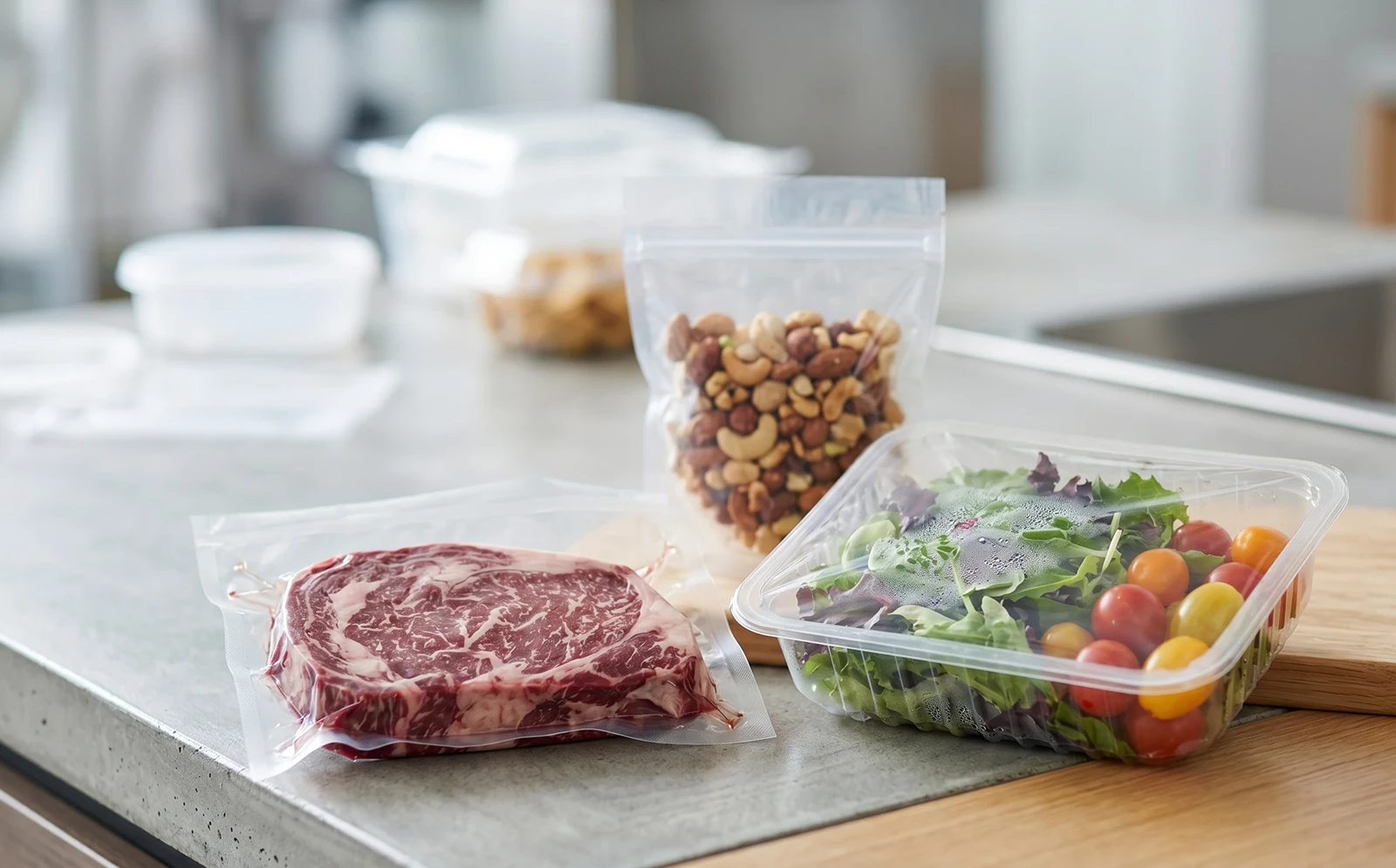
A food packaging machine is an industrial system designed to wrap, seal, or containerize food products to ensure safety, extend shelf life, and maintain quality during distribution. These systems range from manual equipment to fully integrated automated lines that handle the entire process from portioning to final palletizing.
You might notice that rising labor costs and inconsistent sealing quality are slowing down your production throughput. These operational bottlenecks often lead to wasted materials and potential safety risks that can damage your brand reputation among international buyers. This guide provides a technical overview of how specialized equipment solves these issues and helps you scale your manufacturing capabilities effectively.
What Is a Food Packaging Machine and Why Does It Matter for Your Business?
A food packaging machine serves as the primary barrier between your product and environmental contaminants that cause spoilage or degradation. By automating the enclosure process, you ensure that every unit meets the exact weight and seal integrity required by global safety standards.
Defining the Role of Modern Equipment
Modern systems do more than just wrap a product; they manage the atmosphere inside the package to prevent oxidation. This technology is a standard requirement for producers looking to export to markets in Europe or North America where shelf-life expectations are high.
Here’s the deal:
- Precise portion control reduces product giveaway and increases yield.
- Automated sealing prevents human error that leads to leaks or contamination.
- High-speed operation allows you to meet large-scale orders from supermarket chains.
- Integrated sensors track production data for better inventory management.
The Impact on Brand Perception
When your customers receive a product that is perfectly sealed and professionally presented, it builds immediate trust in your manufacturing process. Consistency in packaging is often the first metric a procurement manager uses to evaluate a new supplier’s reliability.
The truth is:
- Professional packaging reflects the quality of the ingredients inside.
- Tamper-evident seals provide a safety guarantee to the end consumer.
- Clear labeling ensures compliance with international shipping regulations.
| Factor | Manual Packaging | Automated Food Packaging Machine |
| Speed | Low and inconsistent | High and constant |
| Accuracy | Subject to human error | Sensor-driven precision |
| Labor Cost | High per unit | Low per unit |
| Scalability | Difficult to manage | Easily adjustable |
Shifting from manual processes to specialized machinery is a necessary step for any facility aiming for regional or global expansion.
Key Takeaway: A dedicated packaging system is a fundamental investment that protects product integrity while significantly reducing long-term operational overhead.
How Do Food Packaging Machines Work to Ensure Product Safety?
A food packaging machine functions by coordinating mechanical movements with electronic sensors to fill and seal containers in a sterile or controlled environment. The process typically begins with material feeding and ends with a discharge system that moves the finished goods to the next stage of the supply chain.
The Sequence of Operation
The process starts when the machine pulls the packaging material—whether it is film, pouches, or trays—into the forming station. After the container is shaped, the filling system dispenses the food item using volumetric or weight-based measurements to ensure uniformity.
Look at the numbers:
- Load cells can measure weight with an accuracy of within 0.1 grams.
- Servo motors control film tension to prevent tearing during high-speed runs.
- PLC systems manage up to 100 different product recipes for quick changeovers.
- Thermal sensors maintain constant sealing temperatures within a 1-degree margin.
Ensuring Seal Integrity and Safety
The sealing station is perhaps the most critical part of the entire operation as it creates the airtight bond that preserves the food. Advanced systems use a combination of heat, pressure, and time to fuse the packaging materials together without damaging the product.
The result?
- Hermetic seals prevent the entry of bacteria and moisture.
- Cooling phases after sealing stabilize the bond for immediate handling.
- Inspection systems can automatically reject any package that fails a pressure test.
| Component | Function in Safety | Benefit to User |
| PLC Controller | Manages timing and logic | Reduces operational downtime |
| Load Cells | Controls filling volume | Minimizes product waste |
| Heat Bars | Creates the final seal | Extends product shelf life |
Technical synchronization between the feeding, filling, and sealing modules ensures that the product remains untouched by human hands throughout the process.
Key Takeaway: Understanding the mechanical flow of your equipment allows you to optimize settings for different food textures and packaging materials.
What Are the Main Types of Food Packaging Machines Available Today?
Different categories of food packaging machine are designed to handle specific food states such as liquids, powders, granules, or solid items. Selecting the correct category depends entirely on your product’s physical characteristics and the type of container you intend to use.
Horizontal and Vertical Systems
Vertical Form Fill Seal (VFFS) machines are commonly used for loose items like snacks or grains, where the product falls into the pouch via gravity. Horizontal Form Fill Seal (HFFS) machines are better suited for solid, single items like protein bars or baked goods that require a flat layout.
Think about it:
- VFFS systems save floor space due to their vertical orientation.
- HFFS systems allow for more delicate handling of fragile food items.
- Multi-head weighers can be integrated into both types for high-speed accuracy.
- Rotary pouch machines are ideal for pre-made bags that need a premium look.
Specialized Liquid and Powder Fillers
Liquids and fine powders require specialized dosing systems to prevent leaks or dust clouds in the facility. Piston fillers work best for thick sauces, while auger fillers are the industry standard for spices and milk powders.
The reality is:
- Anti-drip nozzles keep the sealing area clean for better bond strength.
- Dust extraction units integrated into powder fillers maintain a clean workspace.
- CIP (Clean-In-Place) systems allow for rapid sanitization between batches.
| Machine Type | Best Suited For | Typical Container |
| VFFS | Grains, snacks, frozen veg | Pillow bags, gusset bags |
| HFFS | Biscuits, chocolates, soap bars | Flow wraps |
| Piston Filler | Creams, oils, honey | Bottles, jars, tubs |
| Auger Filler | Flour, coffee, protein powder | Sacks, canisters |
Matching the machine architecture to the physical properties of your food item prevents mechanical strain and ensures a clean packaging result.
Key Takeaway: Choosing between vertical, horizontal, or specialized filling systems is the first step in building an efficient and reliable production line.
How Do You Choose Between Tray Sealers, Thermoforming, and Vacuum Packaging?
Deciding on a food packaging machine often involves choosing between tray-based systems and flexible film-based systems. Each method offers different levels of protection, aesthetic appeal, and cost-effectiveness depending on whether you are selling fresh meat, prepared meals, or dried goods.
Vacuum Packaging and Its Advantages
Vacuum packaging removes all air from the container before sealing, which is one of the most effective ways to inhibit the growth of aerobic bacteria. This method is frequently used for meat, cheese, and fish to significantly extend their refrigerated shelf life.
Here’s the deal:
- Removing oxygen prevents the oxidation of fats and oils in the food.
- The tight wrap prevents freezer burn during long-term storage.
- Compact packaging reduces the space needed for transport and warehousing.
Tray Sealing versus Thermoforming
Tray sealers apply a lid to a pre-made tray, making them perfect for ready-to-eat meals and delicate produce. Thermoforming machines actually create the tray from a roll of plastic film during the process, which offers more flexibility for high-volume production.
The benefit?
- Thermoforming reduces the cost of shipping empty trays to your facility.
- Tray sealers allow for faster changeovers between different tray shapes.
- Both systems can incorporate gas flushing for MAP applications.
| Technology | Packaging Material | Primary Benefit |
| Vacuum | Flexible pouches | Maximum shelf life for proteins |
| Tray Sealer | Pre-formed plastic/paper trays | High-end retail presentation |
| Thermoforming | Roll-fed plastic film | Lowest per-unit container cost |
Your choice between these three technologies will dictate your packaging material costs and the final appearance of your product on the shelf.
Key Takeaway: Vacuum and tray-based systems provide the high-barrier protection necessary for fresh food items that require strict temperature control.
What Role Does Modified Atmosphere Packaging (MAP) Play in Freshness?
A food packaging machine equipped with MAP capabilities replaces the ambient air inside a package with a specific gas mixture, usually involving nitrogen and carbon dioxide. This process is vital for maintaining the color, texture, and nutritional value of fresh produce and meats without using chemical preservatives.
The Science Behind Gas Flushing
By reducing oxygen levels to below 1%, the machine slows down the respiration rate of fresh vegetables and prevents the growth of mold. Carbon dioxide acts as a natural antimicrobial agent, while nitrogen serves as a filler gas to prevent the package from collapsing.
Think about it:
- Red meats stay bright red rather than turning brown or gray.
- Salad leaves remain crisp for twice as long as standard packaging.
- Bakery items resist staling by maintaining internal moisture levels.
Requirements for Successful MAP
To achieve a successful MAP result, you must use high-barrier films that prevent the specialized gas from leaking out and oxygen from seeping back in. The machine must also have precise gas mixing valves to ensure the ratio remains consistent throughout the production run.
The result?
- You can expand your distribution radius because the product stays fresh longer.
- Retailers experience fewer markdowns due to expired products.
- Consumers enjoy a fresher product that tastes as intended by the producer.
| Food Type | Typical Gas Mixture | Target Benefit |
| Fresh Red Meat | 80% O2 / 20% CO2 | Maintains red color and inhibits bacteria |
| Snack Foods | 100% N2 | Prevents oil oxidation and crushing |
| Cooked Meats | 30% CO2 / 70% N2 | Prevents microbial growth |
MAP technology is a game-changing feature for B2B suppliers who need to transport perishables across long distances or overseas.
Key Takeaway: Integrating MAP into your packaging process allows you to offer a superior, preservative-free product with an extended shelf life.
What Are the Primary Benefits of Integrating Food Packaging Machines?
Investing in a food packaging machine offers more than just speed; it fundamentally changes the financial structure of your manufacturing operation. By replacing manual tasks with precision engineering, you can control your margins more effectively and predict production outcomes with higher accuracy.
Labor Savings and Efficiency
Automation allows you to reallocate your workforce from repetitive packing tasks to more skilled roles like quality control and facility management. A single automated line can often do the work of five to ten manual laborers, depending on the complexity of the package.
Look at the numbers:
- Automated systems can operate 24/7 with minimal supervision.
- Personnel requirements are reduced, lowering the risks associated with workplace injuries.
- Throughput remains constant regardless of the time of day or worker fatigue.
Waste Reduction and Resource Management
Manual filling often leads to overfilling or underfilling, both of which cost your business money. Precision dosing in modern machinery ensures that you are using the exact amount of product and packaging film required for every single unit.
The reality is:
- Reduced film waste through precise cutting and tension control.
- Elimination of “giveaway” product that exceeds the weight on the label.
- Lower energy consumption per unit compared to multiple smaller manual stations.
| Metric | Manual Process | Automated System |
| Units per minute | 5 – 10 | 40 – 120+ |
| Product Waste | 2% – 5% | < 0.5% |
| Consistency | High variance | Uniform results |
The shift to automation is often the point where a small processing facility matures into a professional industrial operation.
Key Takeaway: The combination of lower labor costs and minimized material waste creates a rapid return on investment for automated packaging lines.
How Can You Choose the Right Food Packaging Machine for Your Specific Product?
Selecting the ideal food packaging machine requires a detailed analysis of your product’s physical properties, your production environment, and your future growth targets. A machine that works perfectly for frozen peas will fail if used for fine flour or sticky sauces without the proper modifications.
Analyzing Product Characteristics
You must consider variables such as the acidity of the food, its temperature during filling, and its fragility. For example, high-acid foods like pickles require stainless steel components that are resistant to corrosion to ensure the machine lasts for years.
Here’s the deal:
- Sticky products need Teflon-coated surfaces to prevent clogging.
- Frozen items require moisture-resistant electronics to handle condensation.
- Fragile items like crackers need “gas-cushioning” or low-drop heights in VFFS systems.
Determining Production Scale
It is important to buy a machine that can handle your current needs while having the headroom to manage a 20% to 30% increase in volume. Choosing a modular system allows you to add features like labeling or metal detection later as your requirements evolve.
Think about it:
- Check the “Changeover Time” if you plan to run multiple products on one line.
- Ensure the machine footprint fits within your existing factory layout.
- Verify that the local power supply matches the machine’s voltage requirements.
| Selection Factor | Consideration | Why it Matters |
| Flowability | Viscosity or dusting | Dictates the type of filler needed |
| Speed Requirement | Bags per minute (BPM) | Determines if you need a single or twin lane |
| Material Compatibility | PE, PET, Foil, Paper | Ensures the heat sealer can bond the material |
Taking the time to match technical specifications to your product prevents expensive retrofitting or production delays in the future.
Key Takeaway: A successful purchase is based on a deep understanding of your product’s unique needs and your facility’s long-term production goals.
What Factors Determine the Total Food Packaging Machine Cost and ROI?
The price of a food packaging machine is influenced by its level of automation, the materials used in its construction, and the complexity of its control systems. While the initial purchase price is a major factor, the true cost of ownership includes maintenance, energy use, and the potential for downtime.
Understanding the Price Tiers
Entry-level semi-automatic machines are affordable for startups but require significant manual intervention. High-speed, fully integrated lines involve a larger upfront cost but offer the lowest cost-per-unit in the long run due to their extreme efficiency.
The truth is:
- Customizations for specific bag shapes or speeds will increase the initial price.
- High-quality components from brands like Siemens or Omron add to the cost but improve reliability.
- Stainless steel 316L is more expensive than 304 but is necessary for corrosive environments.
Calculating Your Return on Investment
To calculate ROI, compare your current monthly labor and waste costs against the projected costs after the machine is installed. Most mid-sized companies find that a well-chosen packaging system pays for itself within 12 to 18 months of operation.
Look at the numbers:
- Savings on labor usually represent the largest portion of the ROI.
- Reduction in material waste provides immediate and measurable savings.
- Increased output allows for more sales without increasing the facility’s footprint.
| Cost Component | Initial Investment | Ongoing Operating Cost |
| Hardware | Machine, spare parts | Wear-and-tear parts |
| Integration | Installation, training | Staff wages |
| Maintenance | Setup, calibration | Routine servicing |
Budgeting for a machine should be viewed as a capital investment in efficiency rather than a simple equipment purchase.
Key Takeaway: Focus on the cost-per-package over a three-year period rather than just the initial sticker price of the equipment.
How Should You Approach Maintenance and Troubleshooting for Packaging Equipment?
Maintaining your food packaging machine is a proactive task that involves regular cleaning, lubrication, and the replacement of wear-and-tear parts. A well-maintained machine can operate for over a decade, whereas a neglected one will suffer from frequent breakdowns and inconsistent sealing quality.
Daily and Weekly Maintenance Protocols
Cleaning is the most important daily task, especially in food environments where residues can attract bacteria or interfere with sensor accuracy. You should also check the tension on drive belts and ensure that the sealing jaws are free from carbonized plastic.
Here’s the deal:
- Sanitize all food-contact surfaces at the end of every shift.
- Check air pressure levels to ensure pneumatic components are firing correctly.
- Lubricate moving joints according to the manufacturer’s schedule.
Troubleshooting Common Issues
Most common problems, such as poor seal quality or inconsistent bag lengths, can be traced back to incorrect temperature settings or dirty sensors. Training your operators to recognize these early warning signs can prevent minor issues from becoming major failures.
The result?
- Shorter downtime because operators can fix simple issues themselves.
- Longer lifespan for expensive components like heating elements and motors.
- Consistent product quality that keeps your distribution partners happy.
| Problem | Potential Cause | Solution |
| Weak Seals | Low temperature or pressure | Adjust PLC settings or check heater bars |
| Bag Length Variance | Slipping film or sensor error | Clean the eye-mark sensor or adjust tension |
| Product Leaks | Contamination in seal area | Adjust filling timing to prevent splashing |
A disciplined maintenance culture reduces the total cost of ownership and ensures your production line remains a reliable asset.
Key Takeaway: Routine maintenance is the only way to guarantee that your equipment continues to meet food safety standards and production targets.
How Do You Evaluate and Select Reliable Food Packaging Machine Suppliers?
Choosing a food packaging machine supplier is a decision that affects your business for years, as you will rely on them for technical support, spare parts, and future upgrades. A reliable partner should demonstrate not only manufacturing capability but also a deep understanding of your specific industry challenges.
Assessing Technical Expertise
You should look for suppliers who provide comprehensive testing videos of their machines running your specific product. Their ability to customize the equipment to fit your existing production line is a strong indicator of their engineering depth.
Think about it:
- Do they offer remote technical support for international clients?
- Are the spare parts standard and easy to source globally?
- Do they have a track record of serving clients in your specific niche?
Communication and After-Sales Support
B2B buyers often find that clear communication during the design phase prevents costly errors during installation. A supplier that is transparent about lead times and provides detailed manuals in your language is a safer long-term choice.
The reality is:
- Fast response times are vital when your production line is down.
- Professional documentation makes it easier to train new staff members.
- On-site commissioning services ensure the machine is set up correctly from day one.
| Supplier Criteria | Why it Matters | Green Flag |
| Customization | Fits your specific needs | They ask for product samples for testing |
| Component Quality | Longevity and reliability | Use of international brands for PLC/Electrics |
| Support | Minimizes downtime | Dedicated after-sales team with 24h response |
Selecting a partner based on their technical support and engineering quality is always more profitable than choosing the lowest bidder.
Key Takeaway: The value of a supplier is proven after the machine is delivered; prioritize those with a strong reputation for after-sales service and technical depth.
What Are the Future Trends in Food Packaging Automation for 2026?
The food packaging machine industry is moving toward higher levels of connectivity, where machines use AI to self-adjust and communicate with other parts of the factory. By 2026, we expect to see smart sensors become the standard for predicting maintenance needs before a breakdown occurs.
The Rise of AI and Predictive Maintenance
New systems are being equipped with vibration and thermal sensors that alert you when a bearing is starting to fail. This shift from “reactive” to “predictive” maintenance will virtually eliminate unplanned downtime for high-volume producers.
Look at the numbers:
- Predictive maintenance can reduce repair costs by up to 30%.
- AI-driven vision systems can inspect 100% of packages for label and seal defects.
- Integrated OEE (Overall Equipment Effectiveness) tracking provides real-time data on a smartphone.
Sustainable Packaging Material Compatibility
As global regulations move against single-use plastics, the next generation of machines will be designed to handle paper-based films and compostable materials with ease. These materials often have a narrower sealing window, requiring the ultra-precise temperature control found in modern systems.
The result?
- You can meet consumer demand for eco-friendly packaging without losing efficiency.
- Your brand stays ahead of government bans on traditional plastics.
- Improved energy efficiency in newer machine models lowers your carbon footprint.
| Trend | Implementation | Business Value |
| Smart Sensors | IoT integration | Reduced downtime and better data |
| Eco-Materials | Paper/Bio-polymer compatibility | Compliance with environmental laws |
| Remote Monitoring | Cloud-based dashboards | Management of multiple lines from anywhere |
Staying ahead of these trends ensures that the equipment you buy today will still be competitive and compliant five years from now.
Key Takeaway: Investing in forward-thinking technology like AI-driven diagnostics and sustainable material handling future-proofs your production facility.
Securing Your Production Future with the Right Technology
Optimizing your food production starts with choosing a food packaging machine that balances speed, precision, and ease of maintenance. Reliancepak provides the engineering expertise and high-performance equipment needed to transform your facility into a world-class manufacturing site. Whether you are looking for semi-automatic solutions or a fully integrated smart production line, our team is ready to design a system that meets your specific challenges.
We help you navigate the complexities of global food safety standards with machinery that is built for reliability and long-term performance.
FAQ
Can I use the same food packaging machine for different types of products?
Yes, provided the machine is designed with modularity and has adjustable settings for different container sizes. However, you must ensure that the filling system is compatible with the physical state—such as liquid versus powder—of all the items you plan to pack.
How do I know if my product requires vacuum or MAP technology?
If your product is perishable and has high moisture or fat content, such as fresh meat or cheese, vacuum or MAP is likely necessary. These technologies inhibit the bacterial growth that leads to spoilage, allowing you to reach customers in distant markets without compromising quality.
Is it difficult to train my staff to operate an automated food packaging machine?
No, as modern machines feature intuitive touch-screen interfaces with multi-language support and pre-programmed recipes. Most operators can learn the basic functions within a few days, especially if the supplier provides a structured training program and detailed manuals.
What is the typical lead time for a custom food packaging machine?
The lead time usually ranges from 30 to 60 days depending on the level of customization required for your specific packaging needs. Standard models are often available much faster, while fully integrated lines with complex conveyors and inspection systems may take longer to test and calibrate.
How often do I need to replace the wearing parts on my machine?
It depends on your production volume, but most high-wear items like heating wires, silicone strips, and cutting blades should be inspected monthly. Keeping a kit of essential spare parts on-site allows you to replace these items in minutes, preventing any significant interruption to your workflow.