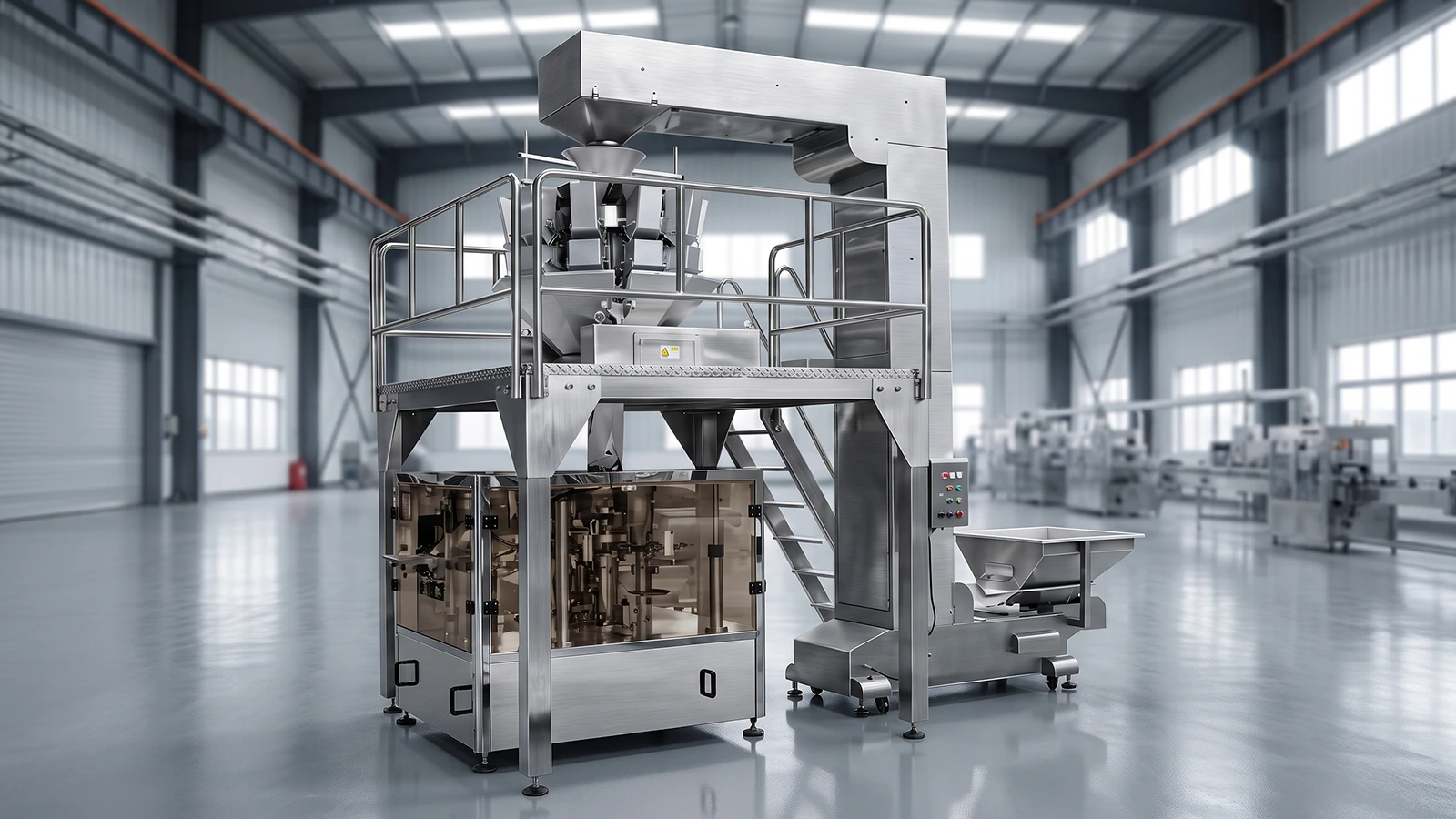
A food packaging machine transforms a manufacturing facility by replacing unpredictable manual labor with high-speed, sensor-driven automation. This mechanical shift directly lowers operational overhead, ensures strict compliance with international food safety standards, and provides the production scalability needed to compete in global retail markets.
You might find that your current manual or semi-automatic processes are creating bottlenecks that prevent you from accepting larger orders. When labor shortages occur or human error leads to rejected shipments, your profit margins suffer immediately. This guide explains how integrating automated systems resolves these exact pain points, allowing you to control costs while guaranteeing consistent product quality.
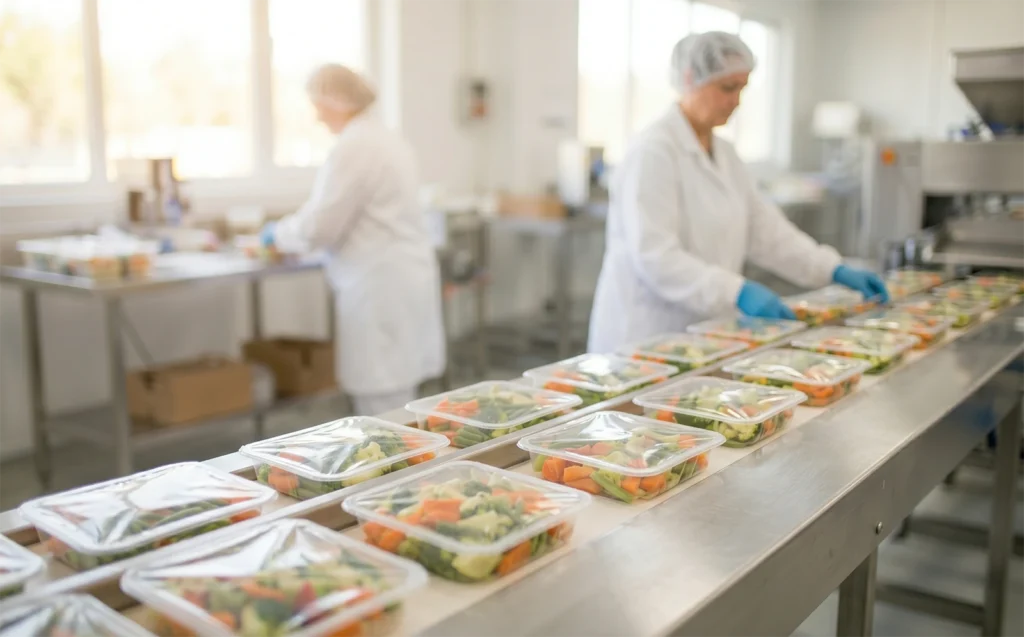
How does automation reduce your direct labor costs?
Automation reduces direct labor costs by allowing a single operator to manage a line that would otherwise require five to ten workers to fill, seal, and inspect packages. The food packaging machine performs the repetitive physical tasks at a constant speed, eliminating the financial drain of overtime pay and fatigue-related slowdowns.
Reallocating workforce to higher-value tasks
When you install an automated system, you do not simply eliminate jobs; you shift your personnel away from mundane packing toward quality control, machine maintenance, and facility management. This transition maximizes the value of your workforce.
Here’s the deal:
- Automated lines run continuously without the need for breaks or shift changes.
- Fewer workers on the floor reduce the frequency of workplace injuries and associated insurance claims.
- The PLC interface requires only one trained technician to oversee multiple production streams simultaneously.
Predictable operational overhead
Manual packing speeds fluctuate based on the time of day and the experience of the worker, making it difficult to calculate exact production costs. A machine provides a fixed output rate that allows for precise financial forecasting.
The reality is:
- You can calculate the exact cost-per-package before you begin a production run.
- High-speed output allows you to fulfill large contracts without hiring temporary seasonal staff.
- The reduction in human contact lowers the cost of daily sanitization supplies and protective gear.
| Metric | Manual Production | Automated Line |
| Operator Requirement | 5 – 10 per line | 1 – 2 per line |
| Speed Consistency | Highly variable | Fixed and predictable |
| Labor Cost per Unit | High | Low |
Investing in automation changes your financial model from high variable labor costs to predictable, lower fixed costs.
Key Takeaway: The immediate reduction in headcount required for packing provides the fastest and most measurable return on investment for any manufacturing facility.
Why is precision dosing critical for material management?
Precision dosing is critical because it prevents the overfilling of packages, commonly known as “product giveaway,” which directly eats into your profit margins over large production volumes. A modern food packaging machine uses load cells and servo motors to measure product within fractions of a gram, ensuring you only use exactly what is required.
Eliminating product giveaway
If a manual worker overfills a 500g bag by just 10g, that 2% error translates to thousands of lost dollars over a month of continuous production. Automated weighers calculate the target weight mathematically to stop this slow drain on resources.
Think about it:
- Multi-head weighers test dozens of combinations in milliseconds to find the perfect target weight.
- Piston fillers use precise mechanical strokes to dispense the exact volume of expensive liquids like olive oil or honey.
- Auger screws count exact rotations to dispense powders without spilling.
Reducing packaging film waste
Beyond the food product itself, automated systems drastically reduce the amount of plastic or foil wasted during the forming and sealing stages. Tension controllers keep the film taut, preventing the wrinkles and misalignments that force operators to throw away empty bags.
The result?
- Eye-mark sensors ensure the machine cuts the bag at the exact printed line every time.
- Scrap collection systems on thermoformers tightly wind excess material for easy recycling.
- Consistent heat application prevents the burning or melting of film that ruins the final presentation.
| Waste Source | Manual Issue | Automated Solution |
| Product Fill | Overfilling (Giveaway) | Sensor-driven exact dosing |
| Film Alignment | Crooked seals / Bad cuts | Servo-tension and eye-mark tracking |
| Seal Quality | Leaks and rejected bags | PID temperature control |
Strict control over both the food product and the packaging material ensures that your raw material budget translates directly into sellable inventory.
Key Takeaway: The mathematical precision of an automated filler recovers lost profits by ensuring every gram of product and millimeter of film is used efficiently.
How do automated systems guarantee food safety compliance?
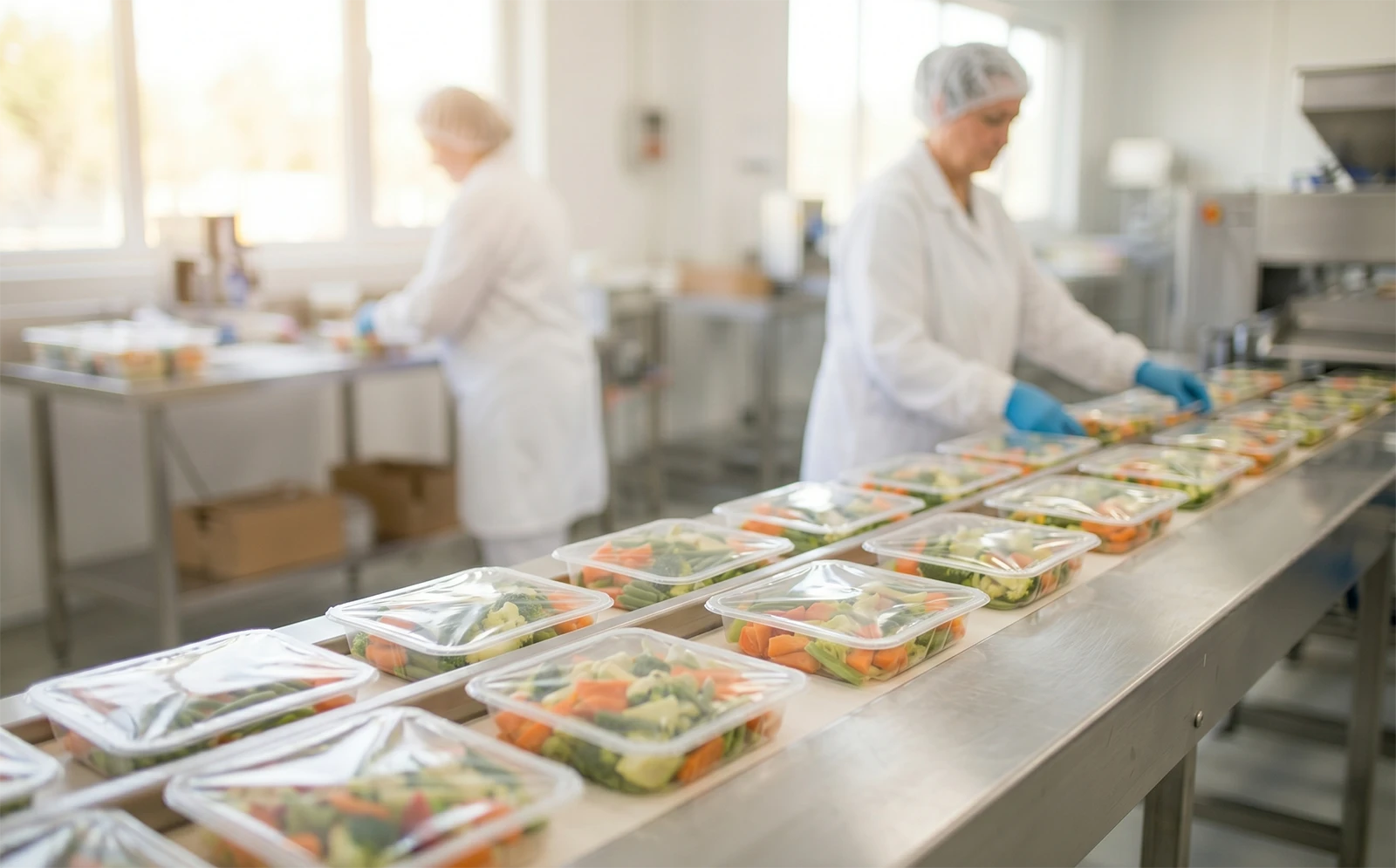
Automated systems guarantee food safety compliance by removing the primary source of contamination—human hands—from the filling and sealing process. A food packaging machine creates an isolated environment where the product is handled by sterile stainless steel components, making it easier to pass strict health inspections and audits.
Minimizing cross-contamination risks
The less a product is exposed to the open air and human touch, the lower the bacterial count inside the final package. Automation ensures the food goes straight from the processing tank into a sealed bag within seconds.
Look at the numbers:
- Enclosed hopper systems protect sensitive items from airborne dust and moisture.
- 316L stainless steel contact parts resist corrosion and prevent metallic contamination in high-acid foods.
- Optional UV sterilization tunnels can treat the film just before it forms the bag.
Ensuring perfect hermetic seals
A package is only safe if the seal remains intact throughout the distribution chain. Automated heat bars apply the exact pressure and temperature required to fuse the materials together, preventing the micro-leaks that lead to premature spoilage.
- Thermal sensors instantly pause the machine if the jaw temperature drops below the safe sealing threshold.
- Cooling fans stabilize the plastic bond immediately so the bag can drop onto a conveyor without bursting.
- Integrated inspection modules can automatically reject any package that fails an inline pressure test.
| Safety Factor | Automated Function | Business Benefit |
| Hygiene | Touchless handling | Passes HACCP and FDA audits |
| Seal Integrity | Uniform heat and pressure | Eliminates spoilage returns |
| Traceability | Integrated date/batch coding | Simplifies potential product recalls |
When you replace manual wrapping with mechanical sealing, you protect your brand’s reputation from the devastating financial impact of a product recall. For more details on how these systems operate, refer to our guide on How to Choose a Food Packaging Machine for Modern Lines.
Key Takeaway: Automation is the most reliable way to enforce the strict hygiene protocols required to sell your products in highly regulated international markets.
Scaling Your Production Safely
The transition to an automated packaging line is a strategic move that protects your profit margins while ensuring your product meets the highest global safety standards. Reliancepak provides the engineering depth and industrial-grade hardware needed to eliminate production bottlenecks and reduce your reliance on manual labor. Our team is ready to design a system that optimizes your material usage and prepares your facility for large-scale distribution.
We help you achieve consistent, high-speed output with machinery that is built to perform reliably in demanding food manufacturing environments.
FAQ
Will an automated machine really save money if my labor is already cheap?
Yes, because the financial benefits extend far beyond just wages. The machine eliminates product giveaway, reduces film waste, and prevents the costly product returns associated with poor manual sealing, all of which improve your overall margin.
How quickly can a standard packaging machine pay for itself?
Most mid-sized manufacturers see a full Return on Investment (ROI) within 12 to 18 months. This calculation is based on the combined savings from reduced labor headcounts and the elimination of wasted materials.
Do I need to shut down my factory to install a new machine?
No, professional installation is typically planned during your standard downtime or over a weekend. A reputable supplier will have the machine pre-calibrated so that it integrates into your existing line with minimal disruption.
Can automated systems track my production numbers?
Yes, modern PLC systems record every cycle and provide real-time data on the number of bags produced, the current running speed, and any rejected units. This data can often be exported directly to your facility’s management software.
Are these machines difficult to clean daily?
No, food-grade machines are specifically designed for rapid sanitation. They feature IP65-rated electronics that withstand low-pressure washdowns and tool-less removal of funnels and forming tubes to make daily cleaning highly efficient.