A food packaging machine using tray sealing, thermoforming, or vacuum technology is selected based on the specific preservation needs of the product, the required output speed, and the final aesthetic expected by the retailer. These three technologies represent the primary methods for protecting perishable items like meats, cheeses, and ready-to-eat meals from microbial spoilage.
You might notice that choosing the wrong enclosure method leads to premature oxidation and a loss of visual appeal that turns away premium buyers. This technical mismatch results in high return rates and prevents you from securing long-term contracts with major supermarket chains. This comparison clarifies the mechanical differences and financial implications of each system to help you stabilize your supply chain.
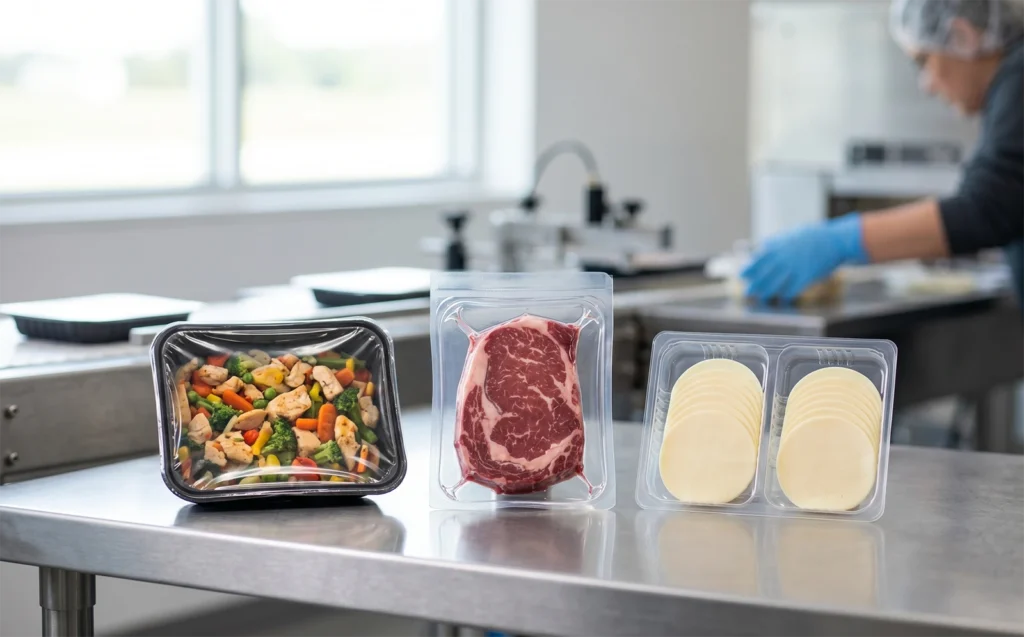
What are the distinct advantages of vacuum packaging technology?
Vacuum technology in a food packaging machine works by removing nearly 100% of the air from a flexible pouch before creating a hermetic seal to stop the growth of aerobic bacteria. This method is the most effective way to prevent the oxidation of fats and proteins in high-value fresh foods.
Oxygen removal for shelf life extension
The primary goal of a vacuum system is to eliminate the oxygen that allows mold and bacteria to thrive. This process creates a skin-tight wrap that protects the product from freezer burn and dehydration.
Think about it:
- Removing air reduces the volume of the package, allowing for more efficient shipping.
- The tight seal keeps natural juices inside the product, maintaining its weight and texture.
- Flexible pouches are generally the least expensive packaging material per unit.
Protection for dense and irregular products
Vacuum systems are highly versatile and can handle products with irregular shapes like bone-in meats or whole fish. The film conforms to the exact contours of the item, ensuring there are no air pockets where spoilage could begin.
The truth is:
- High-barrier films prevent odors from escaping or entering the package.
- Transparent materials allow the customer to see the freshness and color of the product directly.
- Manual and automatic vacuum chambers can be scaled according to your daily tonnage.
| Feature | Vacuum Packaging | Standard Bagging |
| Oxygen Level | Near 0% | Ambient (21%) |
| Bacterial Inhibition | Very High | Low |
| Material Cost | Low | Low |
| Physical Protection | High (Tight wrap) | Medium |
Removing oxygen is a proven mechanical method to double or triple the refrigerated life of fresh proteins without chemical additives.
Key Takeaway: Vacuum technology provides the highest level of aerobic spoilage prevention for raw ingredients while maintaining the lowest material overhead.
When should you invest in a tray sealing food packaging machine?
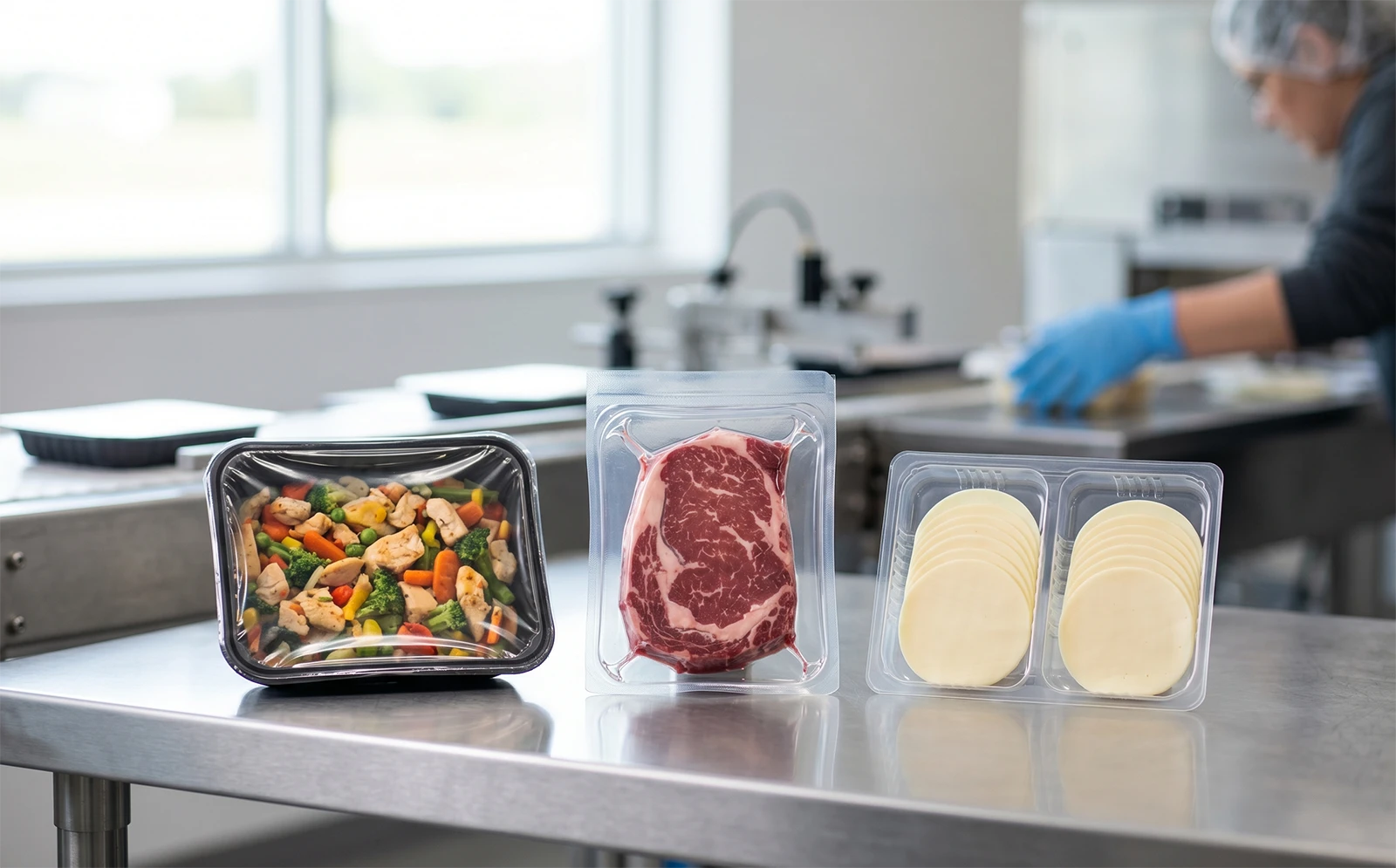
You should invest in a tray sealing food packaging machine when your product requires a rigid structure for retail display or when you are packaging multi-component items like ready-to-eat meals. This technology applies a lidding film to a pre-formed plastic or paper tray, offering a high-end appearance and superior crush protection.
Retail presentation and consumer convenience
Tray sealing is the preferred choice for the “grab-and-go” market because it provides a stable platform that is easy for consumers to handle. The rigid tray protects delicate items like sliced fruits or prepared salads from being crushed during transport.
Here’s the deal:
- Trays can be partitioned to keep different food components separate and fresh.
- Clear lidding films can be printed with high-resolution branding and nutritional data.
- Peelable seals allow for easy opening without the need for scissors or knives.
Integration of modified atmosphere packaging
Most professional tray sealers are equipped with gas flushing modules that replace the internal air with a protective gas mixture. This is vital for maintaining the bright red color of beef or the crispness of green vegetables.
The reality is:
- Precise gas mixing valves ensure the internal atmosphere remains consistent across batches.
- Vacuum-gas cycles ensure that the residual oxygen is low enough to prevent mold.
- The rigid seal area minimizes the risk of leaks compared to flexible pouches.
| Component | Purpose | Outcome |
| Pre-formed Tray | Rigid structure | Prevents product crushing |
| Lidding Film | Airtight cover | High-clarity branding |
| MAP Module | Gas exchange | Maintains color and texture |
The combination of a rigid tray and a controlled atmosphere makes this technology the standard for modern supermarket retail sections.
Key Takeaway: Tray sealers are the optimal choice for products that require high-end branding and physical protection in a retail environment.
Why is thermoforming the most cost-effective for high volumes?
Thermoforming is the most cost-effective solution for high-volume lines because the food packaging machine creates the container from a roll of film rather than using expensive pre-made trays. This inline process reduces shipping costs for empty containers and allows you to customize the bag or tray shape on the fly.
Inline container creation and material savings
A thermoformer heats a bottom web of plastic and uses vacuum or pressure to mold it into a specific shape before the product is loaded. This eliminates the need for a separate tray supplier and gives you total control over your packaging dimensions.
The result?
- You save up to 50% on container costs compared to buying pre-formed plastic trays.
- Film rolls take up significantly less warehouse space than stacks of empty containers.
- The machine can switch between flexible and rigid bottom films depending on the order.
Speed and labor reduction
Thermoforming machines are typically the fastest systems in the industry, often processing hundreds of units per minute. Because the container creation and filling happen on a single continuous line, you require fewer operators.
Think about it:
- Automated loading systems can be synced with the thermoforming cycle for touchless production.
- Integrated cutting systems separate the packages into individual units automatically.
- Waste film from the molding process is collected on a rewind reel for easy recycling.
| Metric | Thermoforming | Tray Sealing |
| Container Source | Roll-fed film | Pre-made trays |
| Material Cost | Lowest | Medium |
| Output Speed | Very High | Medium to High |
| Customization | High (Molds) | Low (Fixed tray) |
The ability to manufacture your own containers at the point of filling provides a massive competitive advantage in high-output industrial facilities.
Key Takeaway: Thermoforming offers the lowest per-unit cost for high-capacity manufacturers who need maximum flexibility in container design.
How do you decide the best technology for your specific facility?
Determining the best technology requires an analysis of your product’s sensitivity to light, its moisture content, and the specific distance it must travel to reach the consumer. You should refer to our comprehensive guide on How to Choose a Food Packaging Machine for Modern Lines to align your equipment purchase with your long-term business scale.
Analyzing the target market and shelf life
If you are selling to bulk wholesalers or industrial kitchens, vacuum packaging is often sufficient and highly economical. However, if your brand targets premium supermarkets, the presentation provided by tray sealing or thermoforming is necessary to justify a higher price point.
The truth is:
- Ready meals almost always require tray-based systems for consumer utility.
- Raw meat intended for long-distance export benefits most from deep-vacuum thermoforming.
- Snack foods and dry goods may not require the heavy-duty barrier of these three technologies.
Evaluating floor space and utility costs
Thermoforming machines have a much larger footprint and higher power requirements than chamber vacuum sealers or compact tray sealers. You must ensure your facility has the pneumatic and electrical infrastructure to support high-speed automated lines.
Here’s the deal:
- Measure your ceiling height and floor area before committing to a thermoforming line.
- Check your local air compressor capacity as these machines require high-pressure pulses.
- Verify the availability of specialized technical support for complex PLC-driven systems.
| Selection Factor | Vacuum Pouch | Tray Sealer | Thermoformer |
| Initial Cost | Low | Medium | High |
| Production Volume | Low to Medium | Medium | Very High |
| Footprint | Small | Medium | Large |
Matching the equipment to your specific operational constraints prevents the mechanical strain that leads to unplanned downtime and lost revenue.
Key Takeaway: The best technology for your site is the one that balances the highest possible shelf life with the lowest total cost of ownership over a five-year period.
Strategic Operational Decisions
The shift from manual wrapping to an automated system using vacuum, tray, or thermoforming technology is a measurable turning point for your production efficiency. Reliancepak provides the engineering depth and high-performance hardware needed to ensure your food products meet the highest global safety and presentation standards. Our team is ready to design a customized system that solves your specific shelf-life challenges and prepares your facility for large-scale retail distribution.
We help you achieve maximum freshness and reliability with machinery that is built to handle the most demanding production schedules.
FAQ
Can I use a tray sealer for liquids like soup?
Yes, provided the machine is equipped with a splash-guard and the sealing timing is adjusted to prevent spills. Actually, many producers use tray sealers with skin-pack technology to hold liquids firmly in place during transport.
Does vacuum packaging change the taste of food?
No, because the process does not involve chemicals or high heat that would alter the flavor profile. In fact, by preventing oxidation, vacuum technology preserves the original taste and aroma of the food for a longer period.
Is thermoforming better than tray sealing for small batches?
No, because the mold changeover time for a thermoforming machine is much longer and the initial cost is higher. If you run many different product shapes in small quantities, a tray sealer is a more flexible and practical choice.
Can all three technologies use MAP (Modified Atmosphere)?
No, while tray sealers and thermoformers are designed for MAP, standard vacuum machines simply remove the air without adding a gas mixture. If you need a nitrogen-filled bag for snacks, you would typically use a VFFS system instead.
What is the most durable material for these machines?
The best machines are constructed from 316L stainless steel to prevent corrosion from food acids and harsh cleaning chemicals. This ensures the equipment remains sanitary and operational for over a decade of continuous use.