
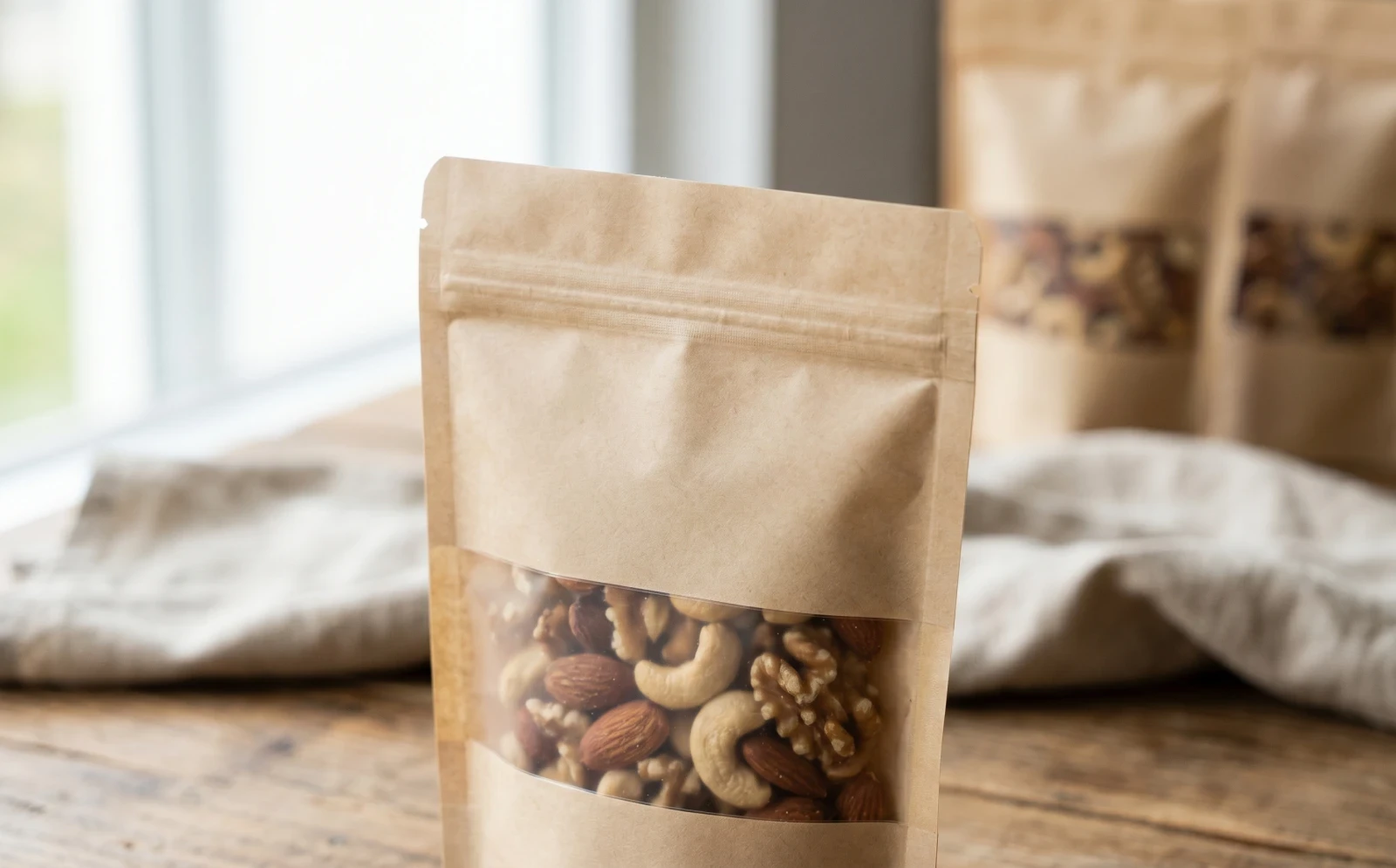
A food packaging machine is a specialized industrial system designed to automate the process of enclosing food products in protective materials to ensure safety, extend shelf life, and maintain quality during distribution. These systems range from simple semi-automatic fillers to complex, fully integrated lines that handle everything from weighing and bagging to final sealing.
You might notice that manual packing often results in inconsistent seal quality and slow output that prevents you from fulfilling large retail orders. These bottlenecks create a ceiling for your business growth and increase the likelihood of product recalls due to contamination. This guide details the fundamental role of these systems and shows how specialized applications provide the reliability needed to scale your production.
What are the technical components of a food packaging machine?
A modern food packaging machine consists of an integrated framework of sensors, dosing units, and sealing mechanisms that work in synchronization via a programmable logic controller (PLC). This hardware ensures that each package is filled to the exact weight and sealed under specific pressure and temperature settings.
The role of the dosing system
The dosing unit is the part of the equipment responsible for measuring the product before it enters the package. Depending on whether you are packing liquids, powders, or solids, the dosing method will vary to ensure accuracy.
Here’s the deal:
- Volumetric fillers measure the product by the space it occupies in a cylinder.
- Auger fillers use a rotating screw to dispense fine powders without creating dust.
- Piston fillers are used for thick liquids like sauces or honey to prevent dripping.
- Multi-head weighers calculate the best combination of portions to reach a target weight.
Structural and safety materials
The materials used to build the machine are just as necessary as its mechanical functions. In food environments, the equipment must resist corrosion from acidic ingredients and withstand frequent washdowns with sanitizing chemicals.
The reality is:
- 304 Stainless steel is the standard for non-contact structural frames.
- 316L Stainless steel is used for all parts that touch the food to prevent metallic contamination.
- Food-grade silicone and Teflon are used for gaskets and sealing jaws to prevent sticking.
| Component | Purpose | Material Used |
| Frame | Structural support | 304 Stainless Steel |
| Dosing Unit | Precision filling | 316L Stainless Steel |
| Sealing Bars | Fusing the film | Teflon-coated Metal |
| PLC Panel | Logic and timing | Industrial Grade Electronics |
A well-constructed system uses high-grade alloys to ensure the longevity of the equipment and the safety of the end consumer.
Key Takeaway: Understanding the mechanical components allows you to identify which parts require the most attention during your daily sanitation protocols.
Why is the application of these machines necessary for safety?
These machines are necessary for safety because they create a controlled environment that minimizes human contact and prevents the entry of aerobic bacteria into the container. Automation ensures that the hygiene standards required by international regulators are met consistently across every batch.
Preventing cross-contamination
Manual handling is a primary source of microbial transfer in food production facilities. By utilizing an automated line, you isolate the product from the surrounding atmosphere until it is securely sealed.
Think about it:
- Closed-loop systems keep powders and liquids away from external pollutants.
- HEPA filtration units can be integrated to provide sterile air over the filling area.
- UV sterilization lamps treat the packaging film before it touches the food.
Ensuring airtight seal integrity
A package that is not perfectly sealed will lead to premature spoilage and wasted inventory. Automated sealing stations use precise sensors to monitor the heat, time, and pressure applied to every bond.
Look at the numbers:
- Thermal sensors monitor jaw temperature 50 times per second.
- Pressure valves ensure the force applied to the film is uniform across the entire seal.
- Cooling phases stabilize the plastic bond before the package is moved.
| Safety Feature | Primary Outcome | Benefit to User |
| Hermetic Sealing | Prevents air entry | Longer shelf life |
| PLC Logic | Eliminates human error | Consistent quality |
| Stainless Surfaces | Resists bacteria growth | Faster cleaning cycles |
Technical synchronization between the filling and sealing modules ensures that the product remains safe from the moment it leaves the processing tank.
Key Takeaway: Safety automation protects your brand from the legal and financial risks associated with contaminated or spoiled food products.
Which industries utilize this packaging technology most frequently?
The snack food, dairy, frozen produce, and pharmaceutical industries utilize this technology most frequently to maintain product stability and meet stringent regulatory requirements. Each sector has unique challenges that require specific machine configurations to handle different product states.
Snacks and dry granule packaging
Snack producers require high-speed machines that can handle fragile items without causing breakage. These systems often use nitrogen flushing to keep the product crisp and prevent oil oxidation.
The truth is:
- Potato chips are packed using vertical systems with low-drop heights.
- Coffee beans require one-way valves to be applied to the pouch during the process.
- Nuts and grains use multi-head weighers to maintain a high speed of up to 120 bags per minute.
Liquid and semi-liquid processing
Liquids present the challenge of splashing and leaking, which can interfere with the sealing process. Specialized nozzles and filling pumps are used to manage the flow rate and prevent contamination of the seal area.
The result?
- Milk and juices are packed in aseptic environments to allow for room-temperature storage.
- Sauces and pastes use anti-drip nozzles to keep the top of the pouch clean.
- Oils require explosion-proof motors if the filling temperature is high.
| Industry | Primary Product State | Common Machine Type |
| Bakery | Solid / Fragile | Horizontal Flow Wrap |
| Condiments | Liquid / Paste | Rotary Pouch Filler |
| Frozen Food | Solid / Granular | Vertical Form Fill Seal |
| Spices | Fine Powder | Auger Filler with Dust Collector |
Matching the machine architecture to the specific needs of your industry prevents mechanical strain and ensures a clean packaging result.
Key Takeaway: The versatility of modern equipment allows it to be adapted for nearly any food or pharmaceutical product with minor adjustments.
How do you choose the right machine for your facility?
You choose the right machine by evaluating your product’s physical state, your required throughput speed, and the specific barrier properties of your intended packaging materials. It is also useful to consult a technical guide on How to Choose a Food Packaging Machine for Modern Lines to ensure you are considering the total cost of ownership.
Assessing production scale
Buying a machine that is too small for your future growth will result in another purchase within a few years. It is better to invest in a system that can handle your current volume while running at 60% capacity.
Think about it:
- Consider the “Bags Per Minute” (BPM) needed to meet your weekly orders.
- Measure your available floor space to ensure the footprint of the machine fits.
- Verify the power and air requirements of the system before installation.
Integration with downstream equipment
A packaging machine is often just one part of a larger production line. You must ensure that the equipment can communicate with other systems to prevent bottlenecks.
Here’s the deal:
- Integrated labelers apply branding and date codes in real-time.
- Metal detectors and X-ray systems scan the finished bags for contaminants.
- Conveyor systems move the bags automatically to the case packing area.
| Selection Factor | Consideration | Importance |
| Product Flow | Viscosity and Dust | High |
| Output Speed | Units per hour | High |
| Material Type | PE / PET / Foil | Medium |
| Factory Layout | Floor space | Medium |
Taking the time to match technical specifications to your product prevents expensive retrofitting or production delays in the future.
Key Takeaway: A successful purchase is based on a deep understanding of your product’s unique needs and your facility’s long-term production goals.
Strategic Production Planning
The transition from manual labor to an automated line is a measurable shift in how you manage your margins and product quality. Reliancepak provides the engineering expertise and high-performance equipment needed to transform your facility into a reliable manufacturing site. Our team is ready to design a system that solves your specific production challenges and prepares you for the global market.
We help you meet the highest food safety standards with machinery that is built for durability and long-term performance.
FAQ
Can I use the same machine for liquids and powders?
No, because the dosing systems are fundamentally different. A powder machine uses an auger or a weigher, while a liquid machine uses a piston pump or a flow meter. Using the wrong system will result in inaccurate filling and mechanical damage.
How do I know if my machine is food-grade?
You check the material certifications to ensure that all surfaces touching the food are made of 316L stainless steel. The machine should also feature a design that has no “dead corners” where bacteria can grow.
What is the typical lifespan of an automated filler?
A well-maintained machine can operate for 10 to 15 years. This longevity depends on your adherence to the manufacturer’s lubrication schedule and the regular replacement of wearing parts like heating elements.
Does an automated system require a specialist to operate?
No, as most systems feature a touch-screen interface with pre-set recipes. An operator can be trained to manage the basic functions within a few days of hands-on experience with the equipment.
Can I pack different bag sizes on one machine?
Yes, provided the machine is equipped with adjustable forming tubes and the software allows for different bag lengths. You will likely need to change the forming set which takes about 15 to 30 minutes.