Choosing the right food packaging machine involves evaluating your product physical state, required production speed, and specific container types to ensure a match that maintains food safety and operational efficiency. This selection process serves as the foundation for your entire production line, determining how well your items are protected during transport and how effectively you can scale your business.
You might be managing a facility where manual packing has caused inconsistent weights and high labor costs, leading to wasted ingredients and slower delivery times. These inefficiencies prevent you from securing contracts with larger distributors who require strict quality control and high-volume output. This guide provides the technical criteria for selecting specialized equipment that solves these bottlenecks and integrates seamlessly into your manufacturing workflow.
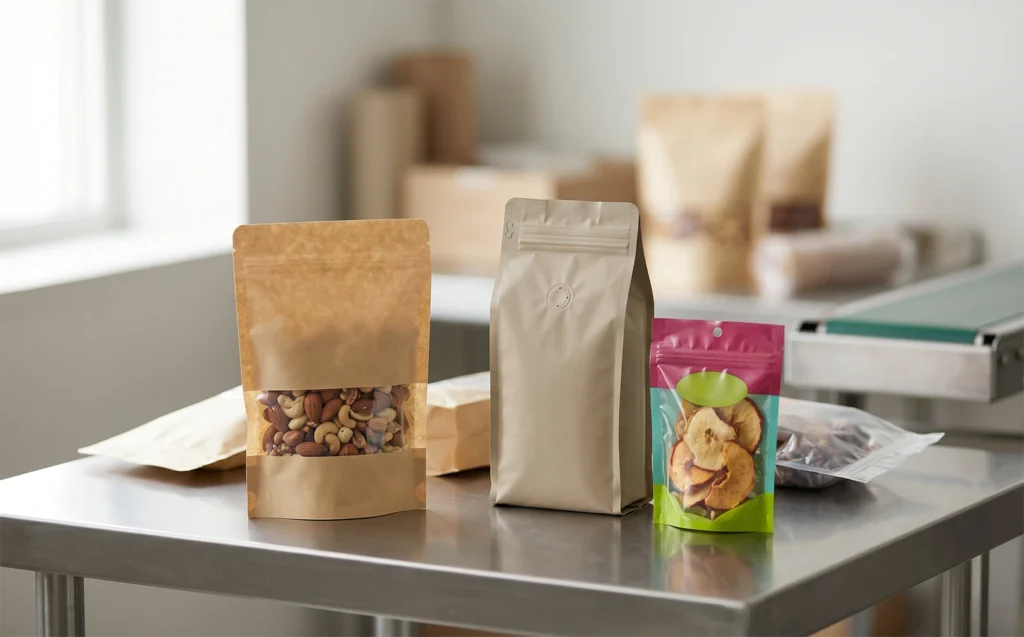
What Factors Should You Consider When Selecting a Food Packaging Machine?
Selecting a food packaging machine requires a detailed analysis of your product acidity, temperature, and texture to ensure the hardware components and sealing mechanisms can handle the specific environment without failure. The chemical composition of your food dictates whether you need specialized stainless steel or specific coating treatments on contact parts to prevent corrosion and contamination.
Here’s the deal:
- Acidic or salty products require Stainless Steel 316L to prevent rust and maintain hygiene standards.
- Sticky or oily items benefit from Teflon-coated surfaces or dimpled plates to ensure smooth product flow.
- Products filled at high temperatures need heat-resistant sensors and specialized seal jaws that operate under thermal stress.
- Fragile items require low-drop heights or synchronized conveyors to prevent breakage during the filling cycle.
| Product Feature | Required Machine Specification | Reason for Selection |
| High Acidity | SS316L Construction | Prevents material corrosion |
| High Viscosity | Piston with heated hopper | Ensures consistent flow |
| Fragility | Low-impact vibratory feeders | Reduces product breakage |
| Fine Powder | Dust extraction integration | Maintains workspace cleanliness |
Using hardware that matches the physical demands of your product prevents premature wear and ensures that your equipment remains compliant with international food safety regulations.
Key Takeaway: Matching the machine metallurgy and surface treatment to your product chemical profile is the first step in ensuring long-term equipment reliability.
How Does Product State Influence the Choice of Filling Technology?
The physical state of your food—whether liquid, powder, or solid—determines if the food packaging machine should utilize an auger filler, a piston pump, or a multi-head weigher for dosing. Each filling technology is engineered to handle specific flow characteristics, and using the wrong system can lead to inaccurate weights or messy seals.
Look at the numbers:
- Auger fillers provide high accuracy for non-free-flowing powders by measuring the number of rotations to dispense a precise volume.
- Piston fillers use mechanical displacement to handle thick liquids and pastes, ensuring that every container receives the exact same amount of product.
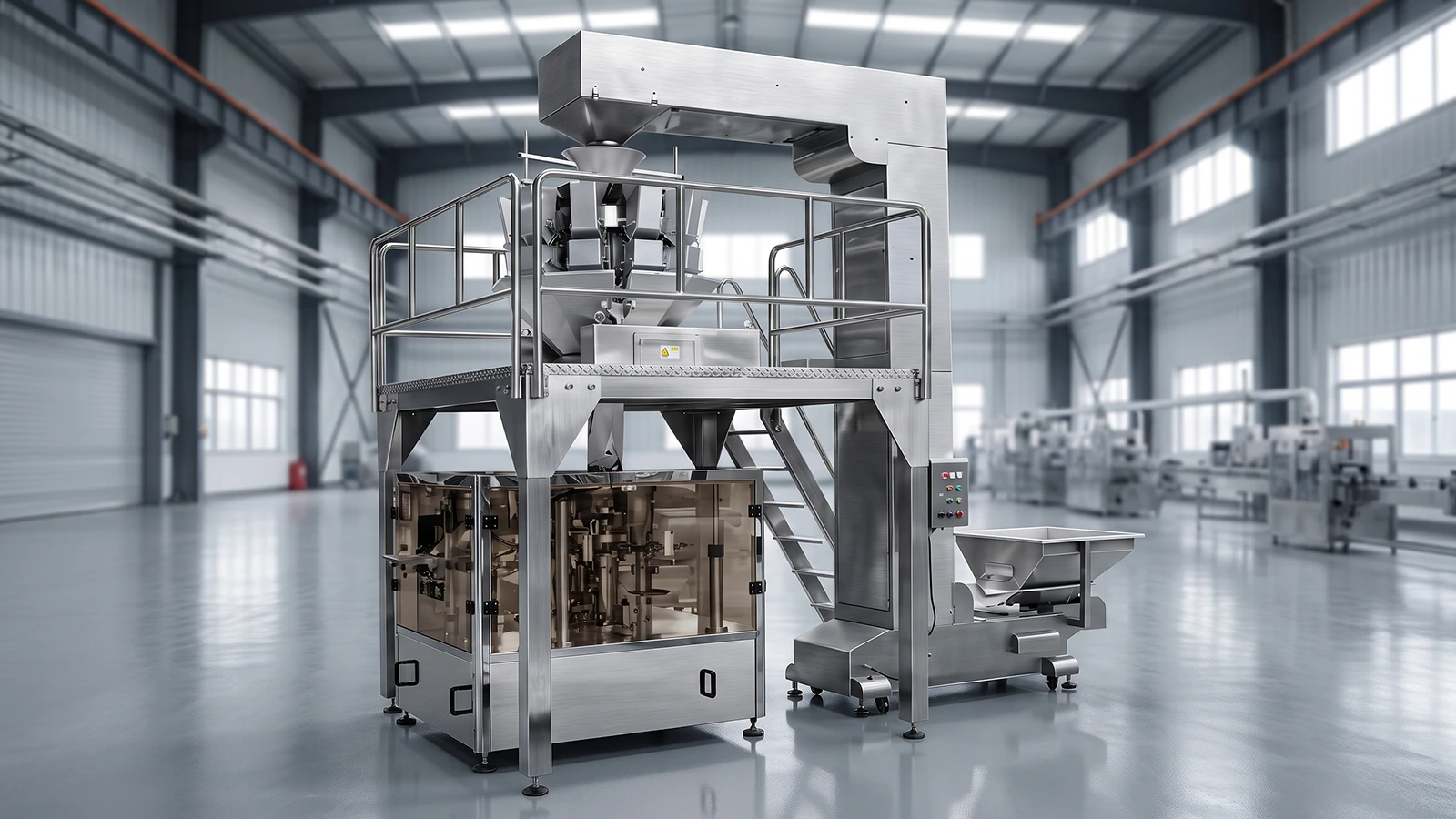
- Multi-head weighers calculate the best combination of product portions to reach a target weight with a margin of error of less than 1%.
- Volumetric cup fillers offer a cost-effective solution for uniform granules like rice or sugar where weight variance is minimal.
| Filling Technology | Best For | Dosing Principle |
| Auger Filler | Flour, coffee, spices | Volume per rotation |
| Piston Pump | Sauces, creams, honey | Mechanical displacement |
| Multi-head Weigher | Snacks, frozen veg, hardware | Computer-calculated weight |
| Peristaltic Pump | Thin liquids, oils | Tube compression |
Identifying the correct dosing method is a vital part of How to Choose a Food Packaging Machine for Modern Lines because it directly impacts your product yield and profit margins.
Key Takeaway: The flowability and density of your product must dictate the dosing technology to avoid material waste and maintain high-speed accuracy.
Why Is Production Scale Critical for Your Equipment Investment?
Production scale dictates the level of automation needed, ranging from semi-automatic units for small batches to high-speed, fully integrated lines for industrial manufacturing. Your target output per hour determines the number of filling heads, the speed of the conveyor system, and the sophistication of the control software required to maintain stability.
The reality is:
- Semi-automatic machines are suitable for startups producing fewer than 1000 units per day with manual container feeding.
- Rotary packaging systems provide high-speed output for pre-made pouches, allowing for more time in the filling and sealing stations.
- Continuous motion VFFS machines allow for the highest speeds because the film never stops moving during the sealing process.
- Modular designs allow you to add components like metal detectors or checkweighers as your volume increases.
| Production Volume | Automation Level | Typical BPM (Bags Per Minute) |
| Small Batch | Semi-Automatic | 5 – 15 BPM |
| Medium Growth | Automatic (Intermittent) | 30 – 60 BPM |
| High Volume | Automatic (Continuous) | 80 – 150+ BPM |
| Multi-Product | Modular / Flexible | Variable |
Purchasing a machine with slightly more capacity than your current needs provides the necessary headroom for seasonal peaks and future market expansion.
Key Takeaway: Investing in a system that can scale with your business prevents the need for expensive equipment replacement as your order volume grows.
How Do You Match Packaging Materials with Machine Capabilities?
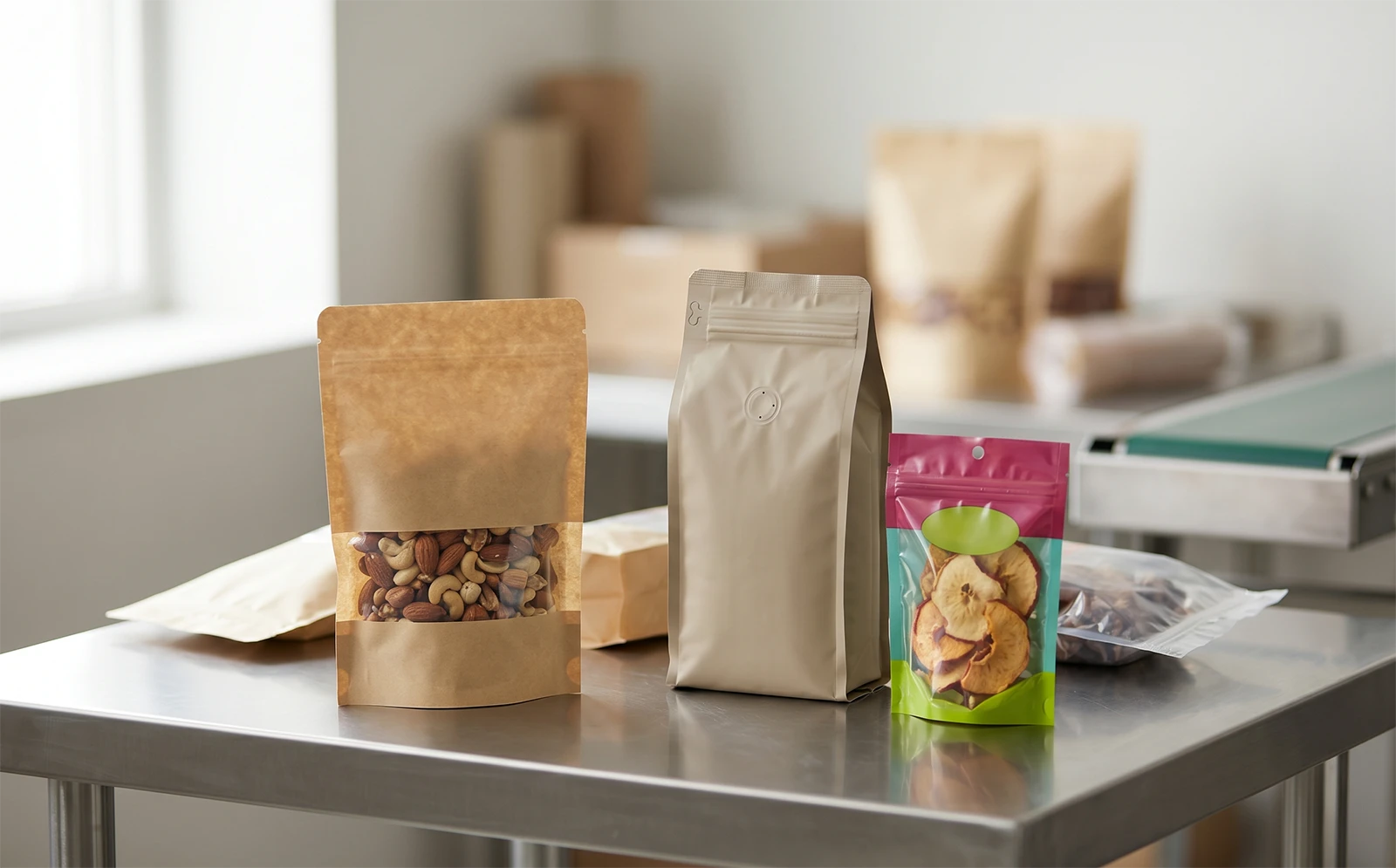
Evaluating your packaging materials is a required step because different films, such as PE, laminates, or compostable paper, require specific heat-sealing technologies and tension controls to create a secure bond. A machine designed for standard plastic films might fail to seal thicker foil laminates or delicate eco-friendly materials without specialized upgrades.
Think about it:
- Polyethylene (PE) films require constant-heat sealing or impulse sealers depending on the film thickness.
- Laminated films with aluminum layers need high-pressure seal jaws to ensure a hermetic barrier against oxygen.
- Recyclable and paper-based films have a narrow sealing temperature window and require ultra-precise PLC thermal control.
- Transparent films with anti-fog coatings need gentle handling to prevent scratching the surface during the forming process.
| Material Type | Seal Requirement | Primary Advantage |
| PE Single Layer | Impulse Sealing | Low cost and high clarity |
| PET/Foil/PE | Constant Heat | Maximum barrier protection |
| Compostable Paper | Precision Thermal Control | Eco-friendly brand image |
| Shrink Film | Heat Tunnel Integration | Tight, professional finish |
Technical synchronization between the film tension system and the sealing jaws ensures that your packaging remains airtight throughout the distribution cycle.
Key Takeaway: Verifying material compatibility before purchase ensures that your machine can handle the sustainable packaging trends of the future.
Securing Your Production Future with the Right Technology
Optimizing your food production starts with choosing a food packaging machine that balances speed, precision, and ease of maintenance. Reliancepak provides the engineering expertise and high-performance equipment needed to transform your facility into a world-class manufacturing site. Whether you are looking for semi-automatic solutions or a fully integrated smart production line, our team is ready to design a system that meets your specific challenges. We help you navigate the complexities of global food safety standards with machinery that is built for reliability and long-term performance.
FAQ
Can I use the same food packaging machine for different container sizes?
Yes. Most modern machines are designed with adjustable forming tubes or grippers that allow you to switch between different bag widths and lengths with minimal downtime.
How do I determine the right speed for my production line?
You should calculate your peak daily demand and add a 20% buffer to ensure the machine can handle growth without running at its absolute mechanical limit.
Does a food packaging machine require specialized power or air supplies?
Yes. Industrial-grade machines typically require 220V or 380V three-phase power and a stable supply of compressed air for pneumatic movements and sealing.
How do I ensure the machine meets my local safety regulations?
You should verify that the supplier provides CE, UL, or CSA certifications and includes safety interlocks and emergency stop buttons as standard features.
Can the machine integrate with my existing labeling or coding equipment?
Yes. High-quality systems feature PLC communication ports that allow them to synchronize with date coders, thermal transfer printers, and labeling machines.