
Food manufacturing is not a single industry. Packaging requirements for fresh poultry differ fundamentally from those for cereal or bottled juice. Automation in food packaging must therefore be configured to match the specific demands of each product category — hygiene constraints, line speeds, environmental conditions, and container formats all vary significantly from one sector to another.
Suppliers that understand these sector-specific needs provide configurations that align with actual production constraints, rather than offering one-size-fits-all systems that underperform on the factory floor.

Fresh and Perishable Foods
Packaging Requirements for Meat, Poultry, and Seafood
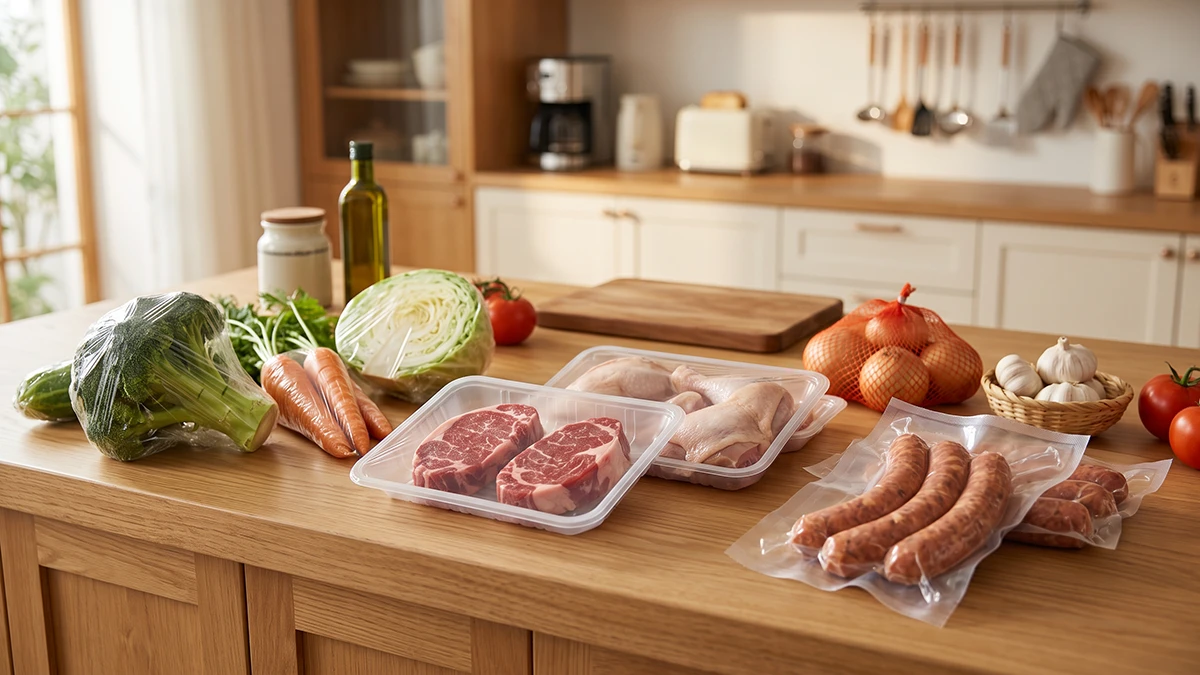
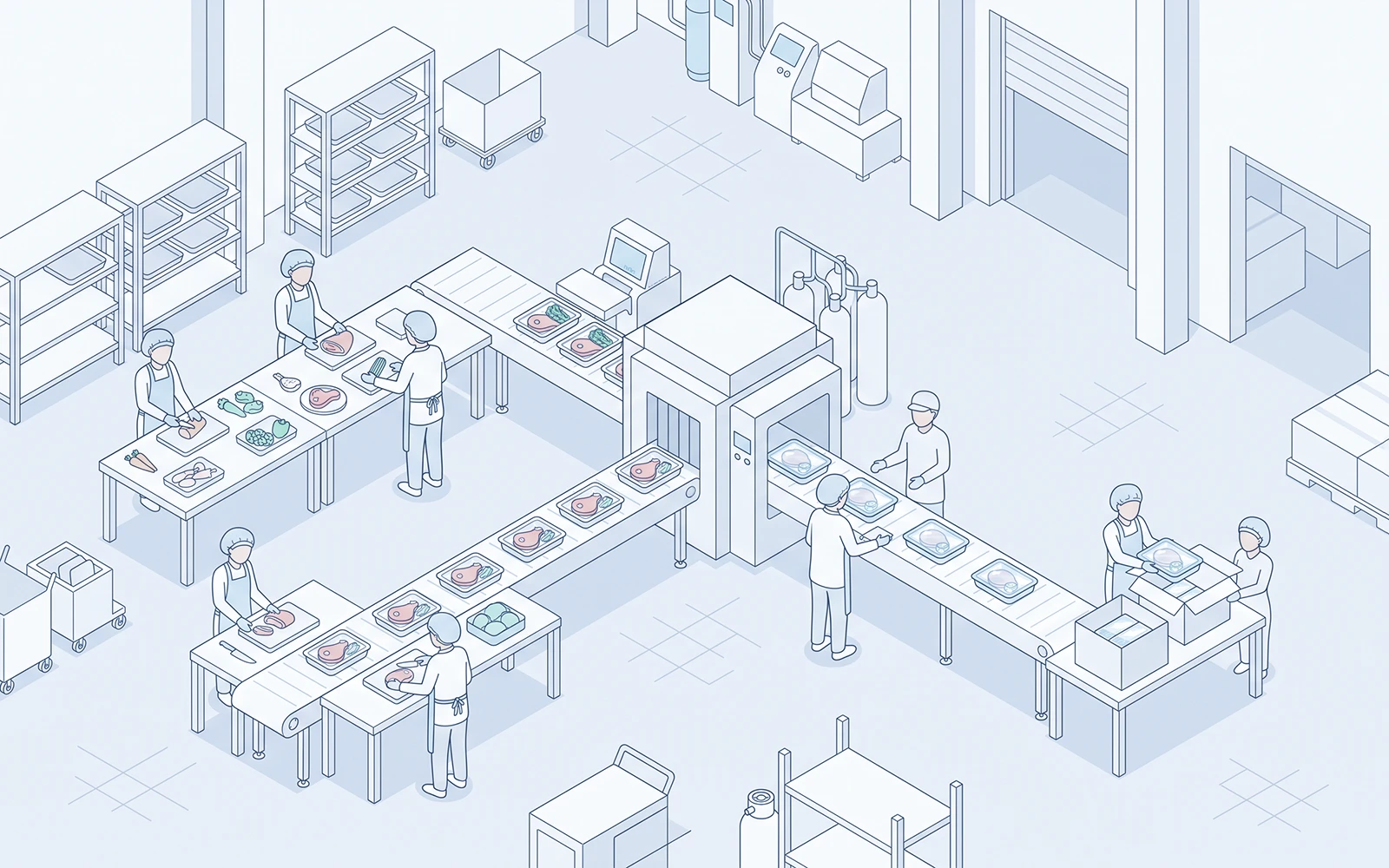
Fresh meat, poultry, seafood, and prepared meals demand packaging that preserves product quality under strict hygiene standards. Modified atmosphere packaging (MAP) is the dominant approach here. Tray sealers and thermoformers create gas-flushed packages that extend chilled shelf life, which is critical for retailers managing short replenishment cycles.
Equipment Design for Wash-Down Environments
Equipment in this sector must withstand frequent wash-down with aggressive sanitizers. Stainless steel construction, IP69K-rated components, and sloped drainage surfaces are standard features. These specifications are not optional — they are regulatory requirements in most markets.
Production speeds in fresh food lines are typically moderate, running at 15–40 packages per minute. Irregular product shapes make consistent indexing more difficult, which limits throughput compared to uniform packaged goods.
Dry Goods and Snack Foods
High-Speed Bagging and Weighing Systems
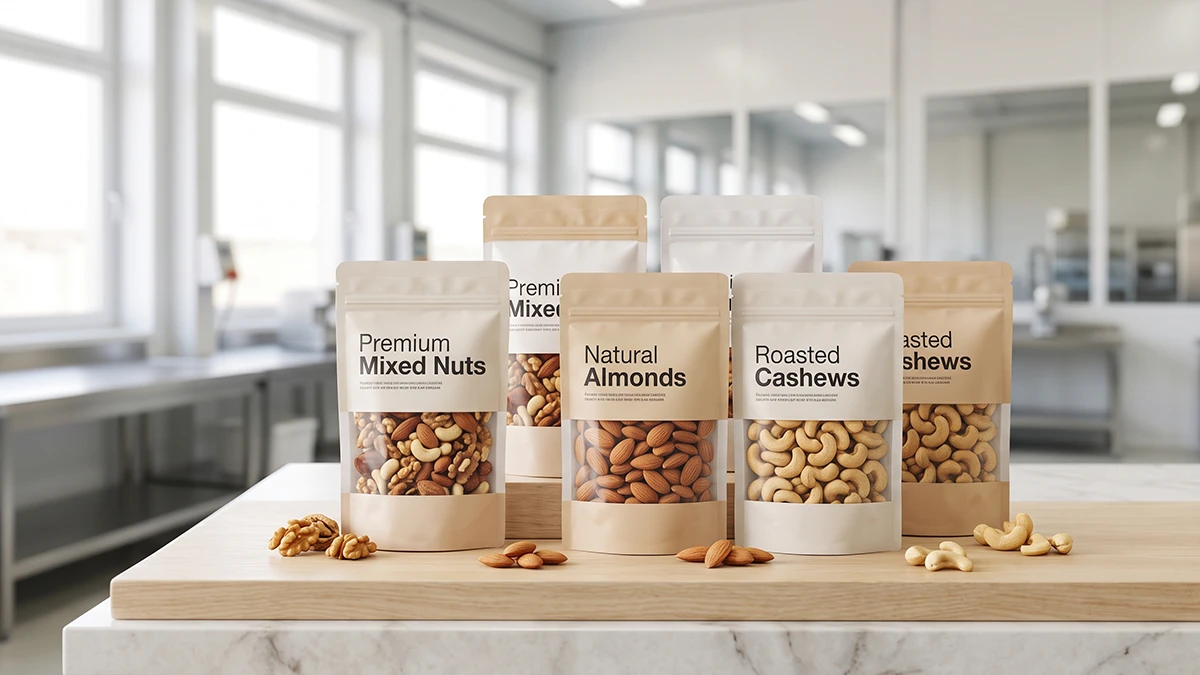
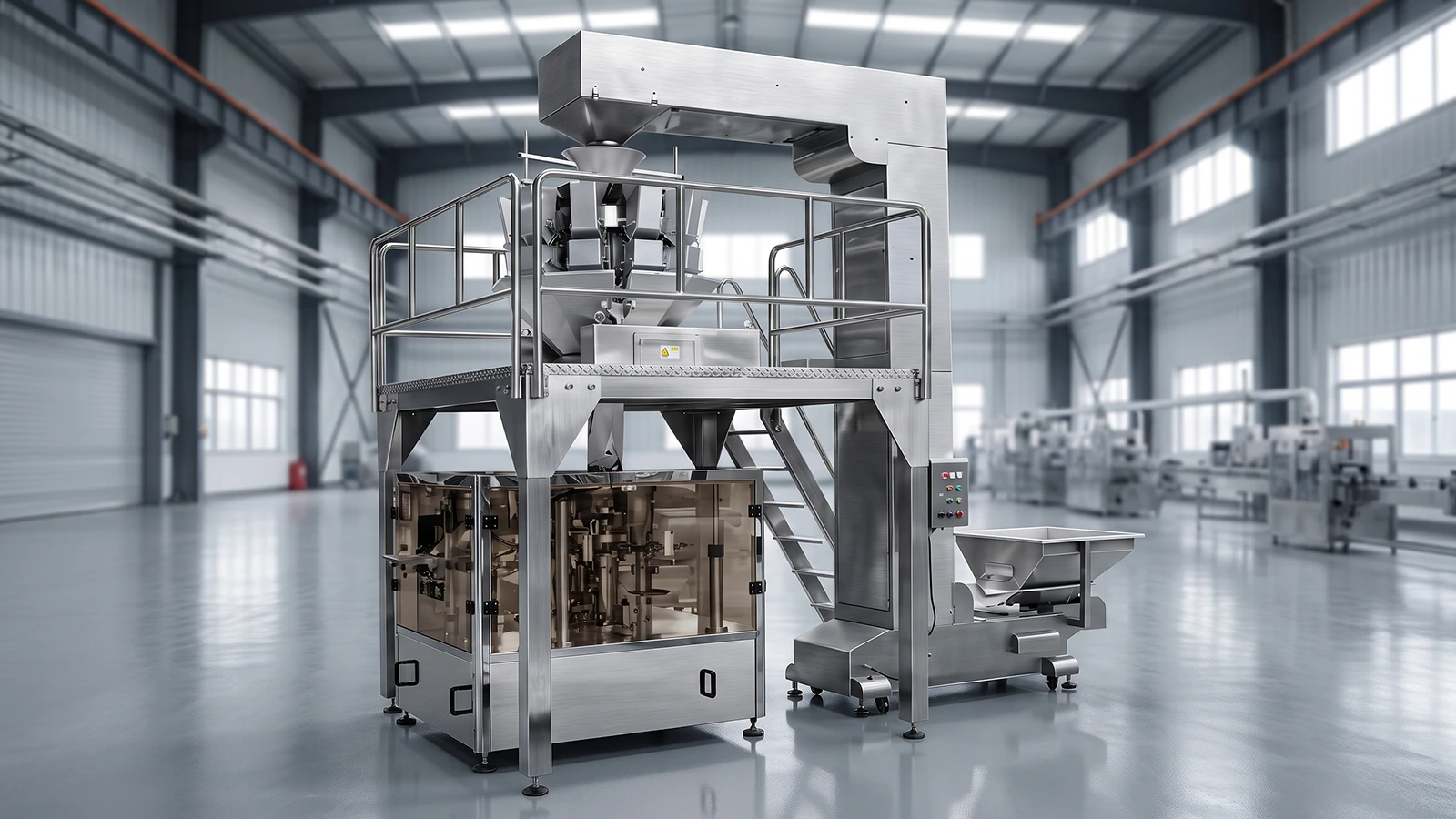
Chips, nuts, grains, and coffee are among the most automated food packaging categories. Multi-head weighers feeding vertical form-fill-seal (VFFS) baggers commonly achieve 60–120 bags per minute. This speed advantage comes from the uniform product geometry and the absence of liquid components that complicate sealing.
Managing Dust, Static, and Seal Integrity
Key challenges in dry goods automation include dust management, static electricity affecting film handling, and seal quality despite product particulates contaminating the seal area. Nitrogen flushing is frequently integrated into these lines to extend shelf life, particularly for oxygen-sensitive products like coffee and snack foods.
Unlike fresh food equipment, dry goods machinery operates in a dry environment. This eliminates the need for wash-down specifications, reducing both equipment cost and maintenance complexity.
Beverages and Liquid Products
Filling Technology Selection
Bottled water, juices, sauces, and edible oils require filling equipment that handles foaming, viscosity variation, and drip prevention. Piston fillers work well for viscous products like sauces. Gravity fillers suit thin liquids. Flowmeter-based systems offer flexibility across multiple product types within a single line.
Downstream Packaging at High Speeds
Downstream packaging includes wrap-around labelers and case packers designed around specific container geometries. High-speed beverage lines can exceed 200 containers per minute, which demands precise conveyor synchronization and reject accuracy that mid-speed lines typically do not require.
Frozen Foods
Packaging Below Freezing
Frozen vegetables, fish, and ready meals present the challenge of packaging in sub-zero environments. Ice accumulation affects sealing quality and sensor accuracy. Product bridging in weigher buckets — where frozen pieces clump together instead of flowing individually — causes unplanned downtime.
Equipment Adaptations for Cold Environments
Equipment for frozen food lines requires heated seal bars, anti-ice coatings, and climate-controlled electrical cabinets. Many facilities use VFFS machines with extended cooling zones on seal bars, which prevents product thaw at the seal interface and maintains seal integrity throughout production runs.
Sector Comparison at a Glance
| Sector | Typical Speed | Key Challenge | Wash-Down Required |
|---|---|---|---|
| Fresh & Perishable | 15–40 ppm | Irregular product shapes, hygiene compliance | Yes — aggressive sanitizers |
| Dry Goods & Snacks | 60–120 bpm | Dust, static, seal contamination | No |
| Beverages & Liquids | 200+ cpm | Foaming, viscosity, drip control | Moderate |
| Frozen Foods | Variable | Ice accumulation, product bridging | Limited — moisture management focus |
Frequently Asked Questions
What type of automation is best for small-scale food producers?
Semi-automatic tray sealers and entry-level VFFS machines offer a practical starting point. These systems reduce manual labor without requiring the capital investment of fully automated lines, and they can be scaled up as production volume grows.
How does automation in food packaging differ between wet and dry products?
Wet products require wash-down-rated equipment with stainless steel construction and sealed electrical components. Dry product lines operate in standard industrial environments, which lowers equipment specifications and reduces ongoing maintenance costs.
Can one packaging line handle multiple food categories?
Generally, no. Each food sector has distinct hygiene, speed, and environmental requirements. Attempting to serve multiple categories with a single line typically results in compromises that reduce efficiency across all products. Dedicated or purpose-configured lines perform better.
What is the typical ROI timeline for food packaging automation?
This depends on labor costs in your region, production volume, and the complexity of the system installed. Many operations see payback within 12 to 24 months, though high-speed beverage lines may recover investment faster due to volume throughput.