
Choosing the right supplier for automation in food packaging is not a procurement checkbox — it is a long-term operational decision. The equipment you buy will run for years, but the relationship behind that equipment determines whether those years are productive or painful. A well-built machine from a supplier with poor support causes more frustration than a simpler machine backed by responsive service.
This guide walks through the practical criteria that separate dependable suppliers from risky ones, so you can evaluate options with confidence.

Evaluate Technical Capability and Breadth of Product Range
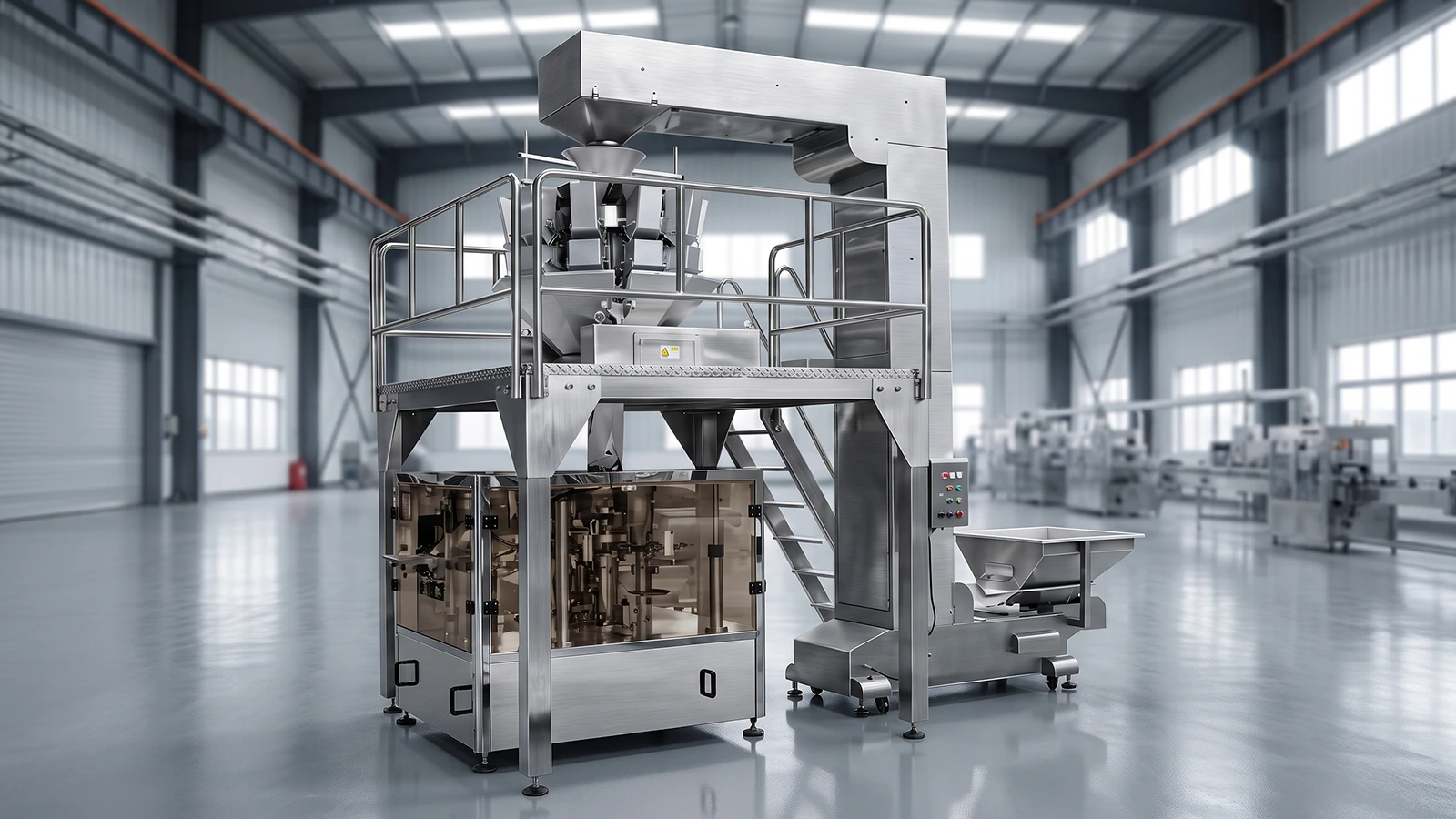
A supplier’s product range tells you something important about how their equipment works together. Suppliers manufacturing baggers, checkweighers, and case packers have a built-in incentive to ensure those machines communicate reliably across your line. You get fewer integration headaches and a single point of accountability when something underperforms.
Specialists may offer deeper expertise in a single machine type, but that shifts the integration burden onto your team. Many food manufacturers lack the internal resources to act as their own system integrator — and that gap often surfaces during commissioning, when timelines are already tight.
What to ask during evaluation:
- Can the supplier provide reference installations in your specific food sector (bakery, fresh produce, frozen, etc.)?
- Do their machines share a common control platform or communication protocol?
- What is their track record with lines at your target throughput range?
| Evaluation Criteria | Broad-Range Supplier | Single-Machine Specialist |
|---|---|---|
| Integration complexity | Lower — built-in compatibility | Higher — buyer acts as integrator |
| Single point of support | Yes | No — multiple vendors involved |
| Depth on one machine type | Moderate | Potentially deeper |
| Commissioning timeline | Typically shorter | Often longer |
Assess After-Sales Support and Spare Parts Availability
Geographic distance from the supplier’s service base directly affects your downtime exposure. Local representation, stocked spare parts, and remote diagnostic capability are not luxuries — they are the difference between a four-hour fix and a four-day wait.
When speaking with potential suppliers, request specific commitments rather than general assurances. Same-day dispatch for critical items and defined lead times for non-stocked components should be standard expectations, not special requests.
Key support factors to confirm:
- Spare parts strategy: Which components are stocked locally, and what are typical lead times for the rest? Machines relying on custom-machined parts from overseas for routine wear items introduce unnecessary downtime risk.
- Remote diagnostics: Remote support resolves many control and software issues without dispatching a technician. This reduces both cost and response time significantly.
- Training scope: Effective training covers both operator-level interface use and maintenance-level troubleshooting. Training delivered at your facility, using your actual product and materials, produces far better results than generic classroom sessions.
Understand Customization vs. Standard Equipment Trade-offs
Standard machines cost less, ship faster, and carry proven field reliability. Customized machines address specific handling requirements but introduce development risk and longer lead times. The decision is rarely all-or-nothing.
The pragmatic approach is standard equipment wherever possible, reserving customization for the areas that genuinely affect your product: infeed conveyors, control integration points, and product contact surfaces. Suppliers offering both customization capability and a standard product line give you flexibility without forcing you into a fully bespoke project — which almost always costs more and takes longer than initially quoted.
Reliancepak, for example, manufactures a comprehensive range of packaging machinery — from semi-automatic units to fully automated lines — while also providing tailored customization and technical support services. This combination lets food producers scale automation at their own pace rather than committing to an oversized system on day one.
Verify Quality Assurance and Compliance Standards
Food packaging automation must meet regulatory requirements in your target market. Ask suppliers about their quality management certifications and whether their equipment complies with relevant food-contact material standards.
A supplier’s willingness to provide documentation — test reports, material certificates, compliance declarations — signals how seriously they treat quality. Silence or vague responses on these topics is a red flag worth noting early.
Consider Delivery Timelines and Commissioning Support
Delivery is not just about when the machine leaves the factory. Confirm that the quoted price includes on-site installation supervision. Machines that perform well at the supplier’s factory often need adjustment when running with your specific utilities, environmental conditions, and product characteristics.
Reliable suppliers plan for this reality. They budget time for commissioning, assign experienced technicians to on-site startup, and do not consider the project finished until the line runs at agreed performance levels with your product.