
An automated food packaging line is only as reliable as its weakest station. When one machine underperforms, the entire downstream flow suffers — filling delays cascade into sealing bottlenecks, and inspection rejects pile up faster than operators can respond. For buyers evaluating automation in food packaging, understanding the role of each machine type is the first step toward building a line that runs consistently at target speeds without constant manual intervention.
This guide walks through the core machine categories found in a typical automated food packaging line, what each one does, and where procurement decisions tend to create problems if overlooked.

Filling and Dosing Equipment
Filling machines are responsible for delivering precise product quantities into containers. The right filler depends heavily on product characteristics — a volumetric filler works well for free-flowing granular products like rice or dry beans, but it struggles with sticky or irregularly shaped items that bridge in the hopper.
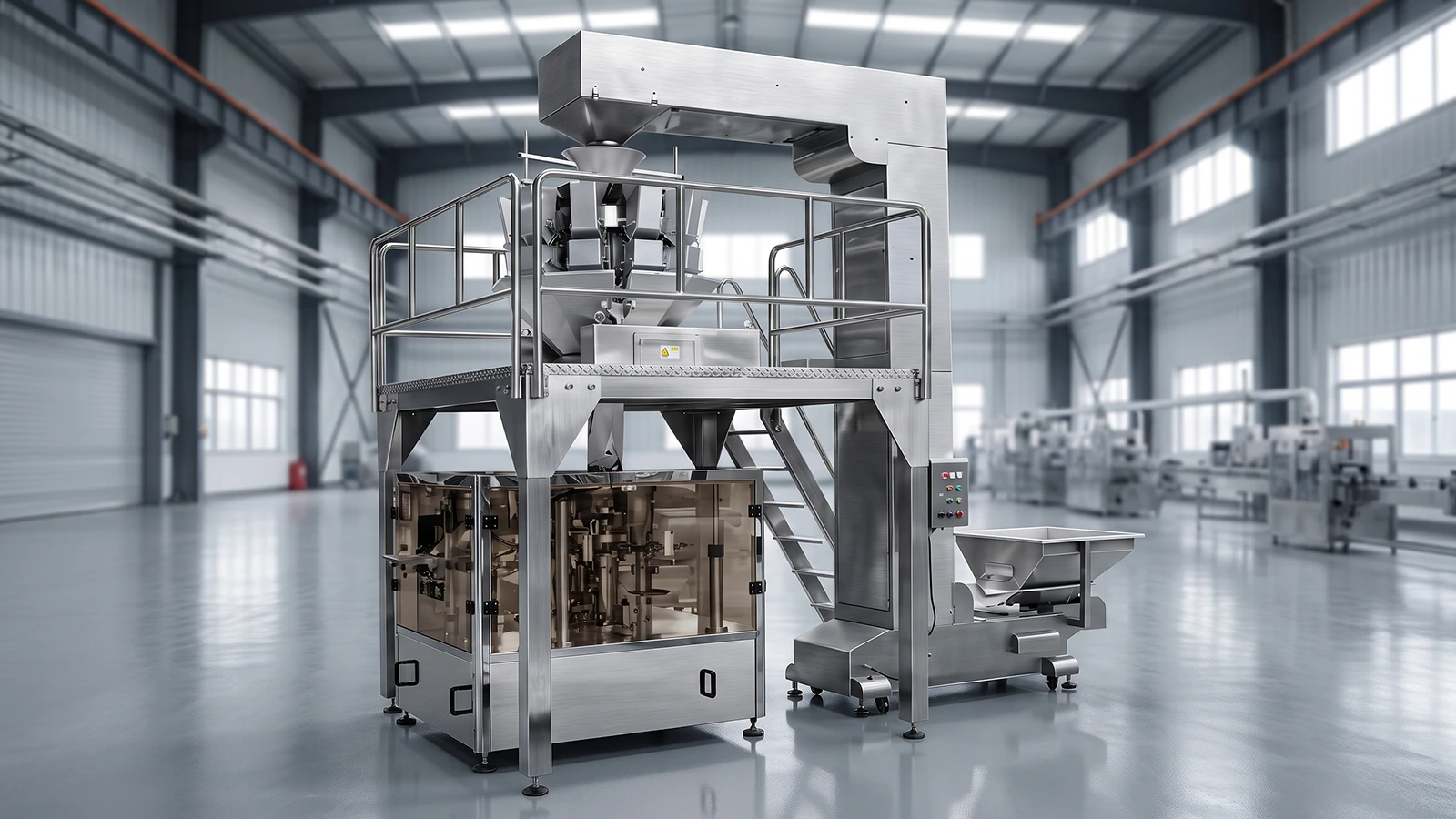
Multi-head weighers are the standard choice for snacks, frozen vegetables, and confectionery. They combine multiple weigh buckets to achieve both high speed and tight accuracy, typically within ±0.5 to ±1 gram depending on the product. For liquid products ranging from water to viscous sauces, piston, gravity, or pump-based systems are used. Viscosity matters here — a gravity filler that handles water cleanly will fail on a thick chili sauce without modification.
Weight giveaway is a real cost driver. Even a small overfill per package adds up to significant product loss over a production shift. Buyers should ask suppliers for actual giveaway data under test conditions, not just theoretical specifications.
Sealing and Closing Machines
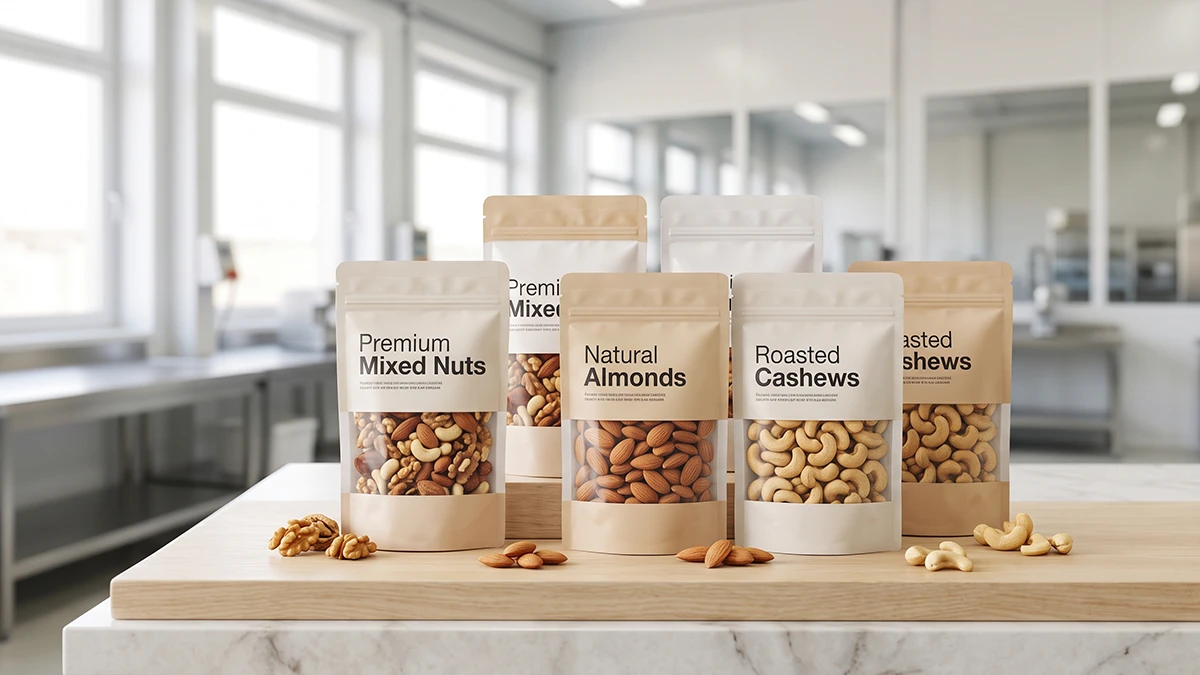
Sealing protects product integrity and prevents contamination during distribution. The sealing method must match both the packaging material and the product’s shelf-life requirements.
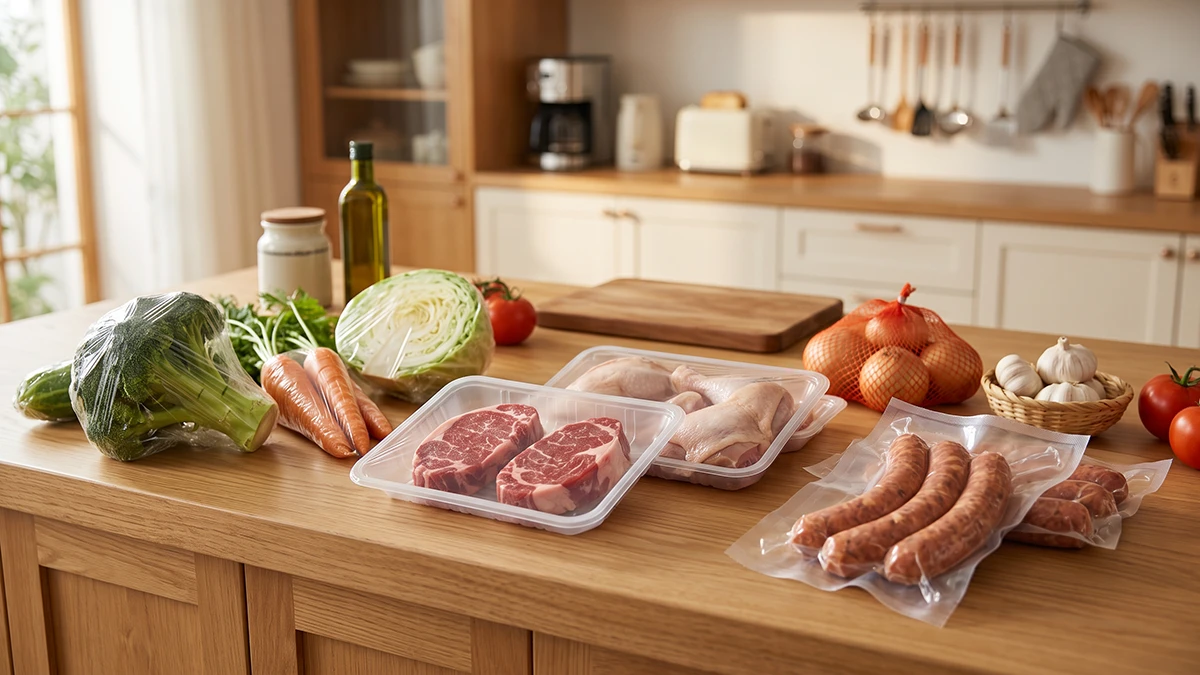
Continuous band sealers are common for pillow bags and pouches. Tray sealers handle modified atmosphere packaging (MAP) for fresh meats and prepared meals — they replace air inside the package with a gas mixture that extends shelf life significantly. Vacuum packaging machines remove air entirely, which is preferred for products where oxidation degrades quality. Cap tighteners serve rigid containers like jars and bottles.
One area buyers sometimes underestimate is seal integrity testing. A seal that looks acceptable may still fail under transport stress. Ask whether the equipment integrates seal validation or if that requires a separate station.
Labeling, Coding, and Inspection Systems
Labeling machines apply labels with consistent placement across high-speed runs. Wrap-around labelers handle cylindrical containers; pressure-sensitive labelers work on flat or irregular surfaces. Print-and-apply systems generate variable data — batch codes, barcodes, expiration dates — directly on the line without requiring pre-printed label inventory.
In-line inspection equipment verifies each package before it moves downstream. This is where automation in food packaging directly intersects with food safety compliance and retailer requirements.
| Inspection Type | What It Detects | Common Application |
|---|---|---|
| Checkweighers | Underweight/overweight packages | Weight verification on every unit |
| Metal Detectors | Ferrous and non-ferrous metal fragments | Mandatory in most food safety programs |
| X-Ray Systems | Metal, glass, stone, dense plastic | Retailer-mandated contaminant detection |
| Vision Systems | Label presence, print quality, seal defects | Packaging appearance verification |
Checkweighers confirm declared weight and reject underweights while flagging overweights to reduce giveaway. Metal detectors and x-ray systems identify contaminants — x-ray goes further by detecting glass, stone, and dense plastic, which is often mandatory under retailer audit requirements. Vision inspection cameras verify label placement, print legibility, and seal integrity, with reject trends providing early warning of upstream issues.
Case Packing and Palletizing Equipment
End-of-line machines pack primary packages into shipping cases and arrange them onto pallets. Robotic palletizers stack cases in predefined patterns optimized for load stability during transport. Stretch wrappers secure palletized loads for shipment.
In high-volume facilities, these machines eliminate the most physically demanding manual segment of the packaging line. For mid-volume operations, semi-automatic case packers with manual case erecting may offer a better cost-performance balance than a fully automated system.
A well-configured line flows product smoothly with buffer zones between stations. These buffers absorb minor speed variations so that a brief slowdown at the labeler does not stop the filler upstream. Without them, even small disruptions cause cascading downtime.
How to Evaluate Equipment Suppliers
When comparing packaging machine suppliers, focus on these areas:
- Trial runs: Request test runs with your actual product, not just a demo with ideal sample material.
- Spare parts availability: Long lead times on replacement parts can sideline a machine for weeks.
- Integration support: Each machine must communicate with upstream and downstream equipment. Ask about control system compatibility.
- After-sales response: When a sealing jaw fails during a production run, response time matters more than brochure promises.
Suppliers like Reliancepak, which offer both standalone machines and complete line solutions, can simplify coordination compared to sourcing each station from a different manufacturer.
Matching Machine Selection to Product Requirements
There is no universal “best” machine configuration. A snack food producer running 120 pillow bags per minute has completely different needs than a fresh meal tray operation requiring MAP sealing at 40 trays per minute. Product characteristics, packaging format, required shelf life, and target throughput all influence which machines make sense.
Start with the product and packaging format, then work backward to the equipment — not the other way around. Buyers who begin with a machine catalog rather than a product specification often end up with equipment that underperforms in their specific application.
FAQ
Can I mix machines from different manufacturers in one packaging line?
Yes. Most modern packaging machines use standard communication protocols. However, integration testing is critical — verify that control systems communicate reliably before committing to a mixed-vendor configuration.
How do I determine the right filling machine for my product?
Consider product flow characteristics, target fill speed, and required accuracy. Free-flowing granules suit volumetric fillers; irregular or sticky products often need multi-head weighers or specialized dosing systems.
What inspection equipment is required for food safety compliance?
Metal detection is a baseline requirement in most food safety programs. Retailer audits increasingly require x-ray inspection as well. Checkweighers are standard for weight verification. Requirements vary by market and customer.
How much space does a typical automated packaging line require?
A medium-speed line with filling, sealing, labeling, inspection, and case packing typically requires 15 to 25 meters of linear floor space, plus buffer zones. Exact dimensions depend on equipment footprint and conveyor configuration.