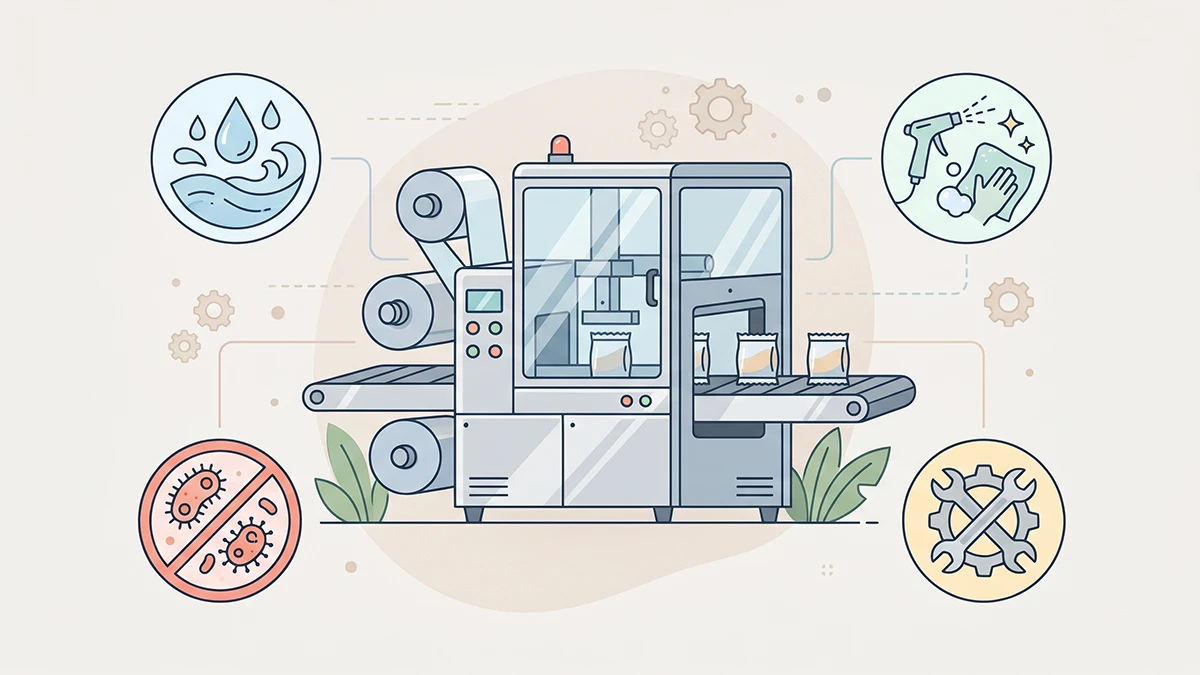
If you run a food processing plant, you already know that cleaning packaging equipment is rarely a ten-minute job. Between production shifts, hygiene audits, and product changeovers, washing down a machine can quietly consume hours of labor every week — and any spot you miss becomes a food safety risk.
That is why easy-to-clean design has become one of the most practical purchase criteria when buying a food packaging machine. In this article, we break down the real cleaning problems most plants face, explain what to look for when comparing equipment, and introduce an easy-disassembly machine series built specifically to cut washing time and sanitary risk.
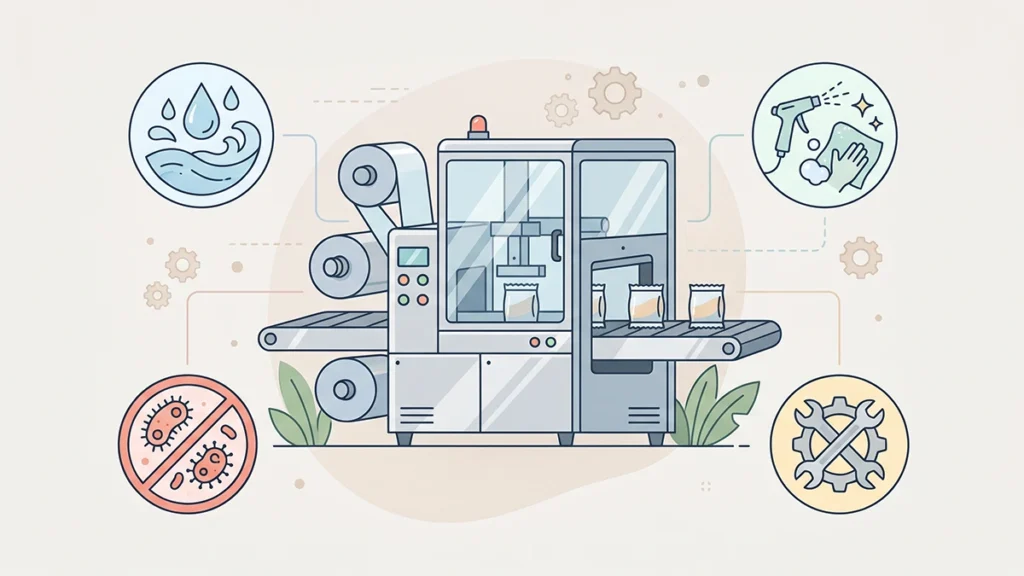
The Hidden Cost of Hard-to-Clean Packaging Machines
Disassembly That Eats Into Production Time
On many conventional machines, a full washdown means removing guarding panels, unscrewing conveyor plates, and dismantling sealing jaws with hand tools. A two-person crew can spend a large part of a shift just getting the machine ready to wash — then assembling it all back again.
For plants running multiple changeovers per day, that accumulated downtime rarely appears on any cost report — but it quietly erodes output.
Sanitary Dead Zones You Cannot See
Enclosed frames, horizontal ledges, hollow welds, and gap-filled product contact points are classic sanitary dead zones. Residue builds up inside them, and no amount of surface wiping removes it. Under warm, humid conditions, these pockets can support bacterial growth and attract pests.
When an auditor swabs the inside of a machine frame or lifts a conveyor belt to check the underside, what they find often determines whether your facility passes. Equipment geometry, not cleaning effort, is frequently the deciding factor.
Water and Electrical Components: A Dangerous Mix
Food machinery must be washed with water — yet many standard machines place motors, sensors, junction boxes, and wiring in vulnerable positions. Water ingress during washdown leads to short circuits, sensor failures, and corrosion of exposed fasteners.
The result is a familiar pattern: the machine cleans up fine today, then trips a breaker or throws an error code tomorrow. Repair costs are only part of the damage; unplanned stoppages during peak production are usually worse.
Why Hygiene Compliance Raises the Bar
Food safety regulations such as FDA requirements in the United States and EU hygiene standards have pushed cleanability from a nice-to-have to an inspection criterion. HACCP and GMP programs expect processors to prove that product contact surfaces can be effectively cleaned and verified.
In many scenarios, a machine that cannot be quickly disassembled simply cannot be properly validated. Inspectors increasingly look for equipment designed according to hygienic design principles: sloped surfaces that drain, smooth welds, and tool-free removal of product zone parts. Choosing compliant equipment upfront is typically far cheaper than retrofitting or defending a failed audit later.
Common Weaknesses of Standard Machines on the Market
Buyers comparing suppliers will notice recurring design shortcomings across entry-level and even some mid-range machines:
- Screwed-on panels and guards that require tools and 30–60 minutes of labor to open for cleaning
- Flat, enclosed base frames where water pools and residue accumulates unseen
- Exposed or poorly sealed electrical boxes positioned directly above wash zones
- Mild-steel fasteners and brackets that rust after weeks of daily wet cleaning
- Complex product contact assemblies with crevices that defeat even thorough sanitizing
None of these issues shows on the showroom floor. They surface a month into operation, when your sanitation schedule slips and your maintenance log fills with water-related faults.
What to Check Before You Buy: A Practical Selection Checklist
When evaluating an improved, easy-clean packaging machine, focus your questions on five areas. The table below summarizes what to verify with each supplier:
| Check Point | What to Ask | Why It Matters |
| Quick-release parts | Can product contact parts be removed by hand, without tools? | Cuts disassembly time from hours to minutes |
| Materials | Is the frame stainless steel, and are fasteners corrosion-resistant? | Prevents rust contamination and structural wear |
| Washdown protection | What is the IP rating of motors and electrical enclosures? | Determines whether water contact causes failures |
| Frame geometry | Are surfaces sloped, open, and free of horizontal ledges? | Eliminates sanitary dead zones and pooling |
| Full cleaning time | How long does a complete washdown and reassembly take? | Directly measures weekly labor cost and downtime |
Beyond this checklist, request a live or recorded disassembly demonstration. A supplier confident in their easy-clean design will show it without hesitation — and the video will tell you more than any specification sheet.
Our Easy-Disassembly Packaging Machine Series
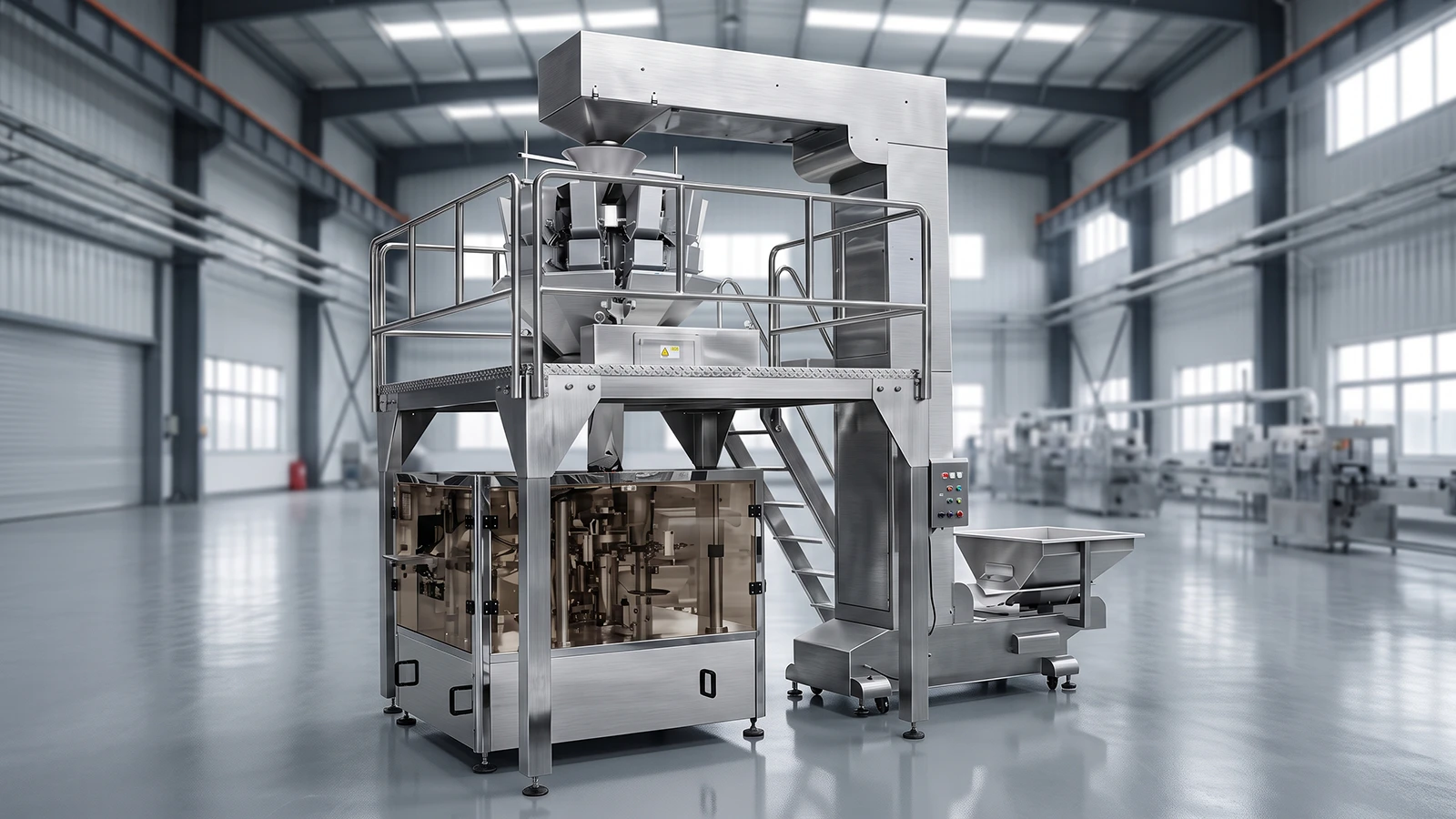
These are exactly the problems our engineers set out to solve. The easy-disassembly packaging machine series from Autopackline was developed after years of watching food processors struggle with washdown routines on conventional equipment.
Tool-free quick-detach design. Product contact parts — forming collars, sealing jaws, conveyor elements, and guards — release by hand in seconds. Your sanitation team can strip the product zone, wash it thoroughly, and reassemble without a single tool, dramatically reducing changeover and cleaning time.
Fully washable construction. Because the design anticipates wet cleaning rather than merely tolerating it, the machine can be washed down directly with water during routine sanitation. No more covering control panels with plastic sheets or tiptoeing around sensitive areas with a damp cloth.
Upgraded waterproof and rustproof structure. Electrical components sit in sealed, elevated enclosures positioned away from spray paths, with protected cable routing throughout the frame. Stainless materials and corrosion-resistant fasteners are used where water and product meet, so daily washdowns do not degrade the machine over time.
For plants handling sauces, powders, fresh produce, or any high-moisture product, this series turns cleaning from a production bottleneck into a routine step. If you would like specifications for your specific product and bag size, contact us for a quote and our team will recommend the right configuration.
FAQ
How often should a food packaging machine be cleaned?
It depends on the product and your HACCP plan, but most food plants perform a full washdown at least once per production day, with spot cleaning between product changeovers. Wet, sticky, or allergen-containing products typically require more frequent full cleaning.
Can easy-disassembly machines really reduce downtime?
Yes. Because product contact parts release by hand without tools, disassembly that once took 30–60 minutes can often be completed in a few minutes. The exact saving depends on your machine model and cleaning procedure, but the labor reduction is consistent across daily operation.
Is a water-washable machine safe for its electrical system?
Yes, when the design includes sealed enclosures with an appropriate IP rating, elevated component placement, and protected cable routing. This is precisely why easy-clean machines are engineered around washdown protection rather than standard dry-environment layouts.
Does easy-clean design cost more upfront?
Typically yes, modestly. However, most processors recover the difference through lower sanitation labor, fewer water-damage repairs, and reduced audit risk. The payback period depends on your cleaning frequency and production volume.
Do these machines meet FDA and EU hygiene requirements?
Our food contact parts use food-grade stainless materials, and the machine design follows recognized hygienic design principles. Contact us to confirm the compliance documentation for your specific market.