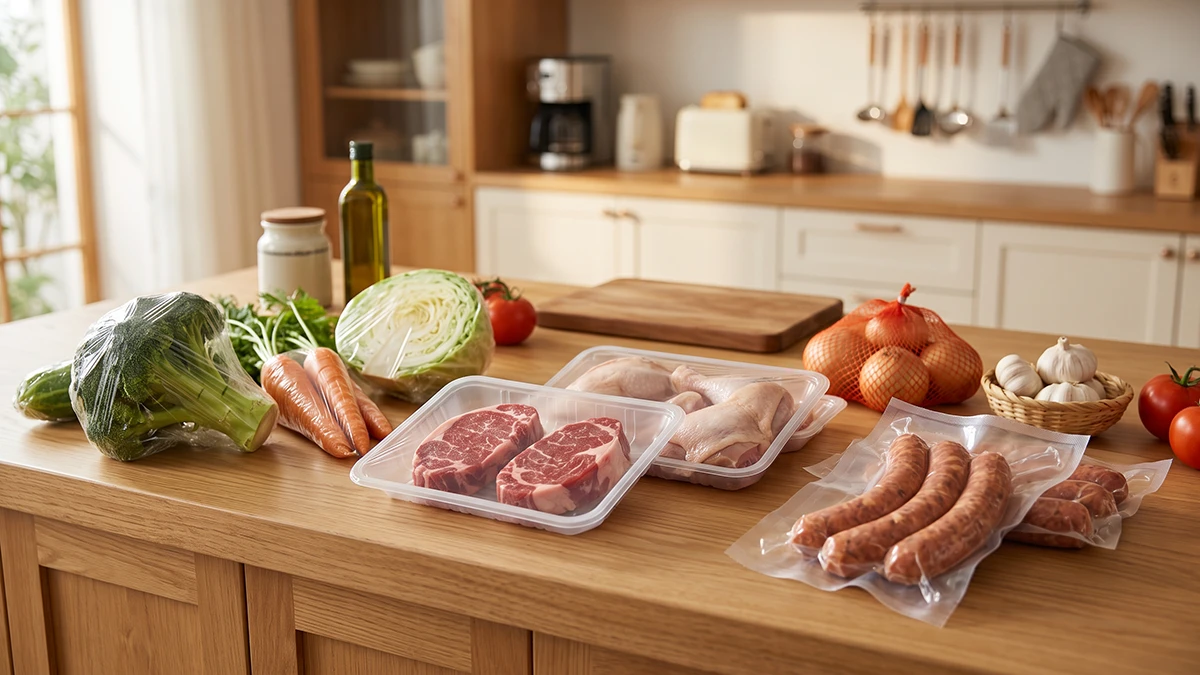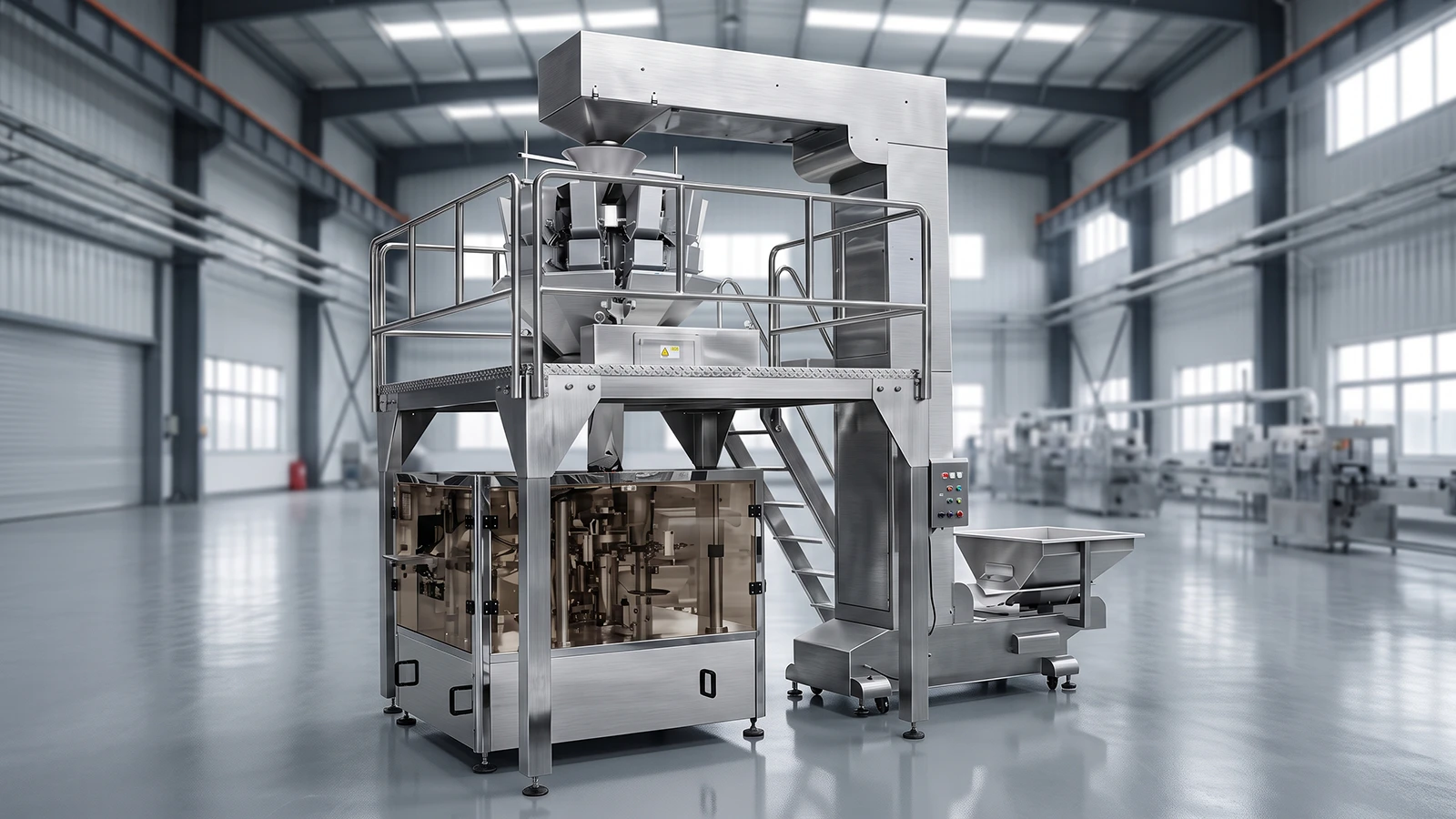
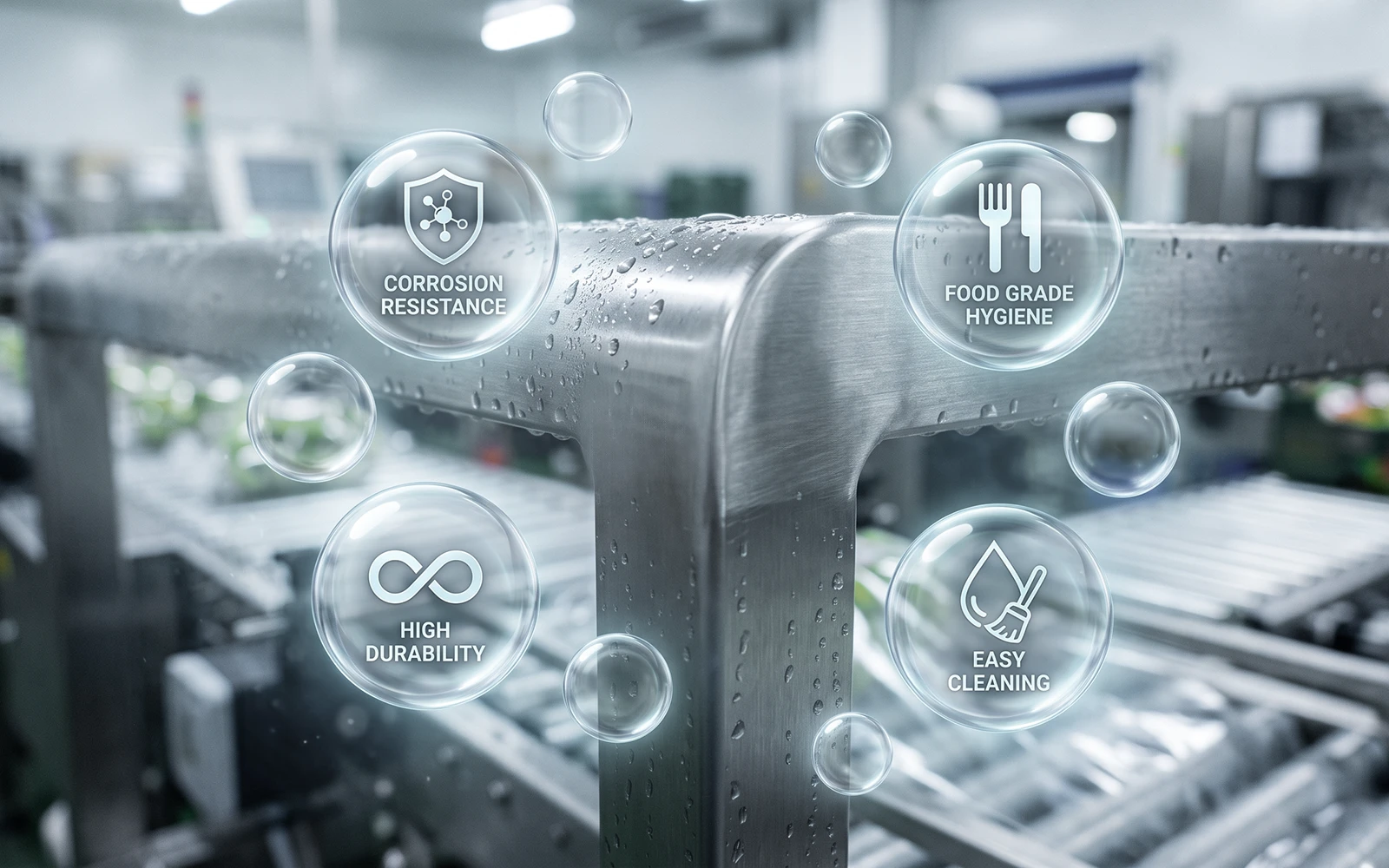
A cling film wrapping machine inside a fresh produce center spends its working life in cold, damp, and mildly corrosive air. Humidity in these halls commonly sits between 10% and 90% RH, temperatures swing from 5°C to 35°C, and splashes of vegetable juice, wash water, or brine are part of the daily routine rather than an exception.
Most procurement conversations start with speed and price per pack. The specification that decides whether the machine is still running cleanly in year five is usually the frame material and how that frame was built.
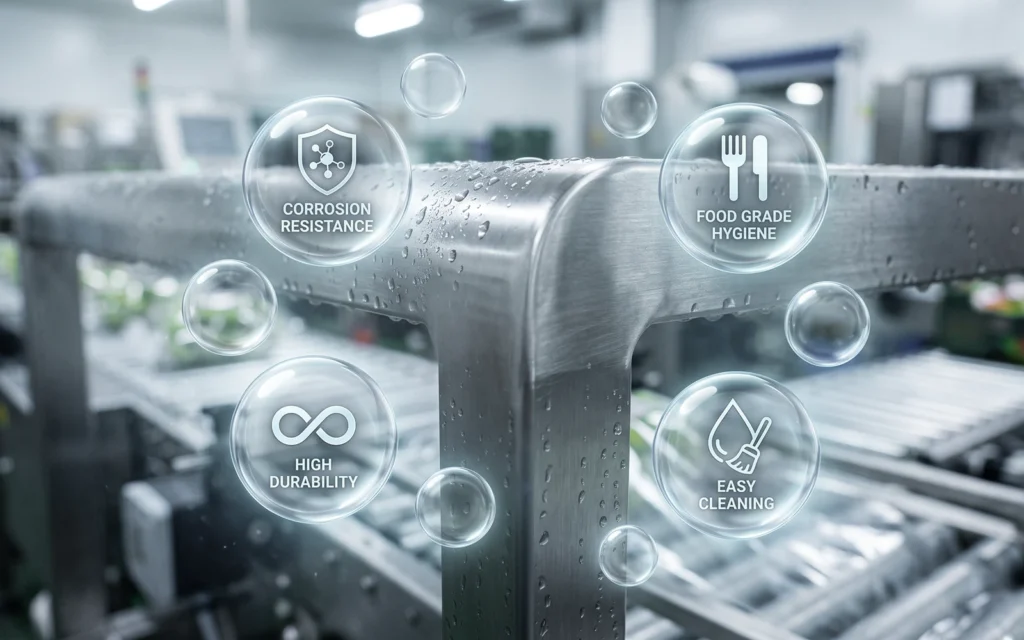
Where Fresh Center Machinery Starts to Fail
Walk through a packing hall that has been in service for eighteen months and look closely at the equipment. The damage follows a predictable pattern.
- Weld seams and heat-affected zones. Welding alters the metallurgical structure of the steel around the joint. On ordinary carbon steel or a low-grade stainless substitute, those seams are typically the first place surface rust appears, especially near drainage points and beneath the film feed area.
- Crevices and trapped residue. Overlapping plates, unfinished corners, and weld slag leave gaps that a washdown hose cannot reach. Organic residue in those gaps becomes a recurring cleaning task for your team, and a finding during a third-party audit.
- Condensation inside enclosures. Cold metal plus humid air equals water on the inside of electrical cabinets and sensor housings. Contacts pit, photoelectric sensors misread, and the line stops for a fault that looks random.
None of this is a design mystery. It is what mild steel and rough fabrication do in a wet room.
Matching Environmental Stress to Design Response
Every fixed cost in a wet-room machine should trace back to a specific failure mode it is meant to prevent. The table below maps the three most common stresses in produce packing halls against the fabrication and component choices that answer them.
| Environmental Stress | Typical Failure in Basic Fabrication | Design Response |
| 10–90% RH, condensation on cold surfaces | Rust along seams and fasteners, paint blistering | SUS304 stainless steel chassis with corrosion- and moisture-resistant properties |
| Washdown with water and mild detergent | Water ingress into the electrical enclosure and sensor heads | Schneider low-voltage components and Shinko optical sensors in sealed circuits |
| Juice, brine, and organic residue on surfaces | Residue accumulates in weld slag, corners, and plate overlaps | Integral laser-cut, weld-free frame with smooth, continuous surfaces |
| Operating window from 5°C upward | Stiff drives, erratic triggering, lubrication starvation | Custom PLC logic with stepper and servo drives matched to the operating range |
The pattern is straightforward. Where the environment attacks joints and gaps, the design removes them.
Why a Laser-Cut, Weld-Free Frame Changes the Hygiene Math
The chassis of this machine is produced as an integral laser-cut structure rather than assembled from welded plate sections. Fewer joints mean fewer places for moisture to sit and residue to collect.
On the shop floor, that translates into three practical differences:
- Faster washdown. A continuous surface wipes down in fewer passes, which matters when cleaning happens between shifts rather than once a week.
- Easier visual inspection. Without weld slag and pitted seams, a supervisor can confirm cleanliness by eye instead of reaching for a scraper.
- Better documentation posture. Hygiene programs built around HACCP and GMP principles rely on equipment that can be cleaned, inspected, and verified. A frame with no hidden crevices makes that verification less contentious.
SUS304 is chosen for its resistance to moisture and the mild organic acids found in fresh produce handling. It is not immune to everything. Strong chloride-based sanitizers and acidic cleaning agents still call for a rinse-and-dry routine, particularly in cold rooms where surfaces stay wet longer. Specification alone does not replace procedure.
Electrical Reliability When the Air Is Wet
Intermittent stoppages in a high-humidity hall are rarely mechanical failures. They are usually triggered by a sensor that saw condensation instead of a product, or a contact that corroded over a long weekend.
This machine addresses that with named industrial components rather than generic substitutes:
- Schneider Electric (Germany) low-voltage electrical components for switching and protection.
- Shinko optical sensors (Japan) for photo detection of products and film positioning.
- A custom PLC control unit handling sequencing and fault logic.
- Leadshine / YAKO stepper and servo drives for film feed, cutting, and indexing motion.
- A Kinco touchscreen HMI for parameter setup and changeover.
For buyers, the useful implication is spare-part availability. Brand-verified components can often be sourced through regional distributors instead of waiting on a proprietary part shipped from the machine builder, which shortens the gap between a failure and a running line.
Putting It on the Line: Automatic Cling Film Wrapping in Practice
The automatic cling film wrapping machine is built on this frame and component platform, and it is configured for the throughput profile that fresh centers actually run.
It handles both tray packaging and trayless direct wrapping of select solid produce categories, which lets one unit cover more of your SKU range. Output runs at 20–25 packs per minute, roughly four to five times the pace of manual wrapping with a hand dispenser. Film roll changeover takes about 30 seconds, so shift interruptions stay short.
Line integration is where most of the value shows up. The outfeed can be paired with automatic labellers, metal detectors, rotary turntables, and downstream sorting stations, and the unit ships fully integrated for minimal on-site assembly. The machine works with both domestic and imported food-grade cling and stretch film, so you are not locked into a single consumable supplier.
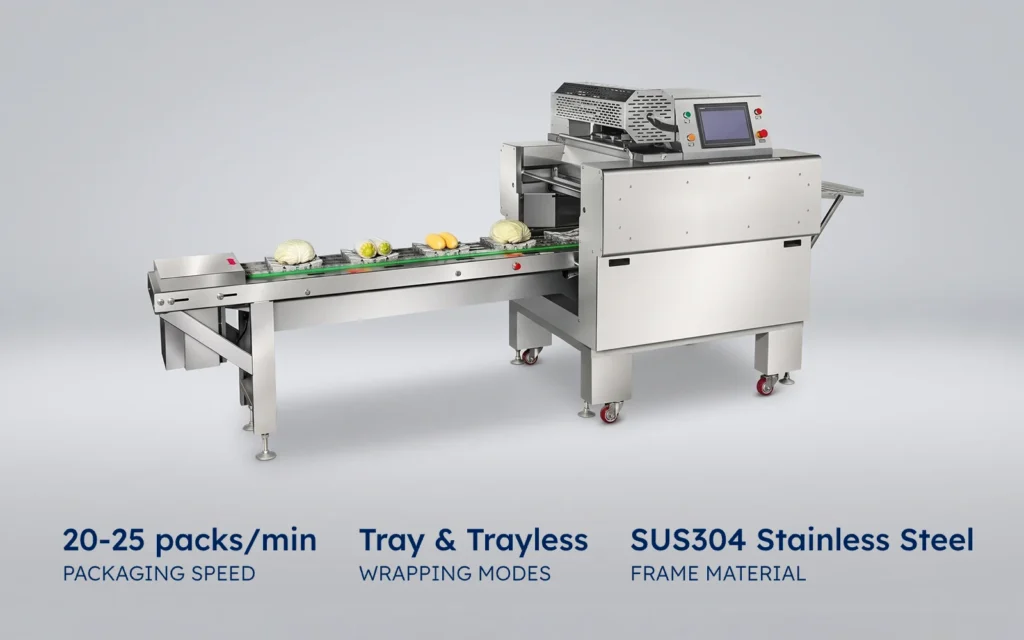
| Parameter | Specification |
| Power supply | AC 220 V / 50 Hz |
| Power consumption | 1,500 W (1.5 kW) |
| Operating temperature | 5°C – 35°C |
| Operating humidity | 10% – 90% RH (non-condensing) |
| Packaging speed | 20 – 25 packs / minute |
| Package length | 120 – 350 mm |
| Package width | 95 – 220 mm |
| Package height | 10 – 130 mm |
| Package weight | 50 – 4,500 g |
| Compatible film width | 350 – 550 mm |
| Max film roll diameter | ≤ 160 mm |
| Machine dimensions (L × W × H) | 3,250 × 1,014 × 1,422 mm |
| Net weight | 305 kg |
| Shipping dimensions (L × W × H) | 3,730 × 1,700 × 2,030 mm |
| Gross weight | 460 kg |
What Procurement Should Verify Before Signing
A supplier questionnaire written around wet-room realities will surface more than a price comparison. Six items are worth putting in the RFQ.
- Material certification. Ask for mill certificates confirming SUS304, not just a datasheet line that says “stainless steel.”
- Fabrication method. Request confirmation that the frame is laser-cut with a weld-free chassis, and ask for photos of the frame before panels are fitted.
- Component BOM. Insist on brand names and model numbers for electrical parts, sensors, drives, and the PLC, so spares can be evaluated independently.
- Enclosure and sensor ratings. Confirm how cabinets and sensor housings are protected against washdown and condensation.
- Sanitation review. Walk the drainage path, the corners, and the underside of the frame during a factory inspection.
- Spares and service terms. Get the critical spare list, dispatch lead times, and the remote support arrangement in writing.
Total Cost of Ownership in a Wet Room
Purchase price is the smallest number in a five-year cost picture for equipment installed in a fresh center. Rust remediation, repainting, corrosion-driven part replacement, and the labor hours spent scrubbing inaccessible seams all land on your maintenance budget. So does the production time lost to sensor faults caused by condensation.
A frame that resists the environment and components that tolerate it shift spend away from maintenance and toward output. That trade-off is where the case for SUS304 fabrication is usually made, and it is worth modeling against your own cleaning schedule and downtime costs.
To size the equipment against your line, request a quote and include your pack dimensions, film width, target packs per minute, and the humidity conditions in your packing hall.
Is SUS304 stainless steel really necessary for a cling film wrapping machine?
Yes, for any machine installed in a wet or cold-room packing hall. SUS304 carries the corrosion resistance that carbon steel frames lack once humidity, washdown water, and produce juice are present daily. In a dry, climate-controlled environment the difference is smaller, but few fresh centers meet that description.
What humidity range can this machine operate in?
The rated operating window is 10% to 90% RH, non-condensing, with temperatures from 5°C to 35°C. Buyers in tropical climates or cold-chain halls should still plan for condensation management, including airflow and drainage around the machine footprint.
Does a weld-free frame cost more upfront?
Typically yes, by a modest margin over a welded carbon steel frame. The return comes later through longer frame life, shorter washdown cycles, and fewer corrosion-related repairs. Facilities running two or three shifts tend to see the difference sooner than single-shift operations.
Which component brands should I expect in a machine like this?
Schneider Electric low-voltage components, Shinko optical sensors from Japan, a custom PLC, Leadshine or YAKO stepper and servo drives, and a Kinco touchscreen HMI. Ask any supplier for the component bill of materials before ordering, because unbranded substitutions are common in this equipment category.
Can one machine handle both trayed and trayless wrapping?
Yes. The unit supports standard foam and plastic trays as well as trayless direct wrapping for select solid produce categories, so it can cover a broader SKU range without a second machine. Confirm which of your products qualify for trayless mode during the specification stage.