Most first-time buyers of a packaging machine for food run into the same fork in the road: a horizontal flow wrapper (HFFS) or a vertical bagger (VFFS). Both make pillow bags. Both run film. But they solve different problems, and picking the wrong one is an expensive mistake to discover after installation.
This guide compares the two from a buyer’s perspective—how each machine works, which products they suit, and what to confirm before you commit to a purchase.
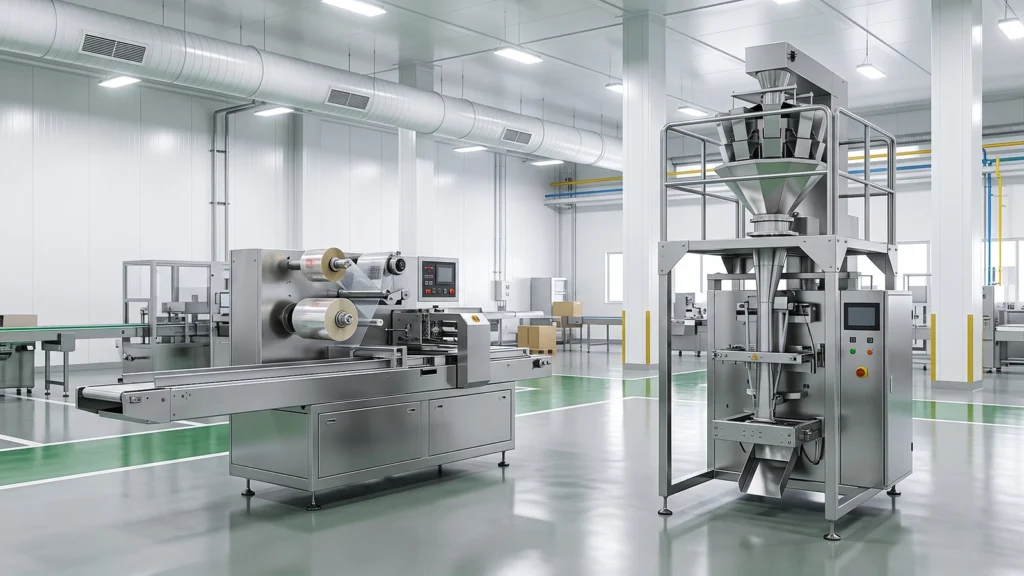
How Each Machine Works
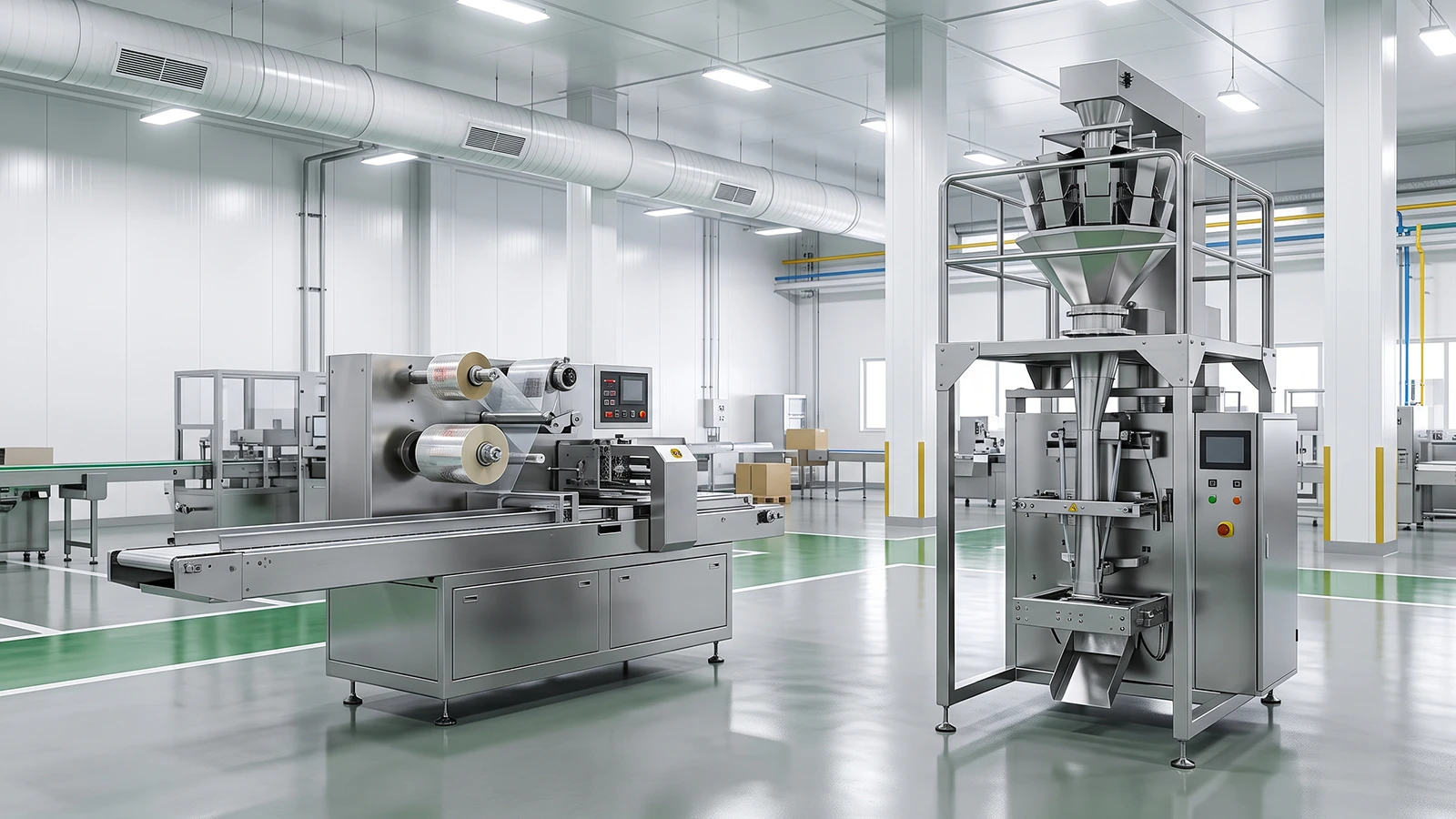
Horizontal Form-Fill-Seal (HFFS), commonly called a flow wrapper: product is fed lying down on an infeed conveyor. Film is drawn from underneath, folded over the product into a tube, sealed lengthwise, and then sealed and cut at both ends as the product moves through rotary or box-motion jaw systems. The result is a tight, fully wrapped pillow or fin-seal pack.
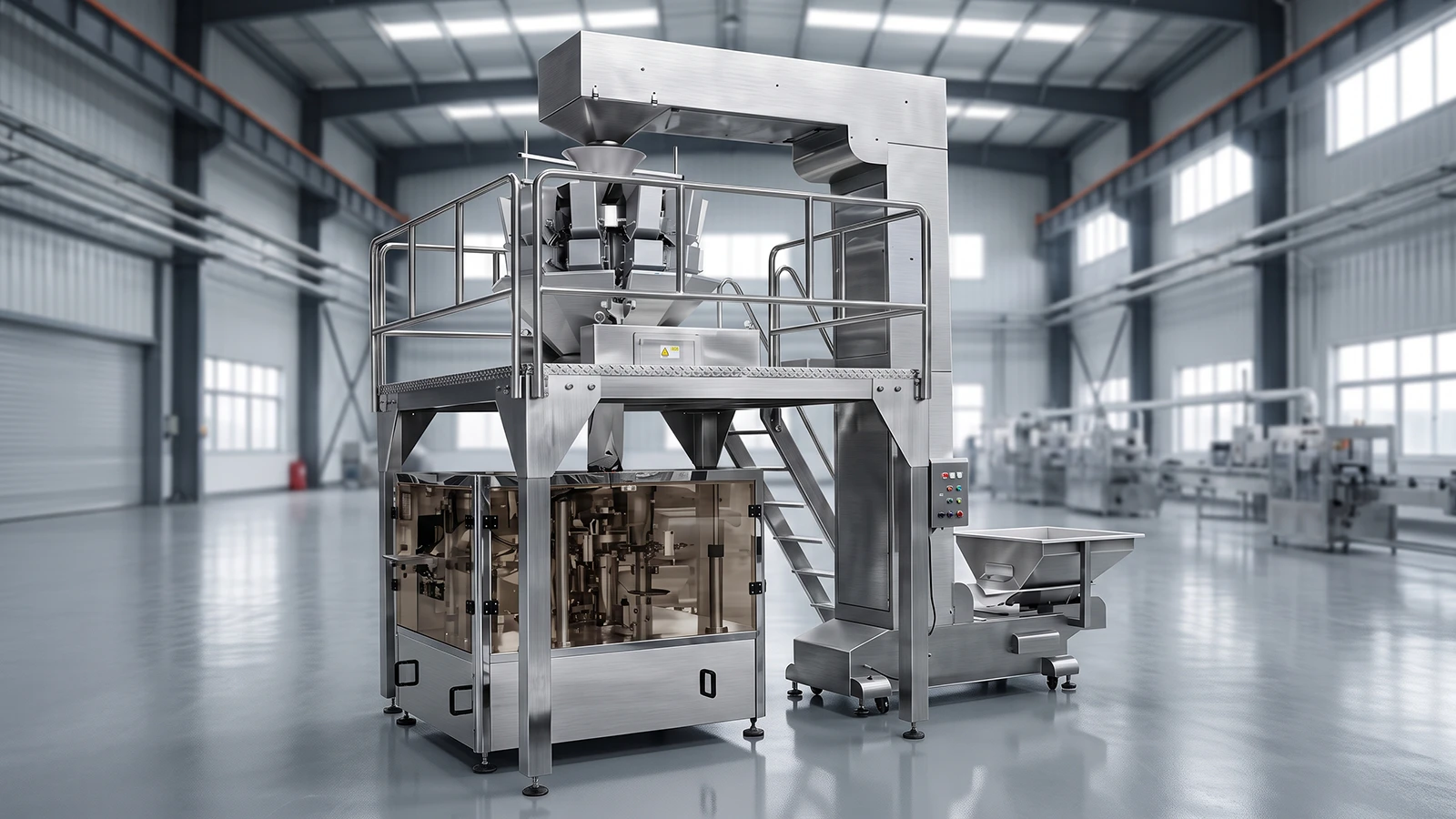
Vertical Form-Fill-Seal (VFFS), commonly called a vertical bagger: film is pulled vertically over a forming collar to make a tube. Product is dropped into the tube from a weighing or dosing head above (multihead weigher, auger, or cup filler), then sealed at the bottom and top and cut apart. The bag is formed around a falling stream of product.
That one difference—product fed horizontally versus dropped vertically—drives almost every selection decision below.
Side-by-Side Comparison
| Factor | Flow Wrapper (HFFS) | Vertical Bagger (VFFS) |
| Product feeding | Horizontal, on an infeed conveyor | Dropped vertically from a dosing system |
| Typical products | Biscuits, bread, chocolate bars, instant noodles, solid items | Granules, powders, snacks, frozen food, seeds, liquids (with fittings) |
| Fragile products | Better—gentle handling, no drop | Risk of breakage or dust from the drop |
| Pack appearance | Tight, retail-ready wrap; supports fin seals and gussets | Standard pillow bag; looser fit around product |
| Film type | Laminated or PE films, printed or plain | Similar film range, typically on larger rolls |
| Speed | Depends on machine class and product | Depends on weigher and product flow |
| Footprint | Long, linear layout; needs conveyor length | Compact vertical layout; height matters more than floor space |
| Changeover | Film and infeed adjustments | Film plus dosing system changes |
| Compatibility | Best for single solid items or counted pieces | Best for free-flowing or dosed products |
Speed figures vary widely by machine class, product, and film, so treat any published number as a starting point for negotiation rather than a guarantee.
Choose a Flow Wrapper (HFFS) When
- Your product is a solid, self-supporting item that survives lying down—bakery goods, biscuits, confectionery, bars, noodles.
- Shelf appearance matters. Flow-wrapped packs are taut and neat, which is why most retail snack and bakery shelves look the way they do.
- You need gentle handling. Fragile items like pastries or wafers avoid the drop impact a VFFS involves.
- You wrap long or elongated products—noodle blocks, candy ropes, cutlery sets.
Choose a Vertical Bagger (VFFS) When
- Your product is loose, free-flowing, or dosed by weight: nuts, chips, frozen peas, rice, coffee, flour.
- You weigh at the point of filling. VFFS pairs naturally with a multihead weigher or auger filler above the bag.
- Floor space is limited. Vertical machines use height instead of a long linear run.
- You bag mixes or varied fill weights across a product range.
What Buyers Should Confirm Before Ordering
The machine type is only half the decision. From a procurement standpoint, these points decide whether the equipment actually performs in your plant:
- Product samples up front. Reputable suppliers will run test packs on your product and film before you sign. Ask for sample packs and a video of the trial.
- Film specification match. Confirm film width, core diameter, and sealing temperature range against the machine. Mismatched film is a common cause of seal failures after delivery.
- Line integration. Check infeed height, outfeed direction, and how the machine connects to your existing weighers, conveyors, or case packers.
- After-sales and spares. Confirm response times, remote support, and which spare parts ship with the machine. For overseas buyers, ask about installation and commissioning support in your region.
- Compliance. For food contact, verify the machine’s material certificates and, where relevant, CE marking for the destination market.
Considering a packaging machine for food production? Reliancepak’s machinery team (autopackline.com) supplies both HFFS and VFFS systems with test packing and after-sales support—contact [email protected] to discuss your application.
FAQ
Can a flow wrapper handle loose products like nuts or chips?
Generally no. A flow wrapper needs a solid product to carry through the sealing jaws. Loose products are better served by a VFFS with a multihead weigher, though pre-made snack packs are sometimes flow wrapped when supplied as a solid stack.
Is a VFFS cheaper than an HFFS machine?
It depends on the configuration. A basic VFFS frame can cost less, but the total budget must include the dosing system (weigher, auger, or filler), which often represents a large share of the investment. An HFFS quote is usually closer to the complete package.
Can one machine run both my biscuit line and my granola?
Typically not with a single machine type. Biscuits point to a flow wrapper; granola points to a VFFS with a weigher. If your range is mixed, buyers often start with the machine covering the higher-volume product and phase in the second later.
What information should I prepare before requesting a quote?
Three things: product details (dimensions, weight, fragility), target output per minute or per shift, and your available film or packaging material. Suppliers can size the machine and quote accurately with these.
How long does delivery and installation usually take?
It depends on the machine class and supplier workload. Standard models may ship within weeks; customized lines can take several months. Always confirm the lead time, shipping terms, and commissioning schedule in the contract rather than relying on verbal estimates.