Choosing a food packaging machine is not about finding the “best” machine on the market. It is about finding the one that fits your product, your bag or tray format, and your production volume. Buy the wrong type, and you end up paying for features you never use — or a line that cannot handle your product at all.
This guide walks through six machine types that cover most food packaging applications, in plain language, and ends with a simple way to narrow down your options.
Quick Comparison
| Machine Type | Best For | Typical Products | Automation Level |
| Premade pouch (pick-fill-seal) | Premium look, stand-up pouches | Snacks, sauces, pet food, coffee | Semi to fully automatic |
| Vertical form fill seal (VFFS) | Bag-making from film roll, high speed | Granules, powders, frozen food | Mostly fully automatic |
| Horizontal pillow pack (HFFS) | Solid products on a carrying film | Biscuits, bread, noodles, bars | Mostly fully automatic |
| Thermoforming with stretch film | Vacuum or gas-flush packs with a formed cavity | Meat, seafood, cheese, ready meals | Fully automatic |
| Tray sealing / skin packing | Products packed in a pre-made tray | Fresh produce, meat trays, sushi | Semi to fully automatic |
| Vacuum chamber machine | Simple vacuum packs at lower volume | Dry goods, cured meat, grains | Semi-automatic |
1. Premade Pouch (Pick-Fill-Seal) Machine
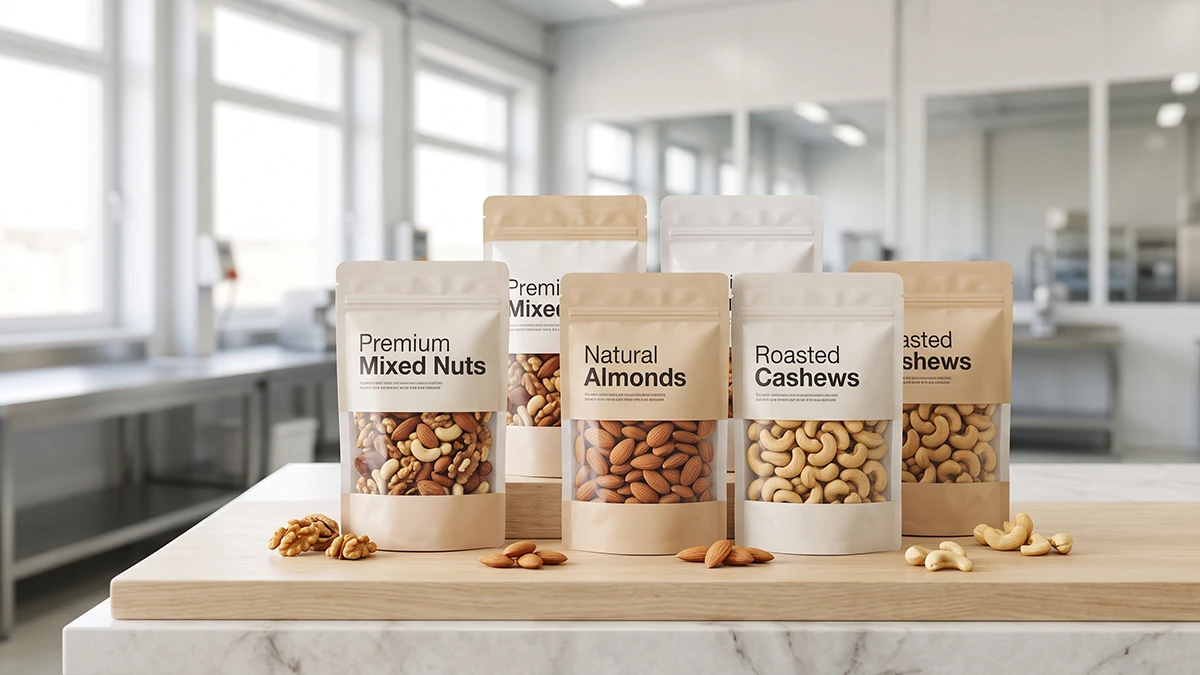
This machine takes ready-made pouches, opens them, fills the product, and seals them one by one. Its main appeal is presentation: stand-up pouches with zippers or spouts give a strong shelf presence, which matters in retail.
It also saves you from buying a film-printing setup, since the bags arrive pre-printed. The trade-offs are a slower cycle than roll-film machines and a higher cost per pack, because premade pouches cost more than plain film. If your brand image depends on packaging appearance, this type is usually worth it.
2. Vertical Form Fill Seal (VFFS) Machine
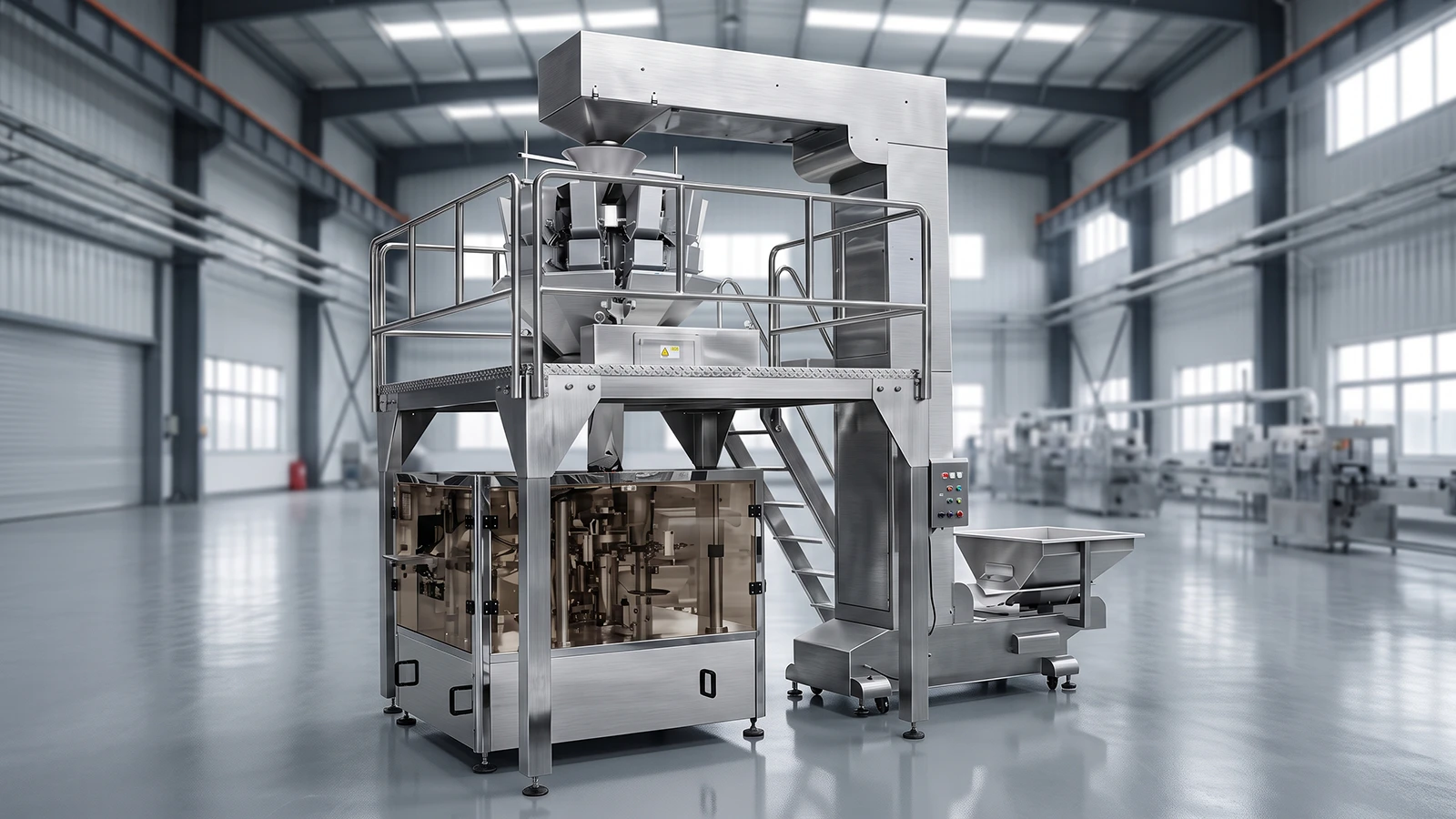
A VFFS machine forms the bag from a roll of film, fills it, and seals it vertically — all in one continuous motion. It is the workhorse behind most granules, powders, and frozen foods on supermarket shelves.
Speed is its strongest point, and film cost per pack is low. The limits show up with fragile or irregularly shaped products, which can be damaged during the vertical drop. For dry, free-flowing products at high volume, it is often the most economical choice.
3. Horizontal Pillow Pack (HFFS) Machine
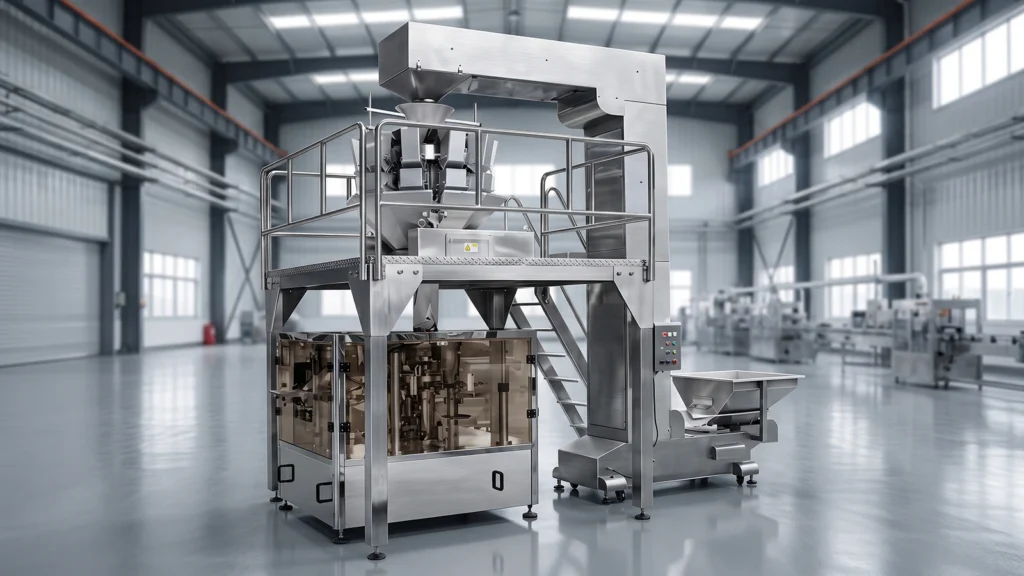
Instead of dropping product into a bag from above, an HFFS machine pushes solid items along a horizontal film tube and seals both ends — the familiar “pillow” shape around biscuits, instant noodles, or snack bars.
It suits products that are uniform in shape and can tolerate gentle handling at speed. If your products vary a lot in size, expect more changeover time between runs.
4. Thermoforming Stretch Film Machine
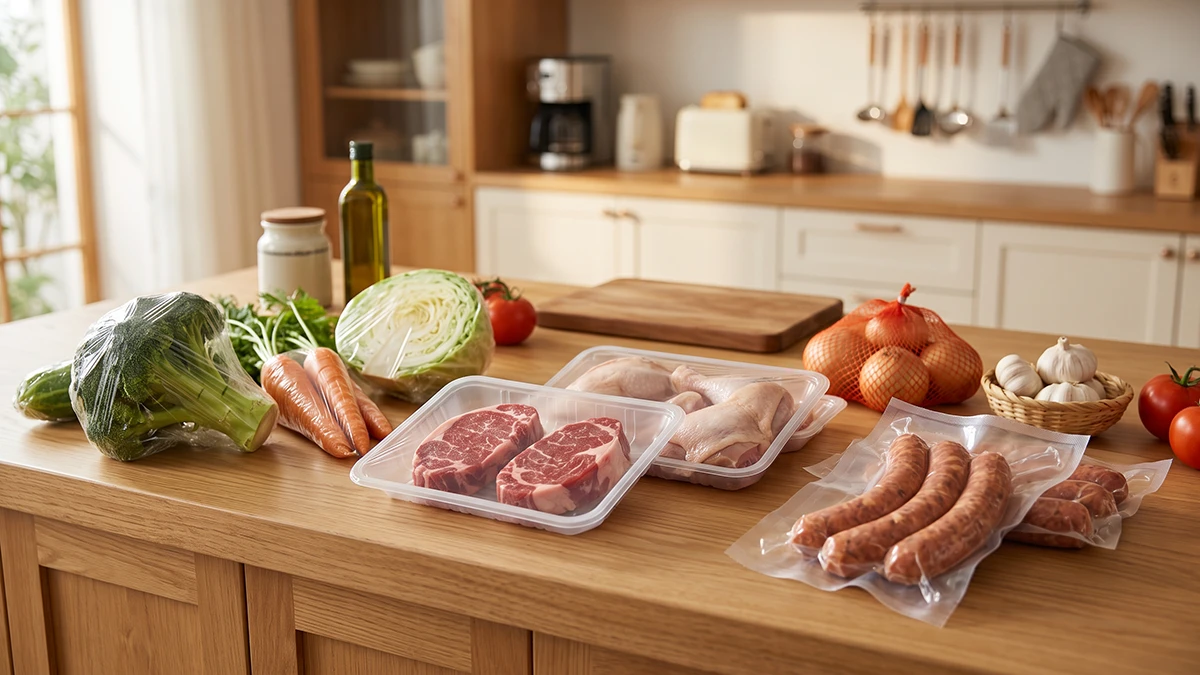
This one forms its own tray or cavity from a bottom stretch film, loads the product, and seals it with a top film — often under vacuum or with modified atmosphere (MAP) to extend shelf life.
It is common for fresh meat, seafood, cheese, and ready meals, where sealing freshness into a shaped cavity matters more than raw speed. The equipment and tooling cost more upfront, so it typically makes sense once your volumes are steady and your pack format is fixed.
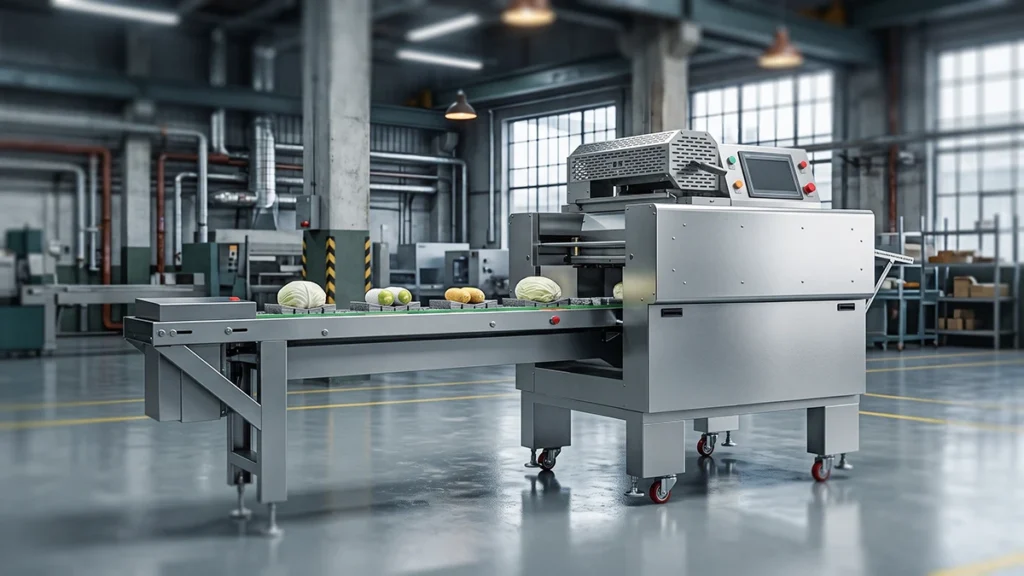
5. Tray Sealing and Skin Packing Machine
Here the tray already exists — you simply place the product in it, and the machine seals film over the top, sometimes pulling the film tight against the product (skin packing) for a premium, leak-resistant look.
It offers a middle ground: lower investment than thermoforming, a clean retail-ready presentation, and flexibility to change tray sizes. Many fresh-produce and meat processors start here before moving to full thermoforming.
6. Vacuum Chamber Machine
The simplest of the six. The operator places product inside a chamber bag, the chamber removes the air and seals the bag. It is a semi-automatic process, so output depends on how many cycles your staff can run.
For low-to-medium volumes — grains, cured meats, dry goods — it delivers strong seals at a modest price. As volume grows, most buyers graduate to one of the automatic types above.
How to Narrow Down Your Choice
Three questions usually settle it:
- What is the product? Free-flowing granules point to VFFS; solid uniform items point to HFFS; fresh products needing shelf life point to thermoforming or tray sealing.
- What pack format does your market expect? Retail shelves favor stand-up pouches and trays; bulk and food-service channels accept simple pillow bags or vacuum packs.
- What is your daily output? Semi-automatic machines like vacuum chambers serve small runs well; fully automatic lines only pay off above a certain volume, which differs by product and region.
If you are unsure where your answers lead, talking it through with a manufacturer early can save months. You are welcome to contact our team with your product details and target output — as a packaging machinery manufacturer serving food, pharmaceutical, and consumer goods plants, we help buyers match machine type to product before any quote is discussed.
One practical note: many suppliers, including us, can adjust feeding systems, sealing dies, and film widths to your spec. So a machine that is “almost right” out of the catalog is often closer than it looks.
FAQ
Which machine type has the lowest running cost per pack?
VFFS usually wins on material cost, because film on a roll is cheaper than premade pouches or trays. But total cost also depends on changeover frequency and labor, so run your own numbers.
Can one machine handle different bag sizes?
Yes, within limits. Most machines accept a range of film widths or tray sizes with changeover parts. Very large differences in pack size may need a second machine.
Do I need a fully automatic line from day one?
Not always. Many plants start semi-automatic, confirm their pack format and sales channel, then automate. It reduces the risk of buying capacity you cannot fill yet.
What information should I prepare before asking for a quote?
Product details (size, weight, fragility), target packs per hour, preferred pack format, and available factory space. Photos or samples of your product and target packaging help a lot.
How long does delivery and installation typically take?
It depends on the machine type and customization level. Standard machines are faster to ship; customized lines add engineering and testing time. Ask your supplier for a realistic timeline, including commissioning.