A food packaging machine spec sheet looks like a simple list of numbers, but each figure hides an assumption about your product, your film, and your production schedule. If you read them at face value, you can end up with a machine that technically “meets spec” and still disappoints on the line.
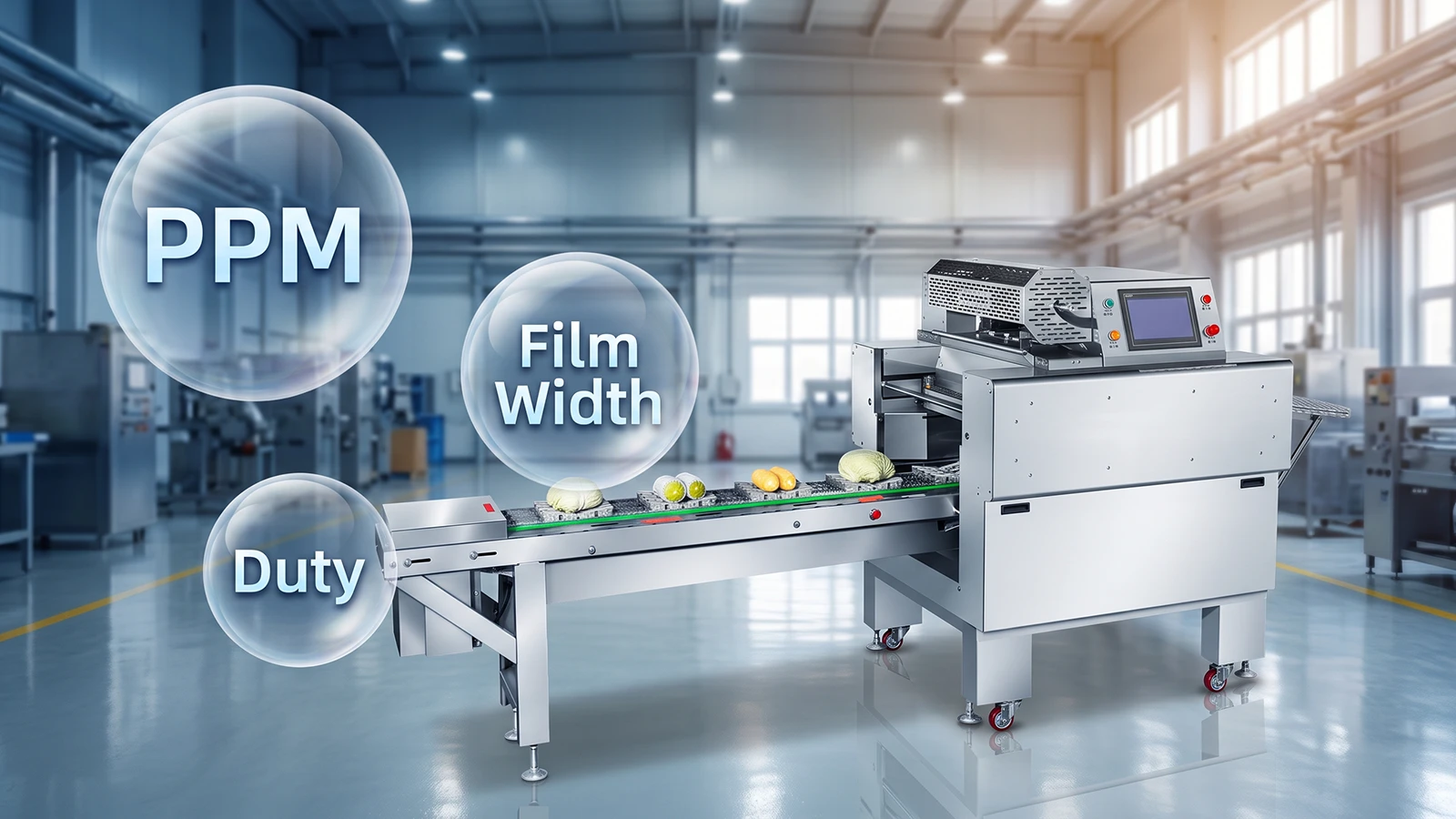
This guide walks through the three numbers that cause the most disputes between buyers and suppliers — PPM (packs per minute), film width, and duty cycle — and shows you what to ask before you sign anything.
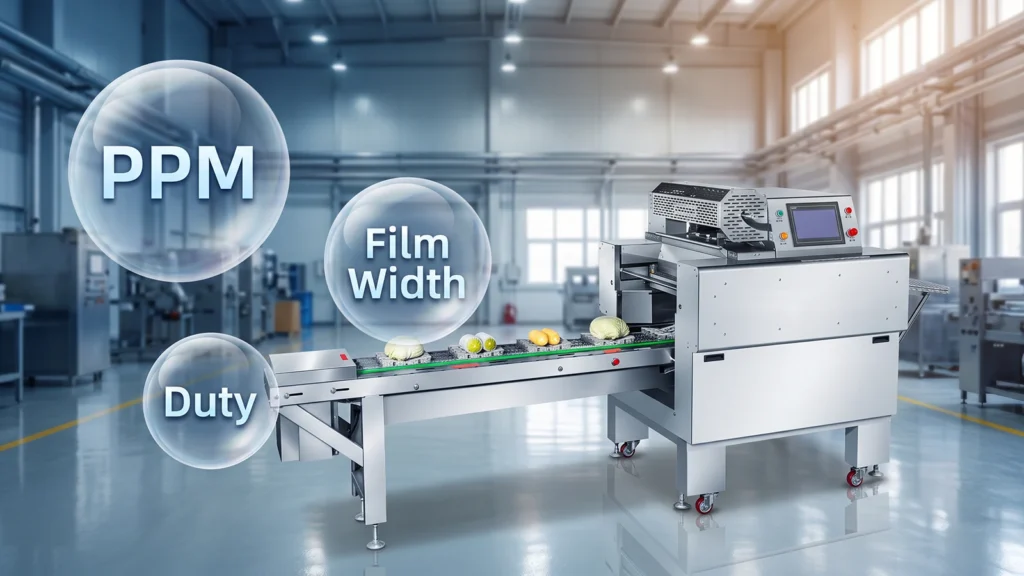
Why Spec Sheets Deserve a Careful Read
Manufacturers publish spec sheets to compare machines quickly, not to guarantee performance on your specific product. A single figure like “60 PPM” is measured under ideal conditions: a free-flowing product, a specific film, a specific bag length, and a skilled operator.
Your reality is probably different. Product bridges in the hopper, film wander, changeovers, and cleaning stops all eat into that headline number. So the goal of reading a spec sheet is not to find the biggest number — it is to find out what conditions produced that number.
PPM: Packs Per Minute, With Conditions Attached
PPM measures how many finished packs a machine produces per minute. It is the first number most buyers look at, and the one most often misused.
What the Number Actually Assumes
A rated speed is usually tied to:
- A specific product (often free-flowing granules or a uniform solid)
- A specific pack length and film type
- Continuous feeding with no upstream delays
If your product is sticky, fragile, irregular, or manually loaded, real output can land well below the rated figure. In many scenarios, a machine rated at 60 PPM may settle at 40–50 PPM on a difficult product — the exact gap depends on the application, so ask the supplier how they calculated the rating.
Match Speed to Your Real Demand
Calculate backward from your sales plan, not forward from the spec sheet. If you need 20,000 packs per 8-hour shift, that is roughly 42 packs per minute of net output. A machine rated near that figure leaves no room for growth, changeovers, or downtime; a machine rated at 60+ PPM gives you breathing room without paying for speed you will never use.
Film Width: The Number That Decides What You Can Run
Film width (sometimes listed as “max film width”) defines the widest roll of packaging film the machine can accept. It matters more than it looks, because it sets the ceiling on bag size — and therefore on package format.
Width and Bag Size Are Not the Same
For a typical vertical form-fill-seal (VFFS) machine, the film width roughly equals two times the bag width plus allowances for the fin seal. So a machine accepting 520 mm film cannot necessarily make a 520 mm wide bag. Check the “max bag width” line separately, and confirm it against your largest planned SKU.
Film Availability and Cost
Choosing an unusual film width can lock you into a narrow supplier base. Before committing, verify that the film width you need is available in the structures you want — laminates, recyclable mono-materials, or paper-based films — at a price that works for your margin. A packaging supplier that handles both machinery and film materials can often flag this early; our team at Reliancepak’s machinery unit, for instance, regularly checks film-machine compatibility before quoting, because a mismatch discovered after delivery is expensive to fix.
Duty Cycle: Can It Run All Day, Every Day?
Duty cycle describes how long a machine can operate continuously before it needs a pause for cooling, cleaning, or maintenance. Spec sheets express this in different ways — a percentage, a “continuous operation” rating, or an MTBF (mean time between failures) figure.
Why It Matters for Food Production
Food lines rarely run one shift. Peak seasons, tight delivery windows, and hygiene schedules all push machines toward longer running hours. A machine built for intermittent duty will reveal its limits quickly: heat buildup in sealing jaws, wear on moving parts, and more unplanned stops.
- Is the rated duty cycle based on continuous or intermittent operation?
- What maintenance intervals apply at two-shift or three-shift production?
- Which components wear first, and how fast can spares arrive?
A supplier answering these with specifics — part names, intervals, lead times — is telling you the machine was designed for real production, not just for a brochure.
Quick Reference: The Three Numbers at a Glance
| Spec | What It Means | The Question to Ask |
| PPM | Rated packs per minute under test conditions | What product, film, and bag length produced this rating? |
| Film width | Maximum roll width the machine accepts | What is the actual max bag width, and is this film widely available? |
| Duty cycle | How long the machine runs before scheduled pauses | Is this rated for continuous operation at my shift pattern? |
A Short Checklist Before You Compare Quotes
- Send suppliers your real product samples, not just a description.
- Ask for output figures measured on a product similar to yours.
- Confirm film width against your largest SKU and your film supply options.
- Clarify duty cycle against your actual shift pattern and maintenance plan.
Suppliers with in-house engineering support, such as Autopackline, can usually run these checks during the quotation stage, which shortens the path from spec sheet to a machine that performs as promised.
What should I do if my product is difficult to run at rated speed?
Request a test run with your actual product before purchase. A short video of your product running through the machine, plus a measured output figure, gives you evidence instead of assumptions.
Does a higher PPM rating always mean a better machine?
No. Excess speed you cannot feed or film wastes budget, and pushing a machine beyond its stable operating range raises reject rates. Match rated speed to your demand with room to grow.
Is maximum film width the same as maximum bag width?
No. For most VFFS machines, bag width is roughly half the film width due to the forming and sealing process. Always check the max bag width line separately.
What duty cycle do I need for two-shift production?
It depends on the specific application, but for two-shift or three-shift food production, insist on a machine rated for continuous industrial operation with defined maintenance intervals — not an intermittent-duty rating.
Can one machine handle different bag sizes?
Usually yes, within the machine’s film width and bag length ranges, but each changeover costs time. Ask how long a typical changeover takes and whether it requires special tooling.