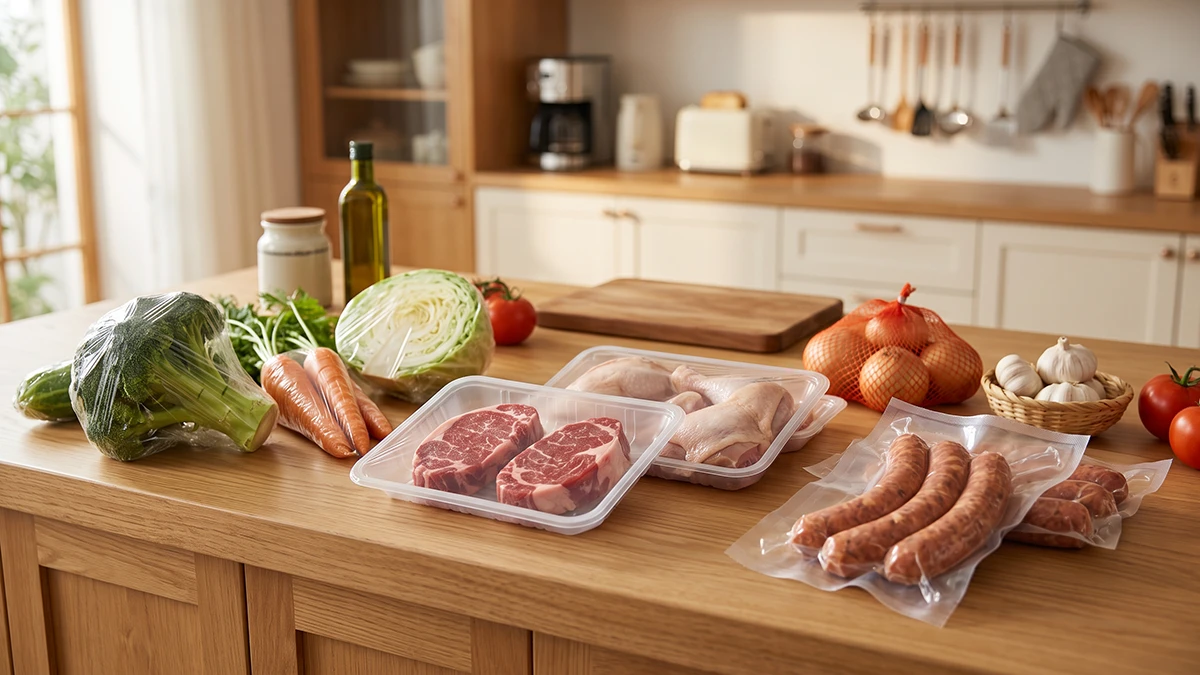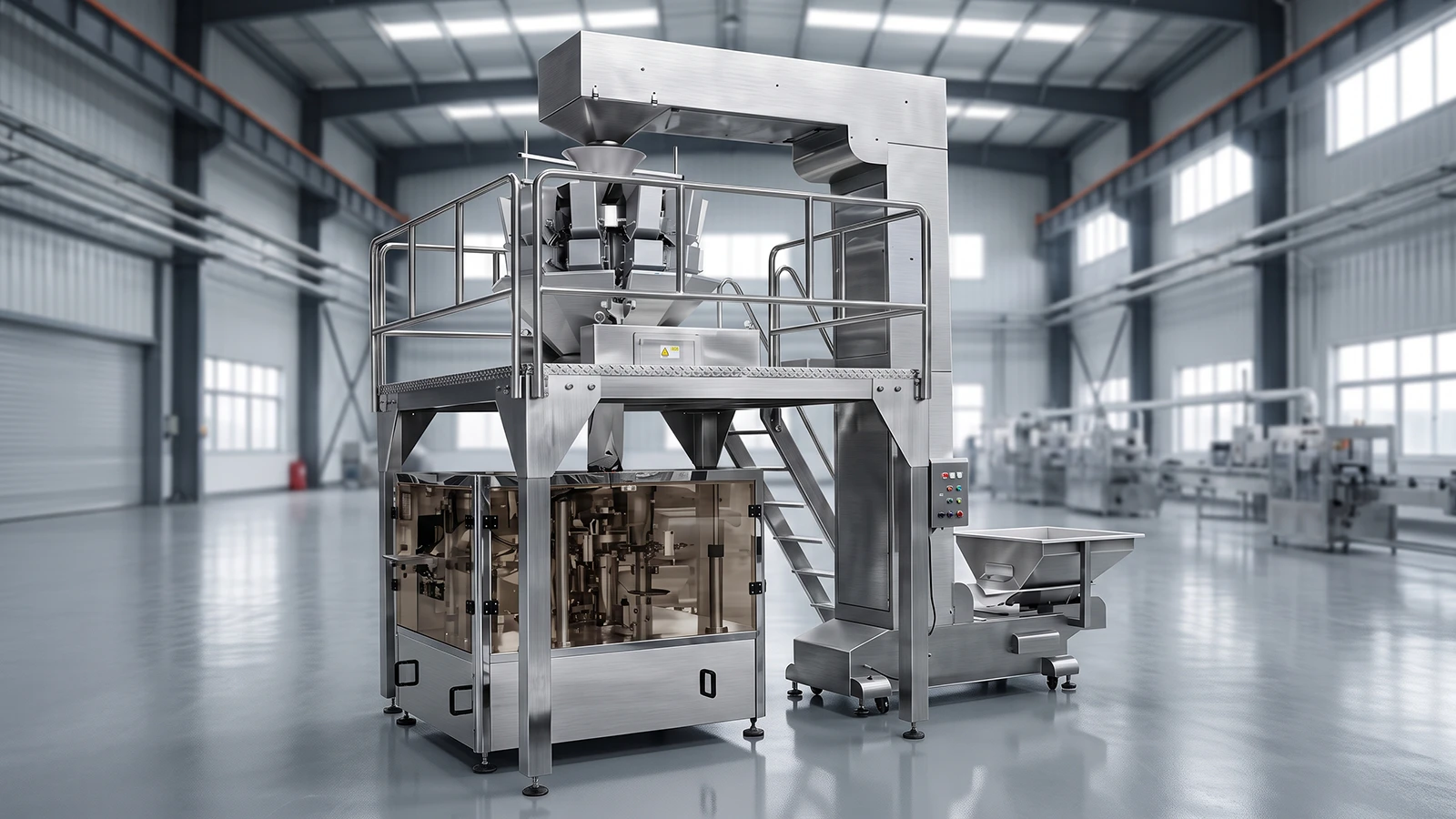
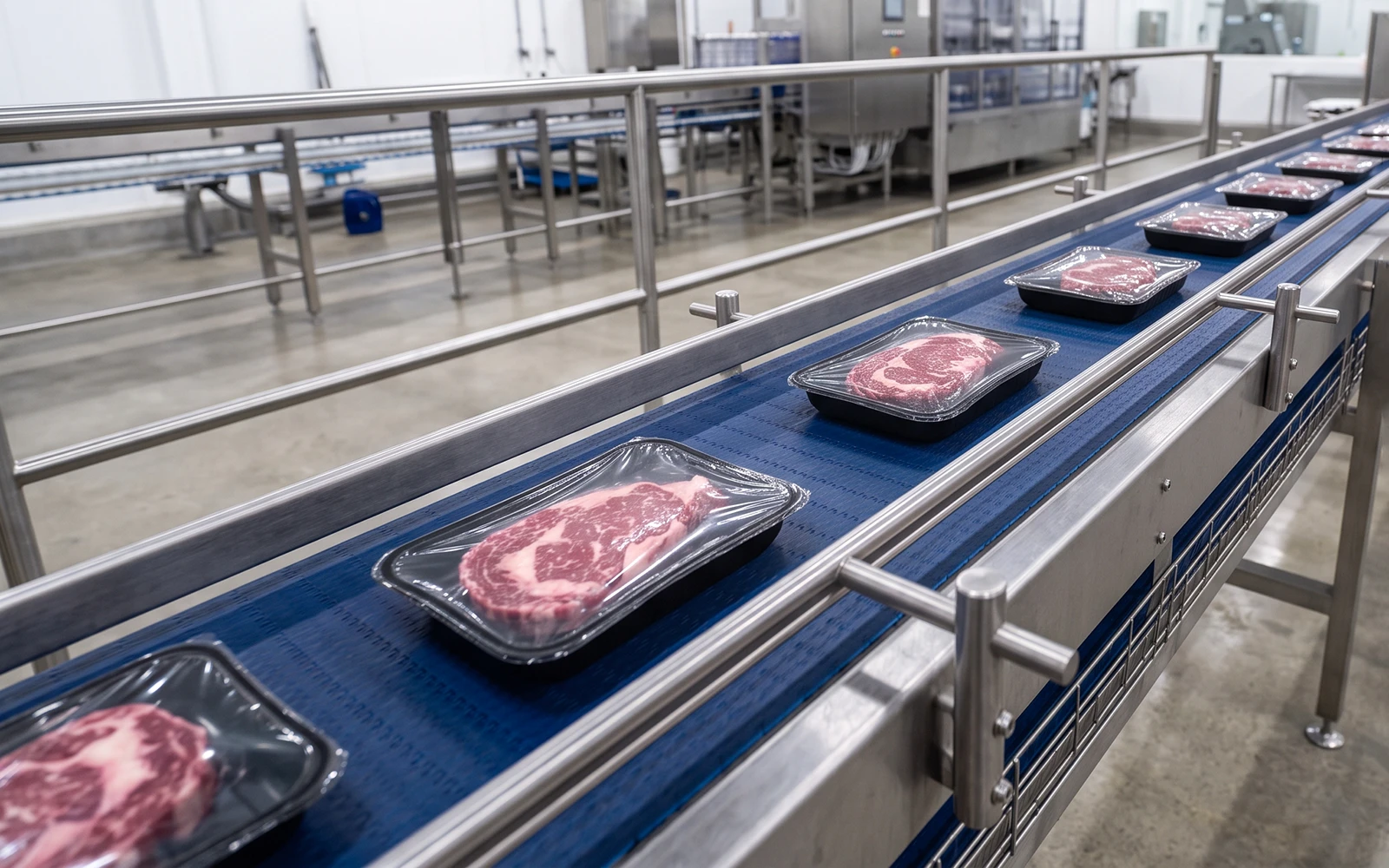
Chilled fresh meat, portioned beef and lamb, and ready-to-eat protein meals all compete on the same two things: how long the product stays safe and how good it looks on the shelf when the shopper picks it up. A well-matched MAP packaging machine controls both. This guide walks through where fresh protein lines typically lose money, which machine-side problems cause it, and the specifications worth comparing before you commit to a supplier.
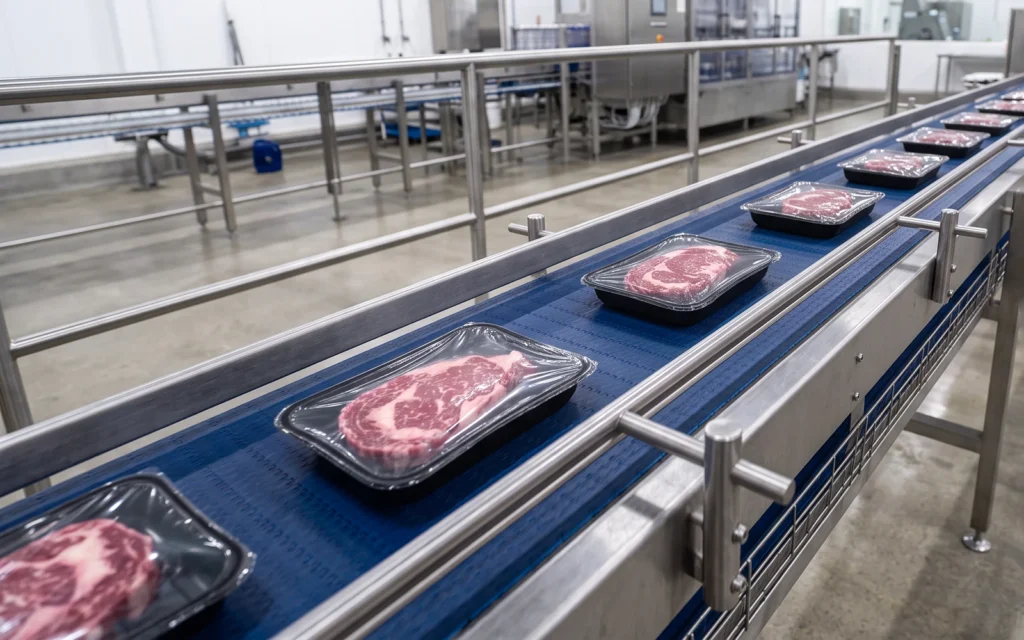
Where Fresh Protein Lines Actually Lose Money
Ask any plant manager running chilled protein what hurts most, and the answer rarely comes back as a single problem. It comes back as a list that looks something like this:
- Color and bloom loss on fresh red meat, leading to markdowns long before the product is actually unsafe.
- Purge and drip accumulation in portioned beef and lamb cuts, which damages presentation and shortens the realistic display window.
- Short shelf life on ready meals, where cooked components, sauces, and garnishes age at different rates inside the same tray.
- Retail rejects and returns caused by weak seals that fail during cold-chain transport, not on the packaging line itself.
The common thread is that most of these losses are invisible until the product is already in the distribution chain. By the time a customer complains about a leaking tray or gray meat, the cost has already landed on your side.
Why Shelf Life Problems Usually Trace Back to the Sealer
Modified atmosphere packaging works when three things happen together: a correct gas mix, an airtight seal, and disciplined cold-chain handling downstream. Most processors control the gas recipe well. The two variables that go wrong on the line are seal integrity and tray positioning, and both are machine-side issues.
A marginal seal is the expensive one. Gas diffuses out through a fine channel, oxygen works its way in, and the shelf life advantage of MAP quietly disappears even though the tray looks sealed. Wrinkles, product contamination in the seal area, and uneven heating across the film are the usual causes, and all three come back to how the machine controls temperature and how precisely it presents each tray to the die.
This is where tray handling technology matters more than most buyers initially expect. Chain-driven and dial-type feed systems rely on push-rod timing, and when product weights vary across a shift, the positioning accuracy drifts with it. The practical consequences show up as misaligned cuts into the film, accelerated mold and cutter wear, and rising maintenance costs. Clip-box conveying takes a different approach: each tray is carried in a fixed fixture, so alignment stays exact regardless of what the line is running.
Three Criteria That Separate a Good MAP Machine From an Expensive Mistake
1. Tray positioning accuracy
Watch the machine you are evaluating run your own trays, not demo trays. With a clip-box system, tray-to-die alignment holds steady across the full product weight range, which protects both seal quality and tooling life. With chain or dial systems, ask directly what happens at your lightest and heaviest SKU, because that is where positioning problems appear first.
2. Seal temperature control
Consistent seals need consistent heat. A Siemens temperature module with independent heating zones, individual regulation, and over-temperature protection keeps the seal area clean and repeatable through long runs. Machines that treat the sealing head as a single heated block will struggle the moment your film or tray material changes.
3. Throughput and footprint matched to your line
A map machine rated around 2,000 boxes per hour covers most mid-size fresh protein operations, but the honest question is whether your upstream portioning and downstream case-packing can feed it and absorb it. Also check the footprint against your floor plan; a frame in the range of 2,800 × 920 × 1,520 mm is designed to sit alongside standard workstations and connect into a continuous assembly-line layout without reorganizing the whole plant.
Specification Benchmarks Worth Comparing Side by Side
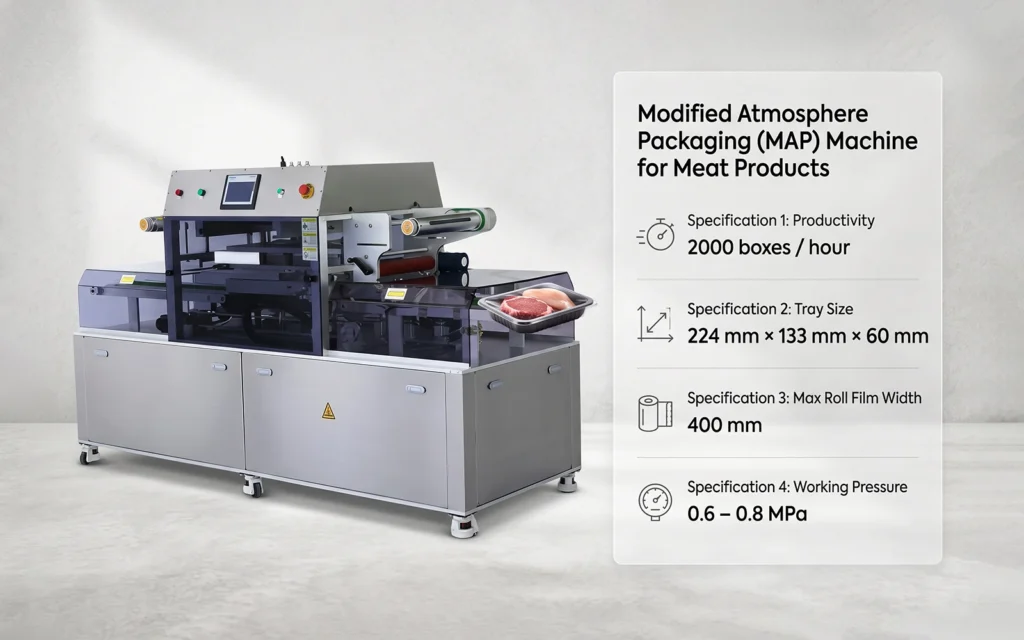
When you put supplier quotes next to each other, these are the figures that reveal the real differences. The table below shows the baseline configuration of our fully automatic meat MAP packaging machine, which many buyers use as a reference point when comparing offers.
| Specification | Details |
| Productivity | 2,000 boxes / hour |
| Max roll film width | 400 mm |
| Max roll film diameter | 260 mm |
| Tray size | 224 mm × 133 mm × 60 mm |
| Total power | 4.5 kW |
| Power supply | 380 V |
| Working pressure | 0.6 – 0.8 MPa |
| Machine weight | 1,100 kg |
| Dimensions (L × W × H) | 2,800 mm × 920 mm × 1,520 mm |
Two notes on reading this table. First, film width and tray dimensions determine which SKUs the machine can run without tooling changes, so check them against your actual retail pack range rather than against supplier demos. Second, working pressure and total power tell you what your compressed air and electrical infrastructure needs to support, which is a detail that occasionally derails installations at older plants.
Matching the Gas Strategy to the Product
The machine provides the environment; the gas mix decides what happens inside it. Ratios always depend on the specific product and its intended display time, so treat the following as orientation rather than a recipe.
| Product type | Typical MAP approach | Risk if gas or seal is wrong |
| Fresh red meat portions | Oxygen-rich mix to maintain bloom color, combined with CO2 to slow aerobic spoilage bacteria | Gray-brown color and early rejection despite acceptable microbiology |
| Poultry cuts | CO2-forward mixes, often with low residual oxygen | Off-odors and drip accumulation in the tray |
| Beef and lamb portion blocks | Mix tailored to cut depth and display duration | Purge loss and surface drying at the cut face |
| Ready meals | Nitrogen and CO2 with minimal oxygen | Fat oxidation and sauce discoloration within days |
Whatever the mix, the gas only stays in the tray if the seal is intact. That is why seal quality and gas strategy should be evaluated as one system, not as separate line items on a quotation.
From Shortlist to Purchase Order
Once you have narrowed the field to two or three suppliers, the fastest way to get a meaningful comparison is to send each one the same package: your tray dimensions, target output per shift, product photos or samples, and a simple line layout. Suppliers who respond with a configuration built around your data, rather than a catalog page, are usually the ones worth visiting.
If you are evaluating a map meat packaging line for chilled beef, lamb, poultry, or ready meals, you can request a tailored configuration and quote through our contact page. Include your tray size and target output, and our engineers will come back with a machine specification matched to your line instead of a generic brochure.
Frequently Asked Questions
How much does a MAP packaging machine cost?
It depends on automation level, tray size range, output requirements, and how much line integration is involved. A fully automatic machine built for continuous production sits at a different price point than a semi-automatic unit, and tooling for multiple tray formats adds cost. Sharing your tray dimensions and target output through a supplier’s inquiry process is the reliable way to get a real number.
What gas mix should I use for map meat packaging?
The short answer: high-oxygen mixes for red meat color, CO2-forward mixes for poultry, and low-oxygen nitrogen/CO2 blends for ready meals. The correct ratio for your product depends on cut type, pack depth, and display time, so run shelf-life trials with your gas supplier before locking in the recipe.
Can one machine handle different tray sizes and SKUs?
Yes, within the machine’s tooling range. Changing between tray formats requires a die change, so ask how long the changeover takes and whether it needs a technician. Also verify your smallest and largest trays against the machine’s tray size limits and film width capacity before you order.
Is a semi-automatic tray sealer enough to start with?
Yes, for low volumes or a new product line still validating demand. The trade-off is labor per tray and seal consistency across operators, which tends to become the bottleneck once you move past roughly a few hundred trays per shift toward continuous retail supply.
How do I verify seal integrity after installation?
Combine inline visual checks with periodic leak testing of sampled trays from each batch. A common approach is a simple pressure or water-bath test on random samples, escalated to your quality protocol if a failure appears. The machine’s job is to make defects rare; your QA job is to catch them before they ship.