Walk into any fresh-food counter and you will see three letters on the film boxes: PVC, PE, and PO. They are not interchangeable, and picking the wrong one costs you in film waste, re-wraps, and unhappy customers. This guide breaks down how each material behaves, what your machine does to it, and how to match both to your products.
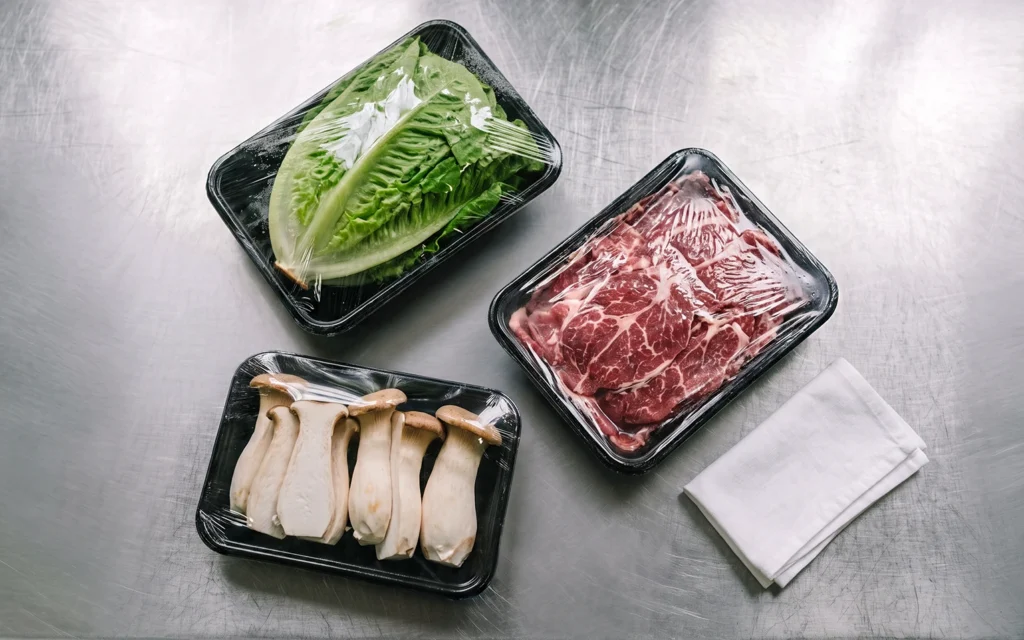
What Each Film Material Actually Does
Each cling film family has a distinct personality. Knowing these differences up front prevents most purchasing mistakes.
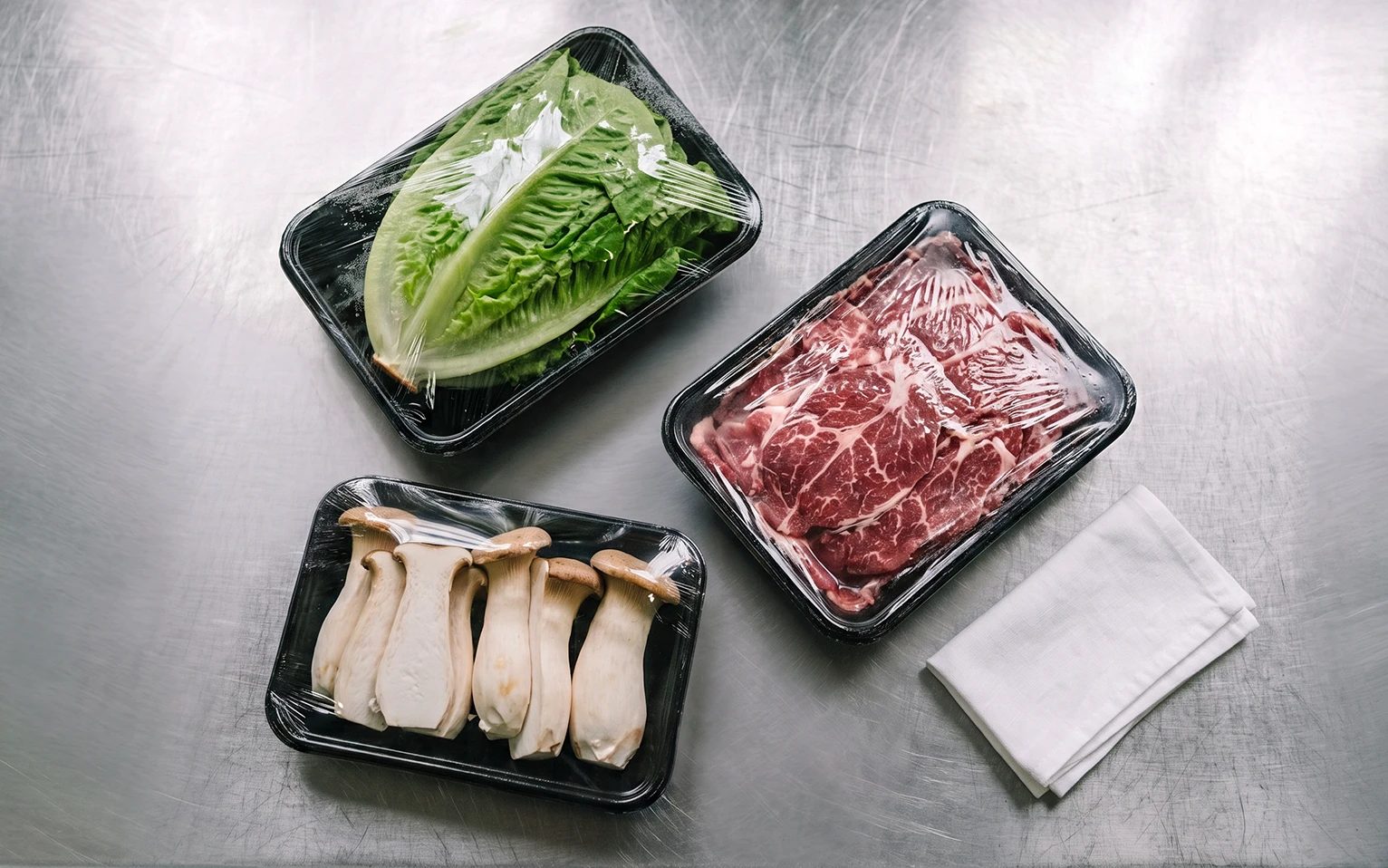
- PVC film clings tightly and stretches well, giving packages a drum-tight, glossy finish that looks great under supermarket lighting. It performs poorly in direct contact with fatty foods and is less common in markets with strict food-contact rules.
- PE film is food-safe across a broad range of applications, including fatty and oily products. It is thicker and stiffer, so it needs more tension control from the machine, and the finished package looks less glossy.
- PO film sits in the middle: lighter, clearer, and with decent self-adhesion. It is often chosen when retailers want presentable packages without PVC’s regulatory baggage.
A quick side-by-side look:
| Property | PVC Film | PE Film | PO Film |
| Cling & stretch | Excellent | Moderate | Good |
| Gloss / shelf appearance | High | Lower | High |
| Fatty-food contact | Limited | Suitable | Generally suitable |
| Typical roll feel | Soft, stretchy | Stiffer, thicker | Light, clear |
| Regulatory acceptance | Varies by market | Widely accepted | Widely accepted |
How Your Machine Affects Film Performance
The same roll can produce a tight package on one machine and a loose, wrinkled one on another. Film behavior depends heavily on how the equipment handles it.
Tension control is the biggest factor. PE film, being stiffer, needs steady and adjustable tension; a machine with imprecise control will produce loose corners or over-stretched edges. Cutting and sealing also matter: softer PVC films cut cleanly at moderate speeds, while PE often demands a sharper blade and a more deliberate wrap cycle.
Speed adds another layer. A machine running 10–12 packs per minute gives each film less time to settle, so adhesion and cut quality must hold up at that pace, not just in a slow test.
What This Means for Your Daily Operation
- Loose, wrinkled wraps usually point to tension mismatch, not operator error.
- Frequent film breakage often comes from over-tensioning a softer film.
- Switching film brands mid-production works only if the machine tolerates varying roll widths and core sizes without recalibration.
Why Film Compatibility Should Shape Your Buying Decision
Here is the point most buyers miss: the machine does not just wrap film — it locks you into a film supply chain. Equipment restricted to one material ties your unit cost to a single supplier and leaves you exposed when that price moves.
Our desktop cling film wrapping machine is built to accept standard PE, PO, and PVC rolls with no proprietary film requirement. For a procurement team, that translates into three concrete advantages:
- Negotiating power. You can quote multiple film suppliers against each other instead of buying locked consumables.
- Product flexibility. Wrap fresh produce in PO today and meat cuts in PE tomorrow, on the same machine.
- Lower total cost of ownership. Standard commercial rolls (250–450 mm width, up to 160 mm diameter) are stocked everywhere, which reduces both unit cost and the risk of supply interruptions.
The machine itself is a compact SUS304 stainless steel unit with an HD touchscreen, dual wrapping modes for both tray and trayless (naked) wrapping, and a photoelectric sensor for accurate edge positioning — designed to run whichever film your buying team selects that week.

Matching Film to Product: A Practical View
There is no universal “best” film; the right choice depends on what sits under it.
- Fresh produce and fruit punnets: PO film generally offers the best mix of clarity and cost.
- Meat, poultry, and fatty foods: PE is typically the safer food-contact choice.
- High-visibility retail displays: PVC delivers the tightest, glossiest presentation where regulations permit it.
If your product mix spans several of these categories, film flexibility stops being a nice-to-have. It becomes the difference between one machine serving the whole line and needing separate setups for different products.
Frequently Asked Questions
Can one wrapping machine handle all three film types?
Yes, provided the machine is designed for broad consumable compatibility. Our desktop model runs standard PE, PO, and PVC rolls within a 250–450 mm width range without any retrofit or adapter purchase.
Which film is cheapest to run?
It depends on your local film market and product mix. PE rolls are often priced attractively in bulk, while PO can reduce waste on produce because its clarity and cling suit lighter packages. Compare cost per package wrapped, not cost per roll.
Does switching between PVC and PE films require machine adjustment?
Usually a minor one. Softer PVC and stiffer PE respond differently to tension, so a brief tension check — and occasionally blade speed — is recommended when changing film types on the same machine.
Is PVC cling film still safe for food packaging?
It depends on your market’s regulations and whether the film contacts fatty foods directly. Many regions restrict PVC for certain food types, which is why we recommend confirming local rules before committing to PVC as your primary film.
How many packages per minute can a commercial desktop machine wrap?
Our standard unit achieves 11 packs per minute (roughly 660 packs per hour), with package dimensions up to 280 mm in length and 2,000 g in weight — sufficient for most supermarket and butcher counters.