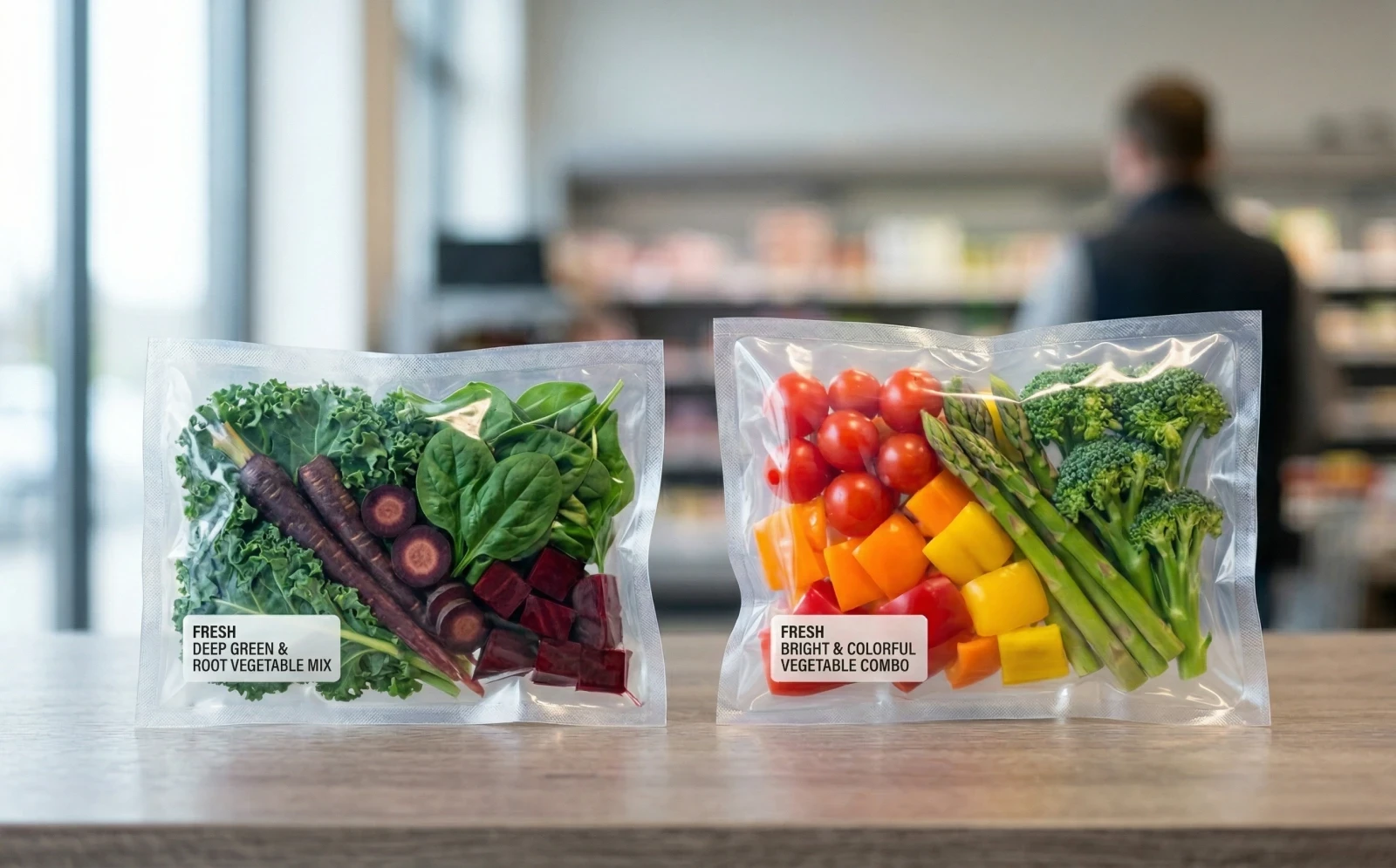
Modified atmosphere packaging (MAP) is a preservation method that replaces the air inside a container with a specific gas mixture to protect product texture, while vacuum packaging removes all air to create a tight, compressed seal. A map packaging machine allows for the precise management of carbon dioxide and nitrogen to inhibit spoilage without physically damaging the item.
You are likely facing the dilemma of choosing a cost-effective way to extend shelf life without sacrificing the visual appeal of your premium food products. High-quality items like fresh pastries, leafy greens, or tender steaks often lose their market value when crushed by the intense pressure of a vacuum seal, leading to customer dissatisfaction and brand erosion. By understanding the technical differences between these two methods, you can select the right equipment to maintain product integrity and ensure a successful retail presentation.
What is the main difference between MAP and vacuum sealing?
The main difference is that a map packaging machine balances the internal atmosphere with protective gases, whereas vacuum sealing relies on total air extraction and physical compression. When you use a map packaging machine, you are creating a stable environment that surrounds the product rather than collapsing the packaging material onto it.
Here’s the deal. Vacuum packaging is a “passive” preservation style that simply removes the oxygen required for most spoilage bacteria to grow. In contrast, MAP is an “active” technology where the gas mixture works to physically support the package and chemically inhibit decay.
- Vacuum packaging creates high physical pressure on the food surface.
- MAP utilizes nitrogen as a filler to prevent package collapse and “product squeeze”.
- Vacuum sealing is often limited to solid, non-delicate items like hard cheeses or frozen meats.
- MAP technology is required for multi-component meals or fragile produce.
| Feature | Vacuum Sealing | MAP Technology |
|---|---|---|
| Internal Pressure | Negative / High Compression | Balanced / Atmospheric |
| Gas Usage | None | CO2, N2, O2 Blends |
| Product Volume | Compressed | Maintained |
| Visibility | Tight Wrap | Natural Display |
The mechanical approach of each method dictates which types of food can be processed without losing their commercial value.
Key Takeaway: A map packaging machine provides a superior solution for products that require physical protection and a natural retail appearance.
How does a map packaging machine protect delicate product textures?
A map packaging machine protects delicate textures by creating a pressurized gas cushion that prevents the packaging film from collapsing onto the food. This cushion is a primary advantage when your production involves items that are easily deformed or crushed under the weight of a standard vacuum.
Look at it this way. If you were to vacuum-seal a fresh croissant or a salad, the removal of air would flatten the product into an unappealing mass. A map packaging machine solves this by injecting nitrogen, which is an inert gas that keeps the bag or tray plump and structurally sound.
- Nitrogen (N2) provides the internal volume necessary to keep films away from the product.
- The absence of compression prevents juices from being squeezed out of fresh proteins.
- Soft cheeses maintain their shape and do not fuse together into a single block.
- Leafy vegetables remain crisp and are not bruised by the plastic wrap.
| Food Type | Vacuum Effect | MAP Effect |
|---|---|---|
| Fresh Berries | Crushed / Juiced | Maintained Shape |
| Sliced Meat | Fused Layers | Easy Separation |
| Bread/Pastry | Flattened | Fluffy / Original Volume |
| Leafy Greens | Bruised / Wilting | Crisp / Respiration Controlled |
The ability to control the physical environment inside the container is what sets MAP apart as a professional-grade solution.
Key Takeaway: Using a map packaging machine is the only way to package pressure-sensitive foods while retaining their original texture and shape.
Why does MAP maintain food color better than vacuum packaging?
MAP maintains color better because a map packaging machine can inject precise levels of oxygen to keep red meat vibrant or use nitrogen to prevent the browning of produce. While vacuum packaging removes oxygen—which can turn fresh beef purple—a map packaging machine allows you to tailor the atmosphere to the specific pigment requirements of your product.
Think about it. The consumer’s first impression of freshness is based almost entirely on color. If your fresh beef looks dark or purple due to a vacuum, buyers may perceive it as old, even if it is perfectly safe to eat.
- High-oxygen MAP (70-80% O2) is used specifically for red meat to maintain oxymyoglobin levels.
- Low-oxygen MAP prevents the oxidation of fats and oils in nuts and snacks.
- Nitrogen flushing prevents the browning of pre-cut fruits and vegetables.
- Controlled CO2 levels stop the growth of mold that can cause surface discoloration.
| Product | Preferred Gas Blend | Visual Result |
|---|---|---|
| Fresh Beef | High O2 / CO2 | Bright Red |
| Sliced Ham | N2 / CO2 | Natural Pink |
| Cut Potatoes | 100% N2 | White / No Browning |
| Fresh Fish | Low O2 / N2 / CO2 | Translucent / Fresh |
The technical flexibility of the gas mixture ensures that your products look as fresh on the retail shelf as they did at the moment of production.
Key Takeaway: A map packaging machine gives you the power to manage product color through precise oxygen and nitrogen ratios.
Which method provides a longer shelf life for fresh products?
While both methods extend shelf life, a map packaging machine often provides a more tailored environment that inhibits specific aerobic bacteria more effectively for fresh goods. By adjusting the concentration of carbon dioxide (CO2), a map packaging machine creates an environment that actively suppresses microbial growth without needing chemical additives.
It gets better. CO2 has a natural antimicrobial effect that is most effective when it is dissolved into the moisture of the food product. In a vacuum-sealed package, you lack this active gas barrier, relying solely on the absence of oxygen to slow down spoilage.
- CO2 concentrations of 20% or higher are required to stop mold and yeast.
- Nitrogen prevents the growth of aerobic bacteria by displacing oxygen.
- MAP allows for “breathable” environments for produce that continues to respire after harvest.
- Vacuum packaging can sometimes encourage the growth of dangerous anaerobic bacteria if not refrigerated correctly.
| Spoilage Factor | Vacuum Response | MAP Response |
|---|---|---|
| Aerobic Bacteria | Inhibited by air removal | Inhibited by CO2 / N2 |
| Mold Growth | Limited | Highly Suppressed by CO2 |
| Respiration | Stopped (bad for veg) | Managed (good for veg) |
| Oxidation | Excellent Prevention | Tailored Control |
The biological needs of your food item should dictate whether a vacuum or a specific gas mixture is the most effective preservation tool.
Key Takeaway: For fresh, high-moisture products, the antimicrobial properties of CO2 in a map packaging machine offer a more robust defense against spoilage.
Is vacuum packaging more cost-effective than using MAP technology?
Vacuum packaging typically has lower initial equipment costs, but using a map packaging machine can result in higher long-term profits through reduced waste and higher retail pricing. While a map packaging machine requires an investment in food-grade gases, the ability to reach more distant markets often offsets these operational expenses.
To be fair. If you are only packaging hard, frozen, or very low-cost items, the simplicity of a vacuum machine might be sufficient. However, for high-value B2B suppliers, the “perceived value” of a MAP-packaged product allows for a higher price point that covers the cost of the nitrogen and CO2.
- MAP equipment is generally more complex and requires more maintenance than basic vacuum sealers.
- Ongoing gas costs must be factored into the per-unit price.
- Reduced product returns due to spoilage or crushing can save thousands of dollars annually.
- Retailers often pay a premium for MAP products because they have a longer “sell-by” window.
| Cost Factor | Vacuum Packaging | MAP Packaging |
|---|---|---|
| Machine Price | Lower | Higher |
| Consumables | Bags / Film | Bags / Film + Gas |
| Waste Rate | Moderate (due to crushing) | Very Low |
| Market Reach | Local / Regional | Regional / National |
The decision between these two systems is a balance between your immediate capital budget and your long-term revenue goals.
Key Takeaway: The higher initial cost of a map packaging machine is a strategic investment that pays for itself through improved product quality and expanded distribution.
How do you choose between these two technologies for your facility?
You should choose based on whether your product is sensitive to physical pressure and how important the “fresh” retail appearance is to your target buyers. Your decision process should begin with a thorough reading of The Comprehensive Guide to Modified Atmosphere Packaging Machines (MAP Machine) for Industrial Efficiency to understand the full scope of available technology.
That is not all. You must also consider your existing production floor space and the technical capabilities of your staff. A vacuum machine is often smaller and easier to operate, while a MAP system offers the high-speed automation required for large-scale industrial growth.
- Product Sensitivity: If it can be crushed, choose MAP.
- Target Market: If you sell to high-end supermarkets, choose MAP for better presentation.
- Shelf Life Goals: If you need to ship across national borders, choose MAP for tailored gas control.
- Budget: If you are a startup with limited funds and hard products, start with vacuum.
| Product Type | Recommended Method | Primary Reason |
|---|---|---|
| Fresh Meat / Poultry | MAP | Color and microbial control |
| Hard Cheese Blocks | Vacuum | Cost and space efficiency |
| Salads / Produce | MAP | Respiration management |
| Frozen Seafood | Vacuum | Cost and oxidation prevention |
Selecting the right technology is the most pivotal decision you will make for the long-term viability of your production line.
Key Takeaway: Choosing between MAP and vacuum packaging requires a clear understanding of your product’s biological needs and your brand’s quality standards.
Reliancepak specializes in providing the technical expertise and robust machinery required to help B2B food producers make the right choice for their specific applications. Our goal is to ensure that your packaging line is a strategic advantage that allows you to scale your operations and satisfy the most demanding retail partners. If you are ready to evaluate which system will best serve your production goals, we suggest contacting our technical team for a detailed consultation.
We believe that the future of food distribution lies in precision technology that reduces waste and maintains natural quality. By investing in the right packaging solution today, you are securing the growth and reputation of your brand for years to come.
FAQ
Can I use the same machine for both MAP and vacuum packaging?
Yes. Most industrial-grade MAP machines allow you to select a “Vacuum Only” mode in the PLC settings, giving you the flexibility to handle different product types on a single production line.
Is gas usage expensive for a map packaging machine?
No. While there is an ongoing cost for nitrogen and carbon dioxide, it typically represents a very small percentage of the total package cost, often less than the value lost from a single spoiled or crushed item.
Does MAP packaging require special films?
Yes. To be effective, MAP requires high-barrier films that prevent the protective gases from leaking out and oxygen from seeping in, ensuring the atmosphere remains stable throughout the shelf life.
Is vacuum packaging bad for fresh meat?
No, it is safe, but it can turn red meat purple and compress the fibers, which might make the product less attractive to retail consumers compared to meat in a MAP tray.
Which method is better for frozen products?
Yes, vacuum packaging is often better for frozen goods because it removes all air that could cause “freezer burn,” and the physical appearance of the product is less important when it is in a frozen state.