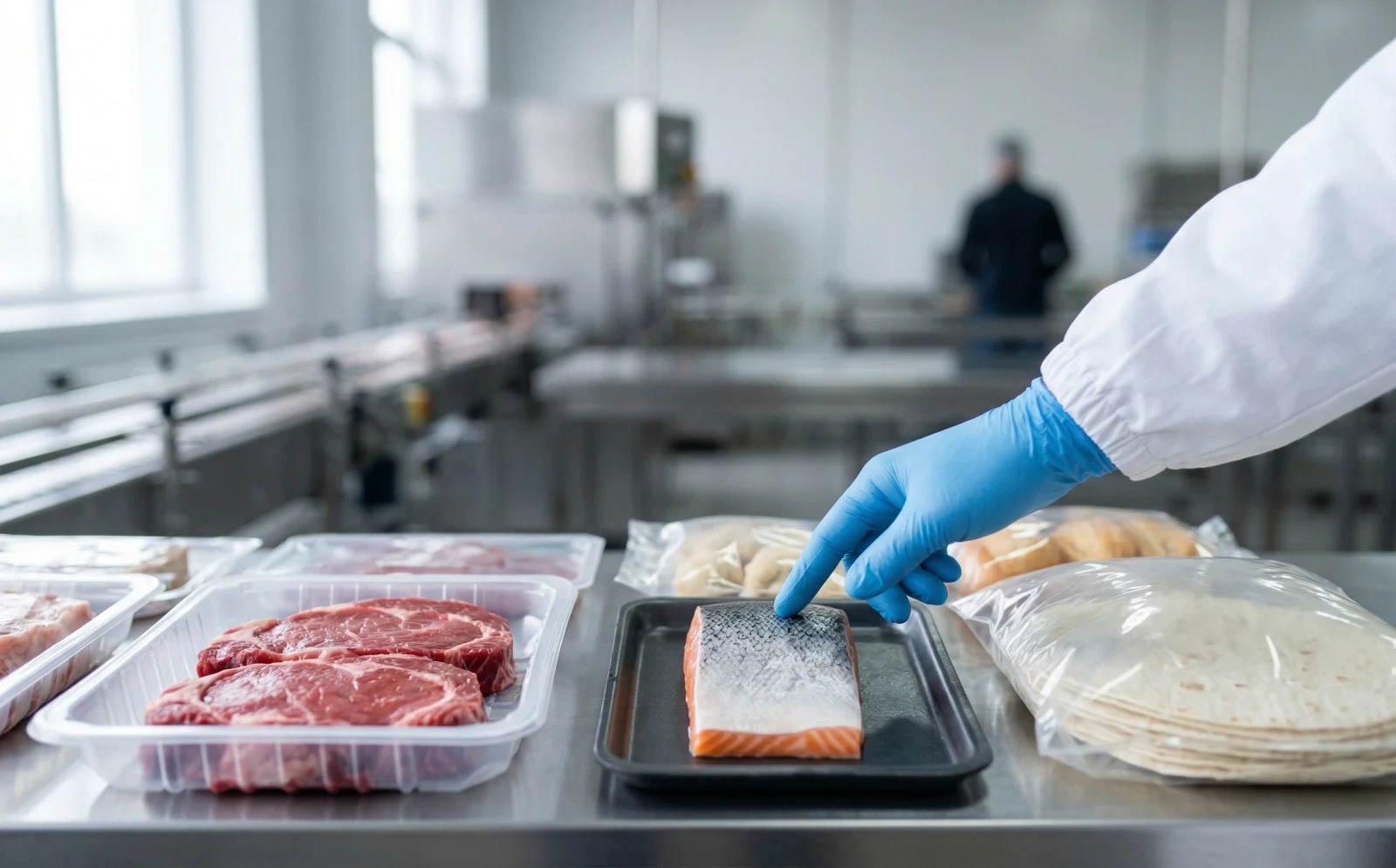
To choose the right map packaging machine, you must evaluate your product’s specific gas respiration requirements, the required throughput speed of your facility, and the physical container format that best serves your retail target. By matching these technical variables to the capabilities of the equipment, you ensure long-term shelf stability and operational efficiency.
Running a food production facility often leads to frustration when equipment cannot keep up with seasonal demand or fails to preserve delicate items correctly. If you invest in a system that lacks precision, you face high spoilage rates and inconsistent product quality that damages your reputation with professional buyers. This guide provides the technical criteria for selecting a map packaging machine that fits your facility requirements while providing a stable return on investment.
What is the first step in selecting a map packaging machine?
The first step in selecting a map packaging machine is determining the specific gas mixture and vacuum levels your food product requires to reach its maximum shelf life. This map packaging machine must be capable of reaching precise millibar levels to ensure that residual oxygen does not cause premature spoilage of your inventory.
Identifying Respiration Requirements
Here is the deal: different proteins and produce have unique biological needs that dictate the gas ratio.
- Red meats typically require high oxygen to maintain a vibrant red color.
- Poultry and processed meats favor high carbon dioxide levels to suppress microbial growth.
- Bakery products use nitrogen to prevent mold without causing the package to collapse.
- Fresh produce needs a breathable atmosphere that balances with its natural respiration rate.
| Product Type | Primary Gas | Target Shelf Life |
| Fresh Beef | Oxygen / CO2 | 5-8 Days |
| Sliced Ham | Nitrogen / CO2 | 15-20 Days |
| Fresh Salad | Low Oxygen | 7-10 Days |
Technical precision in the gas mixing phase is the foundation of any successful packaging strategy.
Key Takeaway: Selecting a map packaging machine starts with a clear understanding of the gas environment required to stop the biological decay of your specific product.
How do you calculate the required capacity of a map packaging machine?
You calculate the required capacity of a map packaging machine by measuring your daily output targets and matching them to the cycles-per-minute rating of the equipment while accounting for cleaning downtime. A map packaging machine that is too slow will create a bottleneck in your production, while a system that is too large results in unnecessary energy costs.
Scaling for Daily Production Targets
The truth is that your machine should handle at least twenty percent more than your current peak demand to allow for future growth.
- Tabletop units are suitable for small batches or laboratory testing.
- Semi-automatic drawer systems handle mid-range volumes for regional suppliers.
- Automatic inline systems provide the high speed needed for large-scale industrial plants.
- Continuous thermoformers offer the highest throughput for high-volume producers.
| Machine Level | Cycles Per Minute | Daily Capacity (8h) |
| Semi-Auto | 5 – 10 | 2,400 – 4,800 |
| Automatic Inline | 20 – 60 | 9,600 – 28,800 |
| Thermoformer | 60+ | 30,000+ |
Throughput calculations must include the time required for material changes and routine sanitation.
Key Takeaway: Correct capacity matching ensures that your map packaging machine remains an efficient link in your supply chain without causing delays.
Which package format should your map packaging machine support?
Your map packaging machine must support the specific container format—whether rigid trays, flexible pouches, or thermoformed skins—that your retail customers demand for shelf visibility. The choice of a map packaging machine often depends on whether your buyers favor the physical protection of a tray or the material efficiency of a bag.
Rigid Trays vs Flexible Pouches
Look at it this way: the packaging format influences both the shipping costs and the perceived value of the food.
- Rigid trays protect delicate items like ready meals or soft fruits from being crushed during transport.
- Flexible pouches are lightweight and reduce the total volume of waste for the consumer.
- Thermoformed packages are created and sealed in one motion, lowering the cost per unit.
- Skin packaging provides a high-end look for premium proteins by contouring to the product shape.
| Format | Protection Level | Material Cost |
| Rigid Tray | High | Moderate |
| Pouch | Moderate | Low |
| Thermoform | High | Very Low |
The packaging style should align with the expectations of your target retailers and the physical needs of the food.
Key Takeaway: Versatility in package format allows your map packaging machine to adapt to changing consumer trends and different retail requirements.
Does the automation level of a map packaging machine affect ROI?
The automation level directly impacts your return on investment by reducing manual labor costs and increasing the consistency of the final seal in a map packaging machine. When you choose a map packaging machine with high automation, you decrease the risk of human error during the vacuum and gas flush cycle.
Semi-Automatic vs Fully Automatic
It gets better: automatic systems often pay for themselves through the reduction of labor overhead in high-volume facilities.
- Semi-automatic machines require manual loading but offer lower initial capital costs.
- Automatic systems integrate with conveyor lines for a touchless production flow.
- Robotic loading can be added to automatic lines to further improve speed.
- Digital control systems allow for the storage of multiple recipes to speed up product transitions.
| Feature | Semi-Automatic | Fully Automatic |
| Labor Needs | High | Low |
| Consistency | Variable | High |
| Initial Cost | Lower | Higher |
Evaluating your local labor costs against the price of automation is a necessary part of your procurement strategy.
Key Takeaway: High levels of automation in a map packaging machine provide the long-term stability and cost savings required for industrial scaling.
Why is vacuum pump performance critical for a map packaging machine?
Vacuum pump performance is critical because it determines how quickly the air is removed, which dictates the overall cycle speed and gas accuracy of the map packaging machine. A map packaging machine that uses a low-quality pump will struggle to reach the vacuum levels needed to prevent spoilage.
Selecting Pump Specifications
Here is the deal: the pump is the heart of the system and must be sized correctly for the chamber volume.
- Oil-free pumps are preferred for clean-room environments and specific food safety standards.
- Rotary vane pumps offer high vacuum depth for products requiring very low oxygen levels.
- High-capacity pumps reduce the duration of the air extraction phase, increasing daily output.
- Proper filtration prevents food particles from damaging the pump internals over time.
| Pump Type | Vacuum Depth | Maintenance |
| Rotary Vane | Very Deep | Moderate |
| Oil-Free | Moderate | Low |
| Liquid Ring | Moderate | High |
The efficiency of the vacuum phase is the primary factor in the final shelf life of the packaged goods.
Key Takeaway: Investing in a high-performance vacuum pump ensures that your map packaging machine operates at peak speed without compromising food safety.
What material grade is necessary for an industrial map packaging machine?
An industrial map packaging machine should be constructed from high-grade stainless steel, such as SUS304, to ensure durability and hygiene compliance in food processing environments. Utilizing a map packaging machine made from corrosion-resistant materials prevents damage from the harsh chemicals used during daily sanitation routines.
Hygiene and Maintenance Standards
The truth is that food-grade construction is a non-negotiable requirement for passing safety audits in major export markets.
- Sloped surfaces prevent water from pooling after the wash-down process.
- IP-rated electronics are protected from moisture during high-pressure cleaning.
- Open-frame designs allow for easy access to all internal components for inspection.
- Tool-free removal of conveyor belts speeds up the sanitation cycle.
| Material | Application | Benefit |
| SUS304 | Main Frame | Corrosion resistance |
| Teflon | Sealing Bars | Non-stick performance |
| Food-grade Silicone | Gaskets | Airtight reliability |
Durable construction reduces the long-term cost of ownership by preventing mechanical failures and rust.
Key Takeaway: The material quality of your map packaging machine dictates its lifespan and your ability to maintain strict hygiene standards.
How do tool changeover speeds impact a map packaging machine line?
Tool changeover speeds impact your production efficiency by determining how long the map packaging machine is idle when switching between different tray sizes or product types. A map packaging machine designed for quick changes allows you to remain responsive to diverse retail orders without losing hours of production time.
Minimizing Operational Downtime
Here is the deal: modular mold designs enable your staff to switch formats in a matter of minutes.
- Rapid-lock systems allow for the manual removal of molds without specialized tools.
- Pre-heated sealing heads reduce the wait time required for the machine to reach operating temperature.
- PLC recipe memory instantly recalls the correct vacuum and gas settings for the new format.
- Synchronized sensors automatically adjust to the new tray dimensions to prevent film waste.
| Changeover Step | Manual Time | Rapid-Change Time |
| Mold Removal | 15 Mins | 2 Mins |
| Parameter Setup | 10 Mins | 1 Min |
| Re-heating | 10 Mins | 3 Mins |
Reducing the complexity of tool changes increases the overall flexibility of your production facility.
Key Takeaway: Quick changeover capabilities in a map packaging machine are pivotal for facilities that handle multiple product lines throughout a single shift.
What after-sales support should you expect for a map packaging machine?
You should expect after-sales support that includes remote technical assistance, readily available spare parts, and on-site maintenance to keep your map packaging machine operational. A reliable supplier of a map packaging machine understands that downtime is the most expensive problem in a B2B food production environment.
Verifying Supplier Reliability
The point is that the value of the equipment is tied to the expertise and responsiveness of the manufacturer.
- Spare parts kits should be provided with the machine for common wear items like sealing wires.
- Technical documentation must be clear and available in your local language.
- Remote diagnostics allow engineers to troubleshoot software issues without a site visit.
- On-site training for your operators ensures the equipment is used correctly from day one.
| Support Type | Importance | Goal |
| Remote Tech | High | Rapid problem solving |
| Spare Parts | Critical | Zero production stops |
| Operator Training | High | Machine longevity |
Choosing a partner with a proven track record is as necessary as choosing the correct technical specifications.
Key Takeaway: Robust after-sales support for your map packaging machine is the best insurance against costly production halts and technical failures.
Reliancepak understands the technical complexities of selecting the right equipment for your facility. We suggest reviewing the comprehensive guide to modified atmosphere packaging machines to see how our systems integrate into a complete production strategy. Our team is ready to provide the customization and technical data you need to make an informed decision for your production line.
We are committed to helping you improve your efficiency through reliable engineering and professional support. Our goal is to ensure that your packaging process becomes a strategic advantage for your business growth.
FAQ
Can I use a map packaging machine for both meat and vegetables?
Yes. Most industrial machines allow you to store different recipes in the PLC, where you can pre-set the vacuum depth and gas mixture for various product types on a single production line.
How do I know if I need a semi-automatic or automatic machine?
Yes, the decision is based on volume. If you produce fewer than 2,000 packs per day, a semi-automatic unit is typically sufficient; for higher volumes, an automatic inline system is necessary to keep labor costs low.
Is it hard to maintain a map packaging machine?
No. While it requires daily cleaning and periodic vacuum pump oil changes, the machines are designed for industrial use and feature accessible components that make routine maintenance straightforward for your technical staff.
Does the machine come with the gas tanks included?
No. You must source food-grade nitrogen, carbon dioxide, and oxygen from a local industrial gas supplier. The machine is then connected to these tanks via a gas mixer or directly to pre-mixed cylinders.
Can I change the tray size later if my retail needs change?
Yes. By purchasing additional mold sets, you can adapt the machine to new tray dimensions. Professional systems are designed with modularity in mind to support the changing needs of your B2B customers.
Meta Description:
Learn how to select the right map packaging machine for your line. Expert B2B guide on capacity, automation, and vacuum specs for industrial food packaging.