A modified atmosphere packaging machine is a specialized industrial system that replaces the ambient air inside a package with a precisely controlled gas mixture to extend the shelf life of perishable goods. This technology primarily utilizes gases such as nitrogen, carbon dioxide, and oxygen to inhibit aerobic spoilage and maintain the freshness, color, and texture of food and medical products without the need for chemical preservatives.
In a high-volume production environment, your biggest challenge is often the rapid degradation of fresh products, which leads to high waste levels and limited distribution range. You are likely dealing with the pressure of maintaining product integrity while trying to lower operational costs and meet the demands of international retailers. This guide provides a technical breakdown of modified atmosphere packaging machine technology, offering the data and operational insights you need to select a system that improves your production stability and broadens your market reach.
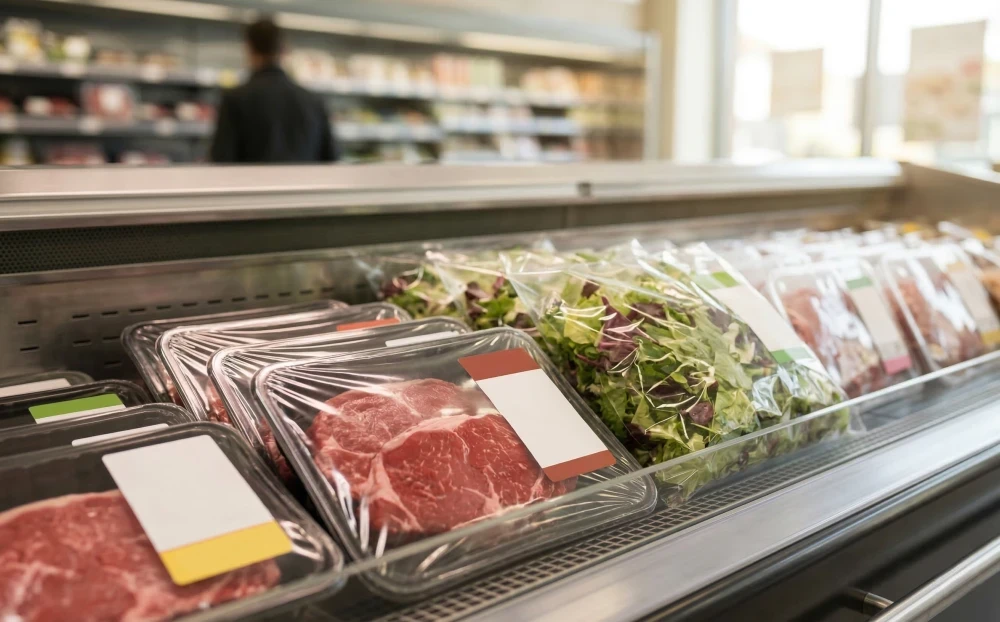
What is a modified atmosphere packaging machine for industrial use?
A modified atmosphere packaging machine is an automated or semi-automated system designed to alter the internal atmosphere of a package to protect the product from biological and chemical decay. By integrating a modified atmosphere packaging machine into your line, you replace standard air—which contains about 21% oxygen—with a tailored gas composition that slows down the aging process of fresh meat, produce, and baked goods.
The Role of Gas Mixtures in MAP
[Link: What Is a Modified Atmosphere Packaging Machine?]
Here is the deal: the effectiveness of the process depends entirely on the gas ratio used. Carbon dioxide acts as a natural antimicrobial agent, while nitrogen serves as an inert filler to prevent package collapse. In some cases, high levels of oxygen are maintained to keep red meat looking vibrant.
- Carbon dioxide (CO2) concentrations usually range from 20% to 80% to suppress mold and bacteria growth.
- Nitrogen (N2) is used to maintain the structural integrity of the bag or tray, preventing the film from clinging to the product.
- Oxygen (O2) is specifically managed to either prevent anaerobic pathogen growth in fish or maintain myoglobin levels in beef.
- Gas mixing valves allow for real-time adjustments based on the specific respiration rate of the food item.
Structural Components of the System
Look at it this way: a professional-grade machine is more than just a sealer. It includes high-precision sensors, vacuum pumps, and gas injection nozzles that work in a synchronized cycle.
- The vacuum system removes existing air to a specified millibar level to ensure a clean starting point.
- Gas flushing nozzles inject the protective mixture at controlled pressures to avoid damaging delicate items like lettuce or berries.
- Sealing bars use heat and pressure to create a hermetic seal that prevents gas migration through the film.
- PLC control panels allow operators to store multiple recipes for different product types, ensuring consistency across batches.
| Component | Function | Material/Spec |
| Vacuum Pump | Removes ambient air | Oil-free or rotary vane |
| Gas Mixer | Creates precise O2/CO2/N2 ratios | Digital or mechanical |
| Sealing Head | Provides airtight closure | Teflon-coated aluminum |
| PLC Controller | Manages cycle timing | Touchscreen interface |
The integration of these components ensures that the modified atmosphere remains stable from the moment of sealing until the consumer opens the package.
Key Takeaway: A modified atmosphere packaging machine is a fundamental tool for any producer looking to stop microbial spoilage and physical degradation through precise gas control.
How does a modified atmosphere packaging machine operate in production?
A modified atmosphere packaging machine operates through a cyclical process of air evacuation, gas replacement, and thermal sealing to create a protective environment for the product. When you utilize a modified atmosphere packaging machine, the sequence begins with the placement of the product into a pouch or tray, followed by a vacuum phase that clears the oxygen-rich environment before the inert gas is introduced.
The Air Evacuation and Gas Injection Cycle
[Link: How Does a Modified Atmosphere Packaging Machine Work?]
Think about it: if even a small percentage of residual oxygen remains, the shelf life of your product could drop by half. The machine uses a two-stage process to ensure the atmosphere is correct.
- The compensation method involves pulling a deep vacuum to remove air from the pores of the product and the headspace.
- Immediately after the vacuum reaches the set point, the gas mixture is flushed into the chamber.
- Flow-wrapping versions of these machines use a continuous gas purge, which is faster but often uses more gas than chamber-based systems.
- Pressure sensors monitor the internal environment to ensure the package does not over-inflate or under-fill.
Material Interaction and Sealing
It gets better: the choice of packaging film is just as important as the gas itself. The machine must work with high-barrier materials to keep the modified atmosphere inside.
- Films containing Ethylene Vinyl Alcohol (EVOH) are frequently used because they offer superior gas barrier properties.
- The sealing temperature must be precisely calibrated to the film thickness to prevent micro-leaks.
- Cool-down periods after sealing allow the plastic to bond permanently, ensuring the atmosphere remains intact during transport.
- Real-time monitoring systems can alert operators if the seal integrity is compromised during a run.
| Stage | Duration (Approx) | Objective |
| Loading | 2-5 Seconds | Product placement in the sealing zone |
| Vacuum | 3-10 Seconds | Removal of ambient oxygen |
| Gas Flush | 2-5 Seconds | Injection of CO2/N2 mixture |
| Sealing | 1-2 Seconds | Permanent closure of the package |
The timing of these stages varies depending on the product volume and the sensitivity of the food item being packaged.
Key Takeaway: The operational success of a modified atmosphere packaging machine depends on the precision of the vacuum-to-gas-flush ratio and the quality of the thermal seal.
What types of modified atmosphere packaging machines fit your facility?
Different types of modified atmosphere packaging machines are categorized by their throughput capacity, package style, and level of automation. Choosing the right modified atmosphere packaging machine requires an understanding of whether your production line favors rigid trays, flexible pouches, or continuous thermoformed containers.
Tray Sealers and Chamber Systems
[Link: Types of Modified Atmosphere Packaging Machines: Tray Sealers, Thermoformers & Chamber Systems]
You might wonder which format provides the best protection for retail-ready goods. Tray sealers are the standard for premium meat and ready-meal presentations.
- Semi-automatic tray sealers are ideal for small to medium batches where an operator manually loads the trays.
- Automatic inline tray sealers can handle up to 60 packs per minute, integrating directly with conveyor systems.
- Chamber MAP machines are used for bulk bags or multiple smaller pouches, providing a very deep vacuum for maximum air removal.
- Handheld or tabletop units serve as a starting point for farm-to-table producers or research labs.
Thermoforming and Flow-Wrap Systems
That is not all: for high-volume industrial players, thermoforming provides the lowest cost per package by creating the container and sealing it in one continuous motion.
- Thermoforming MAP machines use two rolls of film to create a custom-sized tray around the product.
- These systems reduce material waste and allow for rapid changes in package depth and width.
- Horizontal Form Fill Seal (HFFS) machines with MAP capability are used for snacks and bakery items.
- Continuous flow-wrappers use a gas lance to provide a constant stream of nitrogen into the bag as it is formed.
| Machine Type | Typical Throughput | Best Application |
| Tabletop Chamber | 2-4 cycles/min | Lab testing / Small batch |
| Semi-Auto Tray Sealer | 5-10 cycles/min | Regional food plants |
| Automatic Inline | 20-60 cycles/min | Large scale meat/veg |
| Thermoformer | 60+ cycles/min | High-volume industrial |
Selecting a machine type involves balancing your initial capital expenditure with the long-term efficiency of the packaging materials used.
Key Takeaway: From manual tray sealers to high-speed thermoformers, the machine type must align with your specific package format and daily volume requirements.
Is modified atmosphere packaging better than vacuum packaging?
Modified atmosphere packaging is generally superior to vacuum packaging for delicate or multi-component products because it protects the physical structure of the item while extending its shelf life. While a modified atmosphere packaging machine involves a more complex gas management system, it avoids the crushing force of vacuum sealing, which can ruin the texture of soft cheeses, leafy greens, or flaky pastries.
Maintaining Product Appearance and Texture
[Link: Modified Atmosphere Packaging vs Vacuum Packaging]
In simple terms: vacuum packaging removes the air and collapses the plastic around the product, which is fine for hard cheeses or frozen meat but disastrous for fresh cakes.
- MAP prevents “product squeeze,” maintaining the aesthetic appeal required for retail displays.
- The presence of CO2 in MAP provides a more effective barrier against specific aerobic bacteria than a simple vacuum.
- For fresh red meat, a vacuum turns the meat purple due to a lack of oxygen, whereas MAP keeps it bright red.
- MAP allows for “breathable” packaging for produce that continues to respire after harvest.
Cost and Complexity Comparison
To be fair: vacuum packaging machines are simpler and often cheaper to maintain, but they offer less flexibility for a diverse product range.
- MAP requires an ongoing investment in food-grade gases like N2 and CO2.
- The equipment for MAP is typically larger and requires more floor space than basic vacuum sealers.
- Vacuum packaging is often better for long-term frozen storage where aesthetics are secondary.
- MAP provides a higher “perceived value” to the consumer due to the neat, non-compressed appearance of the food.
| Feature | Vacuum Packaging | Modified Atmosphere (MAP) |
| Pressure | High (compression) | Low (balanced) |
| Aesthetic | Compressed / Shrink-wrapped | Natural / Plump |
| Best For | Frozen meat, hard cheese | Fresh produce, baked goods |
| Setup Cost | Lower | Higher |
The choice between these two technologies should be based on how sensitive your product is to physical pressure and how important the visual presentation is to your buyers.
Key Takeaway: Choose a modified atmosphere packaging machine over vacuum systems if you need to protect delicate textures and maintain a fresh, uncompressed retail appearance.
What are the advantages of modified atmosphere packaging machine systems?
The advantages of using a modified atmosphere packaging machine include a significant reduction in food waste, the ability to eliminate chemical preservatives, and an expanded geographic reach for your sales team. When you deploy a modified atmosphere packaging machine, you are investing in a technology that directly improves your bottom line by reducing the frequency of product returns and spoilage claims.
Economic and Logistical Gains
[Link: Benefits of Using Modified Atmosphere Packaging Machines for Food Products]
Here is the deal: extending shelf life from 5 days to 15 days allows you to ship products to more distant regions without the cost of air freight.
- Reduced waste means a higher percentage of your produced goods actually reach the consumer’s plate.
- You can optimize your production schedule by running larger batches and storing them longer.
- Retailers prefer MAP products because they require less frequent restocking and have fewer “mark-downs” due to expiration.
- The ability to ship further means you can enter new markets in neighboring countries or regions.
Quality Assurance and Brand Trust
Look at it this way: your reputation as a supplier depends on the consistency of the food you deliver. MAP provides a reliable barrier against the external environment.
- It maintains the natural flavor profile by preventing the oxidative rancidity of fats and oils.
- MAP is a “clean label” technology, allowing you to market your products as preservative-free.
- The rigid trays used in many MAP systems protect the product from physical damage during long-distance trucking.
- Better quality at the point of consumption leads to higher customer loyalty and repeat orders.
| Benefit Category | Specific Advantage | Impact on Business |
| Operational | Extended shelf life | Lower logistics costs |
| Marketing | Preservative-free | Higher retail price point |
| Financial | Reduced spoilage | Increased net profit |
| Product | Retained nutrients | Better brand reputation |
By removing the reliance on chemicals and freezing, MAP technology offers a more natural way to meet the global demand for fresh, convenient food.
Key Takeaway: The primary value of a modified atmosphere packaging machine lies in its ability to transform your logistics and improve the marketability of fresh goods.
How do you select the best modified atmosphere packaging machine?
Selecting the best modified atmosphere packaging machine for your facility requires a detailed analysis of your product’s respiration rate, your required output speed, and the level of technical support available in your region. Because a modified atmosphere packaging machine is a major investment, you must ensure that the manufacturer can provide the customization needed to integrate the unit into your existing conveyor lines.
Technical Specifications to Consider
[Link: How to Choose the Right Modified Atmosphere Packaging Machine for Your Production Line]
Think about it: a machine that is too slow will create a bottleneck, while a machine that is too complex might lead to excessive downtime if your staff isn’t trained.
- Check the vacuum pump capacity; it determines how quickly the air is removed and thus the overall cycle speed.
- Ensure the PLC software supports the specific gas mixtures required for your different SKUs.
- Look for stainless steel construction (SUS304) to ensure the machine can withstand the harsh cleaning chemicals used in food plants.
- Verify the ease of tool changes; you want a system where you can switch tray sizes in under 15 minutes.
Supplier Reliability and After-Sales
It gets better: the best machine is only as good as the service behind it. In the B2B world, downtime is the most expensive problem you can have.
- Ask for a detailed list of spare parts and their typical lead times.
- Confirm that the supplier offers remote technical support or local technicians who can arrive within 24 hours.
- Request video demonstrations or factory testing with your specific product and trays before shipping.
- Check for certifications like CE or UL to ensure the equipment meets international safety and quality standards.
| Selection Factor | Priority | Why it matters |
| Cycle Speed | High | Determines your daily revenue potential |
| Material Grade | High | Affects machine lifespan and hygiene |
| Gas Accuracy | Critical | Directly impacts the shelf life achieved |
| Tooling Cost | Moderate | Affects the cost of launching new products |
Taking the time to verify these technical details prevents the frustration of owning equipment that fails to meet its advertised performance once installed.
Key Takeaway: Successful procurement of a modified atmosphere packaging machine hinges on matching technical specs to your production goals and ensuring robust after-sales support.
Which food products require modified atmosphere packaging machine tech?
Fresh meats, seafood, pre-cut vegetables, and ready-to-eat meals are the primary products that require modified atmosphere packaging machine technology to remain viable for the retail market. Implementing a modified atmosphere packaging machine allows these highly sensitive items to withstand the temperature fluctuations and delays often found in the cold chain.
Meat, Poultry, and Seafood
[Link: MAP Packaging for Fresh Food: Meat, Seafood, Fruits & Ready Meals]
You might wonder why meat packaging varies so much. It is because different proteins react differently to gas concentrations.
- Red meat (beef, lamb) often uses high-oxygen MAP (70-80% O2) to maintain the red color that consumers associate with freshness.
- Poultry is typically packaged with high CO2 and N2 mixtures to prevent microbial growth without changing the color.
- Seafood is extremely sensitive; it often requires a mixture that includes a small amount of O2 to prevent the growth of anaerobic bacteria like Clostridium botulinum.
- Smoked or processed meats benefit from 100% nitrogen flushes to prevent the oxidation of fats.
Produce and Ready-to-Eat Items
That is not all: fruits and vegetables are living organisms that continue to “breathe” after they are packaged, making gas management even more complex.
- Fresh-cut salads use Equilibrium Modified Atmosphere Packaging (EMAP) where the gas mixture balances with the plant’s respiration.
- Ready meals with multiple components (meat, veg, sauce) require a gas mixture that serves as a “middle ground” for all ingredients.
- Bakery products like tortillas or bread use high CO2 to prevent mold, extending shelf life from days to months.
- Pasta and cheese products use MAP to maintain moisture levels and prevent the oil from going rancid.
| Food Category | Primary Gas Mixture | Typical Shelf Life Extension |
| Fresh Red Meat | 70% O2 / 30% CO2 | 5-8 days extra |
| Fresh Poultry | 30% CO2 / 70% N2 | 7-14 days extra |
| Pre-cut Salad | 5% O2 / 5% CO2 / 90% N2 | 4-7 days extra |
| Hard Cheese | 100% N2 or 30/70 CO2/N2 | 2-4 months extra |
Understanding the biological needs of your product is the first step in configuring the gas settings on your machine.
Key Takeaway: The versatility of a modified atmosphere packaging machine makes it a required asset for a wide range of perishable food sectors, from protein to produce.
How do you fix issues with a modified atmosphere packaging machine?
Common issues with a modified atmosphere packaging machine usually involve seal leaks, incorrect gas concentrations, or vacuum pump inefficiency. When you encounter a problem with your modified atmosphere packaging machine, the first step is to perform a standardized leak test to determine if the failure is mechanical or material-based.
Managing Seal Integrity and Leaks
[Link: Common Problems in Modified Atmosphere Packaging and How to Solve Them]
In simple terms: even a pinhole leak will allow the protective gas to escape and oxygen to enter, ruining the batch.
- Inspect the sealing bars for carbon buildup or damaged Teflon tape, which can cause uneven heat distribution.
- Check the film tension; if the film is too loose, it can create “wrinkle leaks” at the corners of the tray.
- Use a water bath or a CO2 sniffer to identify the exact location of gas escaping from the package.
- Ensure the sealing pressure is high enough to bond the film to the tray flange even if there is slight moisture or fat contamination.
Solving Gas Mixture and Vacuum Failures
To be fair: sometimes the machine looks like it is working, but the gas levels inside the package are wrong. This is usually a sensor or valve issue.
- Recalibrate your gas mixing valves monthly to ensure the O2/CO2/N2 ratios haven’t drifted.
- Check vacuum pump filters; a clogged filter will slow down the cycle and prevent a deep enough vacuum.
- Verify that your gas supply tanks are not empty or icing over, which can happen during high-volume runs.
- Test the internal atmosphere of a random sample from every batch using a handheld gas analyzer.
| Problem | Likely Cause | Solution |
| Weak Seal | Low temperature/pressure | Increase seal settings or clean bars |
| High Oxygen Levels | Vacuum pump failure | Replace filters or check pump oil |
| Package Collapse | Incorrect N2 ratio | Increase nitrogen percentage in mixer |
| Burned Film | High temperature | Lower seal temp or increase speed |
A proactive maintenance schedule is the best way to prevent these technical hurdles from stopping your production.
Key Takeaway: Most problems with a modified atmosphere packaging machine can be solved through regular calibration and maintaining a clean sealing environment.
Conclusion
As your production expands, the stability and efficiency of your packaging process will determine your competitive edge. Reliancepak provides the industrial expertise and robust machinery needed to master modified atmosphere packaging, ensuring your products stay fresh from the factory to the consumer’s table. If you are ready to improve your shelf life and scale your operations, we invite you to consult with our technical team to find the perfect MAP solution for your specific needs.
We are committed to helping you achieve production excellence through precision engineering and reliable support. Our goal is to ensure that your packaging line is not just a stage in the process, but a strategic advantage for your business growth.
FAQ
Can I use the same modified atmosphere packaging machine for different products?
Yes. Most industrial MAP machines allow you to save multiple “recipes” in the PLC, where you can pre-set the vacuum depth, gas mixture, and sealing temperature for various items like meat, cheese, or vegetables.
How do I know which gas mixture is right for my food product?
The mixture depends on the respiration rate and fat content of the food. Generally, red meats require high O2 to stay red, while mold-sensitive products like bread require high CO2; you should consult with a gas specialist or your machine manufacturer for a precise recommendation.
Is it expensive to maintain a modified atmosphere packaging machine?
No. While there are ongoing costs for food-grade gases and periodic replacement of sealing wires and Teflon tape, the reduction in food waste and returned orders typically covers these maintenance costs many times over.
Can a modified atmosphere packaging machine handle liquid products?
Yes, but it requires specific configurations. Special vacuum-stop features or inclined loading systems are used to prevent liquids from being sucked into the vacuum pump during the air removal phase.
How long does it take to see a return on investment (ROI)?
Most of our clients see an ROI within 6 to 18 months. This is achieved through a combination of reduced labor costs via automation, significantly lower product spoilage, and the ability to sell into higher-priced, more distant markets.