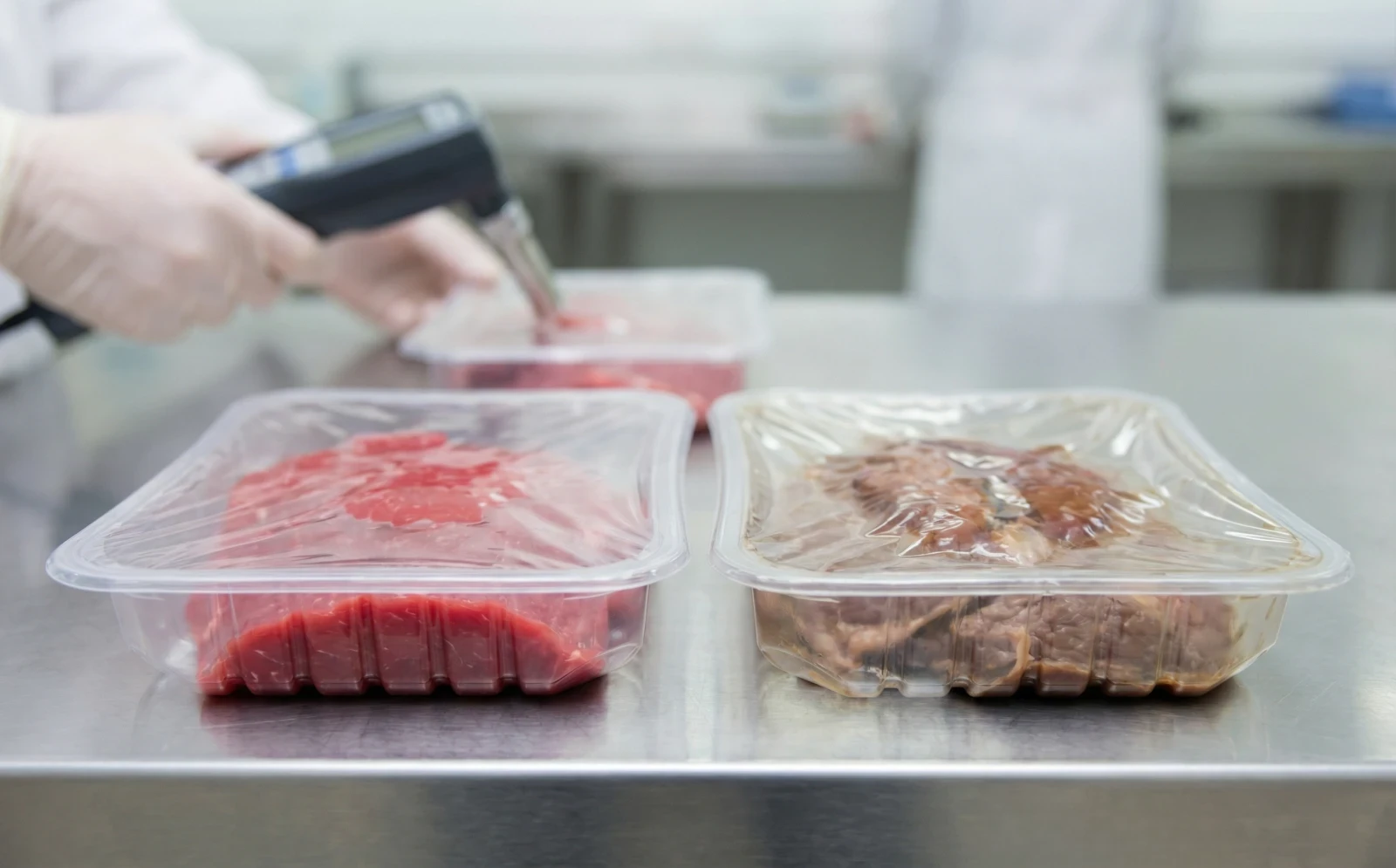
Common problems in modified atmosphere packaging include seal leaks, incorrect gas concentrations, and package deformation, which are typically resolved by recalibrating the map packaging machine or adjusting film tension. These issues often arise from mechanical wear, environmental fluctuations, or improper material selection, requiring a systematic approach to technical maintenance and quality control.
You might find your fresh food inventory spoiling prematurely despite investing in gas flushing technology, leading to high return rates and damage to your brand reputation. This failure in the packaging process creates a bottleneck in your supply chain and results in significant financial losses for your factory. By identifying and correcting the root causes of atmospheric inconsistencies, you can ensure that every package remains stable and reaches the retail shelf in peak condition.
Why do seal leaks occur in a map packaging machine?
Seal leaks in a map packaging machine occur when the thermal energy or pressure applied to the tray flange is insufficient to create a hermetic bond between the film and the container. When you utilize a map packaging machine, maintaining the integrity of this seal is the only way to prevent the protective gas from escaping and ambient oxygen from infiltrating the package.
Inspecting Sealing Bar Temperature and Pressure
Here is the deal: if the temperature of the sealing bars fluctuates by even a few degrees, the film will not fuse correctly to the tray.
- Use a digital thermometer to verify that the temperature across the entire bar is uniform.
- Check the pneumatic cylinders to ensure they are providing equal pressure to both ends of the sealing head.
- Clean any carbon buildup or food debris from the Teflon surface to prevent uneven heat distribution.
Material Compatibility and Surface Contamination
Look at it this way: the presence of fat, moisture, or salt on the sealing area acts as a barrier that prevents a permanent bond.
- Adjust your filling nozzles to prevent product splashes onto the tray flange during the loading phase.
- Verify that the film and the tray are made of compatible polymers, such as PP trays with PP-based films.
- Inspect the tray for structural defects or warping that might prevent the sealing bars from making full contact.
| Failure Point | Root Cause | Solution |
| Weak Seal | Low Temperature | Increase heat setting on PLC |
| Patchy Seal | Dirty Sealing Bars | Clean Teflon tape or replace |
| Edge Leaks | Warped Tray | Check tray quality and storage |
The stability of your seal is the physical foundation of the entire modified atmosphere process.
Analysis: Mechanical calibration of the sealing head is the most frequent fix for intermittent leak issues in high-volume lines.
Key Takeaway: Consistent seal integrity requires a clean environment and precisely managed thermal settings to lock in the modified atmosphere.
How can you identify incorrect gas mixtures in your packages?
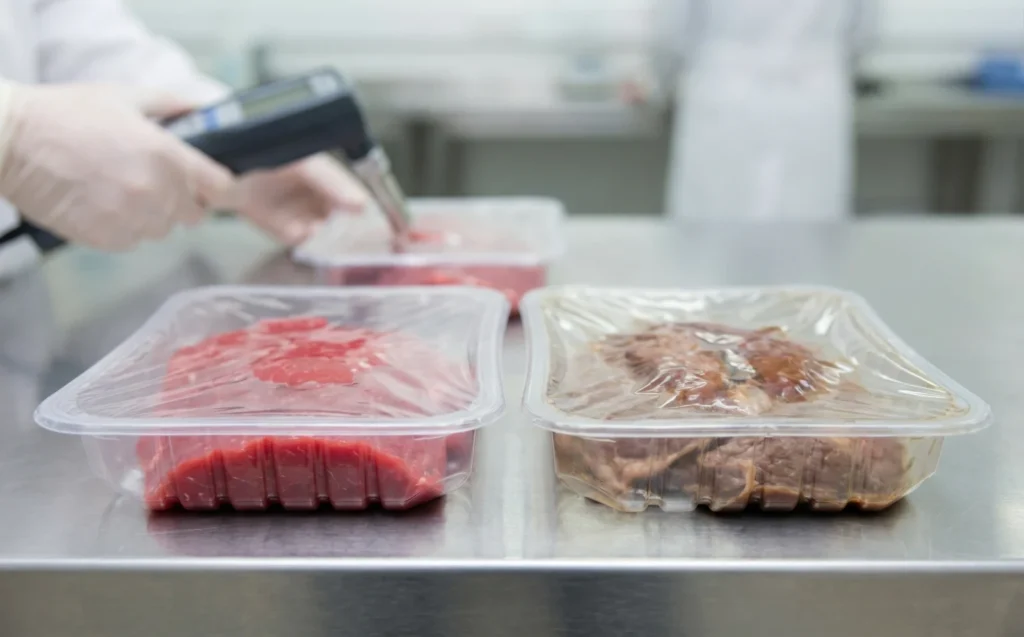
Incorrect gas mixtures are identified through random sample testing using a handheld analyzer, which often reveals drifting calibration in the mixing valves or failures in the vacuum displacement cycle. To ensure your map packaging machine provides the correct environment, you must verify that the ratios of carbon dioxide and nitrogen match the specific biological requirements of your product.
Recalibrating Gas Mixing Valves Regularly
That is not all: gas mixers can drift over time due to changes in ambient temperature or fluctuations in the pressure of the supply tanks.
- Perform a daily calibration check before the start of each production shift.
- Use certified food-grade gases with a purity level of at least 99.9%.
- Inspect the gas supply lines for leaks or kinks that might restrict the flow of a specific gas component.
Monitoring Vacuum Pump Performance for Clear Displacement
Here is the deal: if the vacuum pump fails to reach the target millibar level, residual oxygen will remain in the package and dilute the incoming gas mixture.
- Check the vacuum pump oil levels and replace the oil according to the manufacturer’s schedule.
- Inspect the chamber gaskets for wear that might prevent the machine from reaching a deep vacuum.
- Monitor the vacuum duration; a lengthening cycle often indicates a failing pump or a leak in the system.
| Gas Error | Likely Cause | Solution |
| High Oxygen | Poor Vacuum | Replace pump filters and gaskets |
| Low CO2 | Blocked Injector | Clean the gas flushing nozzles |
| High Nitrogen | Mixer Drift | Recalibrate the digital mixing unit |
Regular testing is the only way to guarantee that your preservative-free products remain safe throughout their shelf life.
Analysis: Gas accuracy is a moving target that requires constant sensor feedback and technical oversight to remain within safe tolerances.
Key Takeaway: Precise gas management depends on the synchronization between the vacuum pump’s extraction power and the mixer’s injection accuracy.
What causes package collapse or product squeeze in MAP?
Package collapse in MAP occurs when the carbon dioxide injected by the map packaging machine is absorbed into the moisture of the food, creating a negative pressure that draws the film inward. This phenomenon is particularly common with high-moisture proteins or porous products where the initial gas volume is insufficient to compensate for the absorption rate.
Balancing CO2 Absorption with Nitrogen Filler
Look at it this way: nitrogen is an inert gas that does not dissolve in water or fat, making it the perfect tool to maintain package volume.
- Increase the nitrogen percentage in your mixture to act as a physical filler.
- Pre-chill your products to slow down the initial rate of gas absorption after sealing.
- Adjust the gas volume settings to slightly over-fill the headspace if you anticipate high CO2 uptake.
Adjusting Internal Pressure to Prevent Film Cling
It gets better: maintaining the correct internal pressure prevents the film from touching the product, which is vital for the visual appeal of sliced meats or moist produce.
- Use pressure-controlled gas flushing rather than timed injection for more consistent results.
- Verify that the film tension is high enough to resist the inward pull of the vacuum.
- Consider using rigid trays with higher side walls to provide more headspace for the gas mixture.
| Issue | Observation | Adjustment |
| Tray Warping | High CO2 absorption | Increase Nitrogen (N2) ratio |
| Film Cling | Low internal pressure | Increase total gas flush volume |
| Crushed Product | High vacuum force | Lower vacuum depth or use gas flush |
Managing the physical volume of the package is as important as managing the chemistry of the gases.
Analysis: Structural stability in a package is achieved by balancing the chemical activity of CO2 with the inert physical support of N2.
Key Takeaway: Correcting package deformation requires a technical understanding of how different food types absorb gas over time.
How do you solve condensation or fogging issues?
Condensation or fogging is solved by using high-barrier films with anti-fog coatings and ensuring the map packaging machine operates in a temperature-controlled environment. These droplets form when the warm gas mixture is injected into a package containing cold product, or when the cold chain is broken during transport.
Selecting Anti-fog High-barrier Films
That is not all: the choice of film is the primary factor in how your product appears to the consumer in the refrigerated section.
- Specify “Anti-fog” (AF) treatments when ordering your top films from suppliers.
- Ensure the film has a high moisture vapor transmission rate (MVTR) to prevent internal sweating.
- Use multi-layer films that include an EVOH layer to maintain the gas barrier while providing clarity.
Managing Temperature Fluctuations in the Cold Chain
Here is the deal: even the best map packaging machine settings cannot prevent condensation if the product temperature varies wildly after sealing.
- Maintain a stable temperature in the packing room to match the storage area.
- Ensure the product is fully chilled to its target storage temperature before it enters the machine.
- Inspect the cooling fans in the storage area to ensure air is circulating evenly around the finished trays.
| Visual Problem | Likely Cause | Solution |
| Water Droplets | Temp differential | Use Anti-fog (AF) treated film |
| Cloudy Film | Low barrier film | Upgrade to EVOH high-barrier film |
| Ice Crystals | Product too warm | Pre-chill product before packaging |
Clear visibility is the most effective marketing tool for fresh products in a retail environment.
Analysis: Preventing fogging is a collaborative effort between machine settings, material selection, and cold chain logistics.
Key Takeaway: Visual clarity depends on using active anti-fog materials and maintaining a consistent thermal environment from production to retail.
Why does product discoloration happen despite gas flushing?
Product discoloration happens when residual oxygen levels exceed 1% or when the gas mixture is not suited to the specific pigment requirements of the food. When a map packaging machine fails to remove all ambient air, the remaining oxygen reacts with the product, leading to browning in vegetables or the graying of red meat.
Eliminating Residual Oxygen Pockets
Look at it this way: some products have “hidden” air pockets, such as ground meat or leafy salads, that require a deeper vacuum.
- Increase the vacuum dwell time to allow air to be pulled from the center of the product.
- Use a “double vacuum” cycle where the machine evacuates, flushes, and evacuates again for sensitive items.
- Verify that the gas flushing nozzles are positioned to reach the bottom of deep trays.
Verifying Gas Purity from Cylinders
It gets better: sometimes the issue is not the machine, but a contaminated gas supply that contains trace amounts of oxygen or moisture.
- Always source food-grade gases from reputable suppliers with certificates of analysis.
- Install high-quality regulators and filters on your gas supply lines to catch impurities.
- Use an on-line gas analyzer to monitor the purity of the gas as it enters the map packaging machine.
| Color Change | Product | Required Fix |
| Gray/Purple | Red Meat | Increase Oxygen (O2) ratio |
| Browning | Lettuce/Apple | Decrease O2 / Increase Nitrogen |
| Bleaching | Smoked Meat | Eliminate O2 / Use 100% Nitrogen |
Color stability is the primary indicator of freshness that consumers use to judge your brand quality.
Analysis: Discoloration is usually a chemical symptom of a mechanical failure in the vacuum or gas delivery system.
Key Takeaway: Preventing discoloration requires a perfect vacuum and a gas mixture that supports the natural pigments of the food.
What mechanical failures slow down a map packaging machine?
Mechanical failures that slow down a map packaging machine include clogged vacuum filters, worn sealing wires, and sensor malfunctions in the PLC. These issues increase the cycle time and reduce your daily output, which you can learn more about in the What Are MAP Packaging Machines? Industrial Guide provided on our site.
Cleaning Vacuum Pump Filters for Faster Cycles
Here is the deal: a clogged filter forces the pump to work harder, extending the time it takes to reach the target vacuum level.
- Clean or replace the intake filters every 100 hours of operation.
- Inspect the exhaust filters to ensure they are not restricted by oil mist or debris.
- Monitor the vacuum gauge; a slow drop in pressure is a clear signal that the filter is blocked.
Replacing Teflon Tape and Sealing Wires
Look at it this way: worn components in the sealing head lead to inconsistent heat and “sticking” issues that stop the line.
- Replace the Teflon tape as soon as you see signs of fraying or carbon buildup.
- Inspect the sealing wires for kinks or thin spots that could lead to an electrical short.
- Keep a stock of spare sealing heads for quick replacement during busy production shifts.
| Mechanical Part | Lifespan (Approx) | Failure Symptom |
| Sealing Wire | 5,000 Cycles | Uneven seal or no heat |
| Vacuum Filter | 1,000 Hours | Slow cycle time |
| Chamber Gasket | 6 Months | Machine fails to reach vacuum |
Proactive replacement of wear parts is the most effective way to avoid emergency downtime.
Analysis: Machine speed is a direct reflection of the cleanliness and maintenance status of the vacuum and sealing systems.
Key Takeaway: Maintaining high production speeds requires a disciplined schedule of cleaning and part replacement.
How can film tension errors impact seal integrity?
Film tension errors impact seal integrity by causing wrinkles or “channel leaks” where the film meets the tray corners. If the tension system on your map packaging machine is not calibrated, the film may pull away during the heat-sealing phase, creating an opening for gas to escape.
Adjusting Film Roll Alignment and Tension
That is not all: the film must be perfectly flat as it enters the sealing zone to ensure a uniform bond across the entire flange.
- Check the tension rollers to ensure they are applying even pressure across the width of the roll.
- Align the film roll so that it is perfectly centered over the trays to prevent “edge creep.”
- Use a film with the correct “shrink” properties for your specific machine type.
Preventing Wrinkle Leaks at the Tray Corners
Look at it this way: the corners of the tray are the most vulnerable points for leaks because the film must stretch over the radius.
- Increase the sealing pressure to flatten small wrinkles during the thermal cycle.
- Adjust the “dwell time” to give the film more time to bond at the corners.
- Use a film with a slightly higher sealant layer thickness to fill in any surface irregularities.
| Tension Error | Result | Fix |
| Too Loose | Wrinkles in seal | Tighten brake on film mandrel |
| Too Tight | Film snaps or warps | Loosen tension rollers |
| Misaligned | Exposed tray flange | Recenter the film roll |
Precision in film feeding is just as important as precision in gas mixing for a successful final product.
Analysis: Film management is often overlooked but remains a top cause of seal failure in automatic packaging lines.
Key Takeaway: Perfect seal integrity depends on a flat, properly tensioned film that covers the entire sealing surface of the container.
When should you upgrade your map packaging machine software?
You should upgrade your map packaging machine software when you introduce new tray formats, high-barrier films, or require better data integration for your quality control systems. Modern PLC software allows you to manage recipe deviations and integrate real-time leak detection, which you can explore in our Industrial Guide for better factory planning.
Managing Recipe Deviations in the PLC
It gets better: advanced software can alert operators if the vacuum or gas levels deviate from the set point by even 0.1%.
- Update your recipes whenever you change your product supplier or film specification.
- Use the data logging feature to track gas consumption and identify waste in your production.
- Set “lockouts” on the control panel to prevent unauthorized changes to the packaging parameters.
Integrating Real-time Leak Detection Systems
That is not all: newer software versions support the integration of inline gas sensors that can test every package as it leaves the machine.
- Upgrade your controller to support Modbus or other communication protocols for factory automation.
- Install software updates that improve the diagnostic capabilities of the vacuum pump and mixing valves.
- Enable remote technical support features so engineers can troubleshoot your machine from a distance.
| Software Need | Benefit | Impact |
| New Recipes | Accuracy | Longer shelf life for new SKUs |
| Data Logging | Efficiency | Lower gas and material costs |
| Remote Diag | Stability | Reduced technical downtime |
Digital precision is the final layer of protection for your production quality and factory efficiency.
Analysis: Software updates bridge the gap between mechanical performance and the data-driven needs of modern B2B buyers.
Key Takeaway: Keeping your machine’s software current ensures that you can utilize the latest preservation techniques and maintain high-efficiency standards.
What can we offer?
Ensuring the stability of your production line requires a combination of technical knowledge and high-performance equipment. Reliancepak provides the industrial expertise and robust machinery needed to solve common packaging hurdles, allowing you to focus on scaling your business and satisfying your global customers. If you are ready to eliminate spoilage and improve your packaging consistency, we invite you to consult with our technical team to find a solution that matches your facility’s unique challenges.
We are committed to helping you achieve production excellence through precision engineering and reliable support. Our goal is to ensure that your packaging line is a strategic advantage that drives your business growth in the competitive fresh food market.
FAQ
Can I fix a seal leak without stopping the entire production line?
No. You must stop the cycle to clean the sealing bars or adjust the temperature, as attempting to fix these issues while the machine is running is dangerous and ineffective.
Why is my machine using more gas than usual?
Yes, this is often caused by a leak in the internal gas hoses or incorrect pressure settings that cause excessive gas to be purged during the flushing phase.
How do I know if my vacuum pump is failing?
Yes, the primary signs are a lengthening vacuum cycle, an increase in noise or vibration, and a failure to reach the set millibar level on the control panel.
Is it possible for the film to be the cause of my packaging problems?
Yes. If the film is not a high-barrier material or has a defective sealant layer, the protective gas will leak out even if the machine is perfectly calibrated.
How often should I perform a deep clean on my map packaging machine?
Yes, we recommend a thorough sanitation of all food-contact surfaces and mechanical components at the end of every production shift to prevent bacteria buildup.